
Panama Canal - 2025
April 14 to April 30
Port Canaveral → Nassau, Bahamas → Cartagena, Colombia → Panama Canal → Puntarenas, Costa Rica → Huatulco, Mexico → Puerta Vallarta, Mexico → San Pedro
PART 1
On April 19, we transited the Panama Canal starting at Colon, traveling South to the Pacific Ocean. We traveled via the “new” 2016 Agua Clara and Cocoli Locks. The journey through the Canal took approximately nine hours and twenty-seven minutes, starting at 6:25 AM when we passed under the Atlantic Bridge and ending at 4:52 PM when we passed under the Bridge of the Americas.
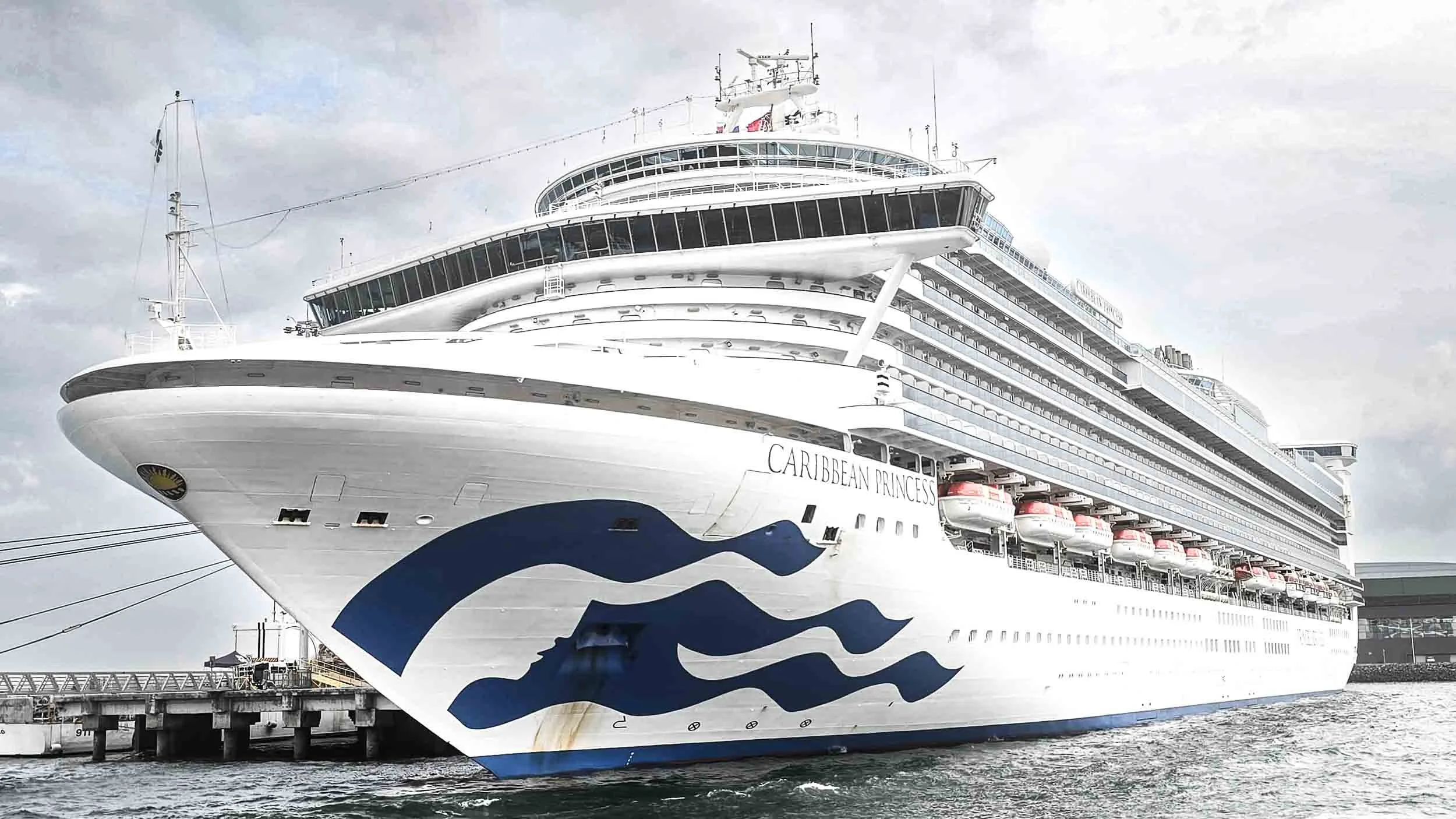
We spent 16 days on this ship in April of 2025 cruising the Panama Canal and visiting several other Ports of Call.
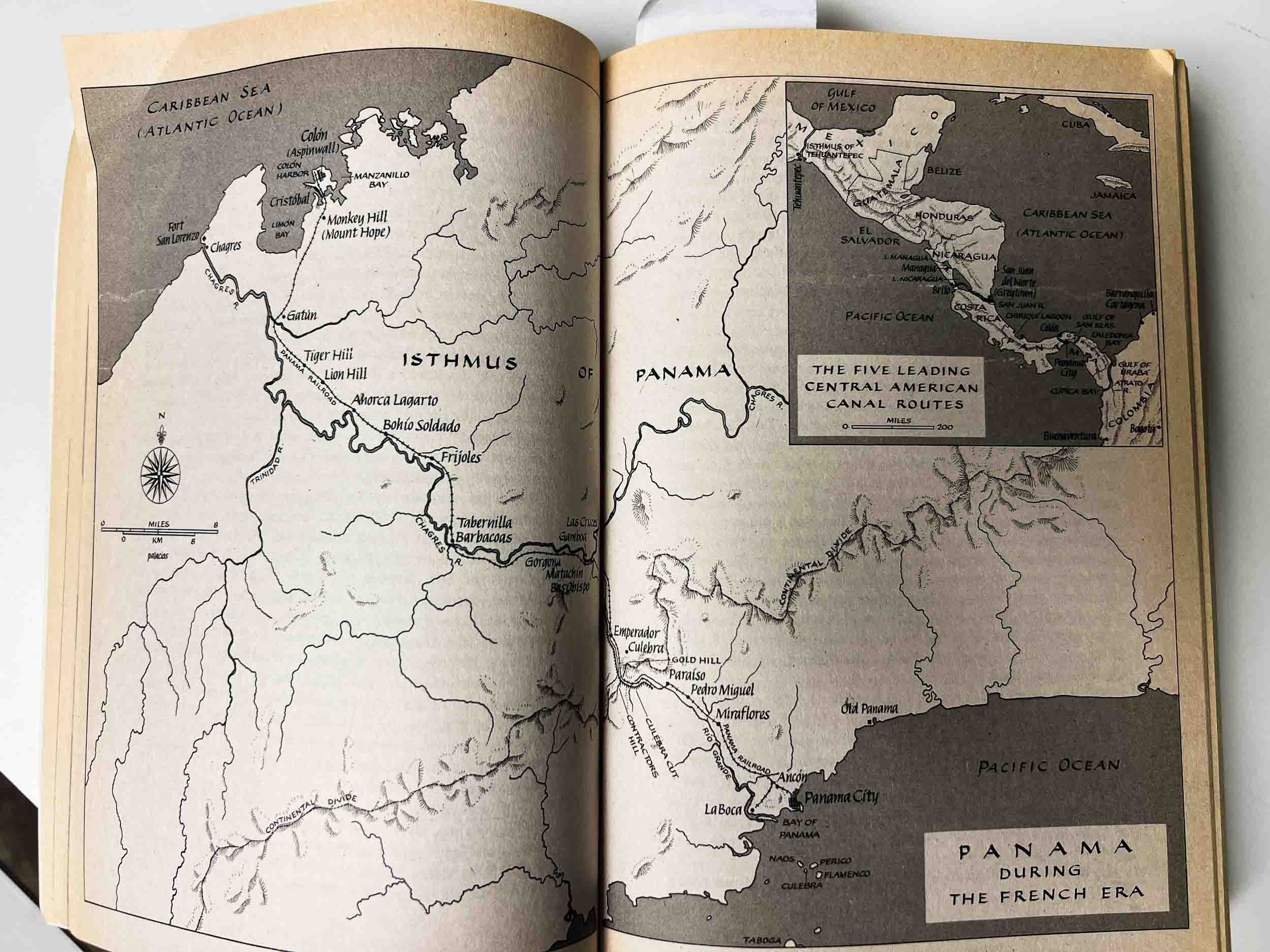
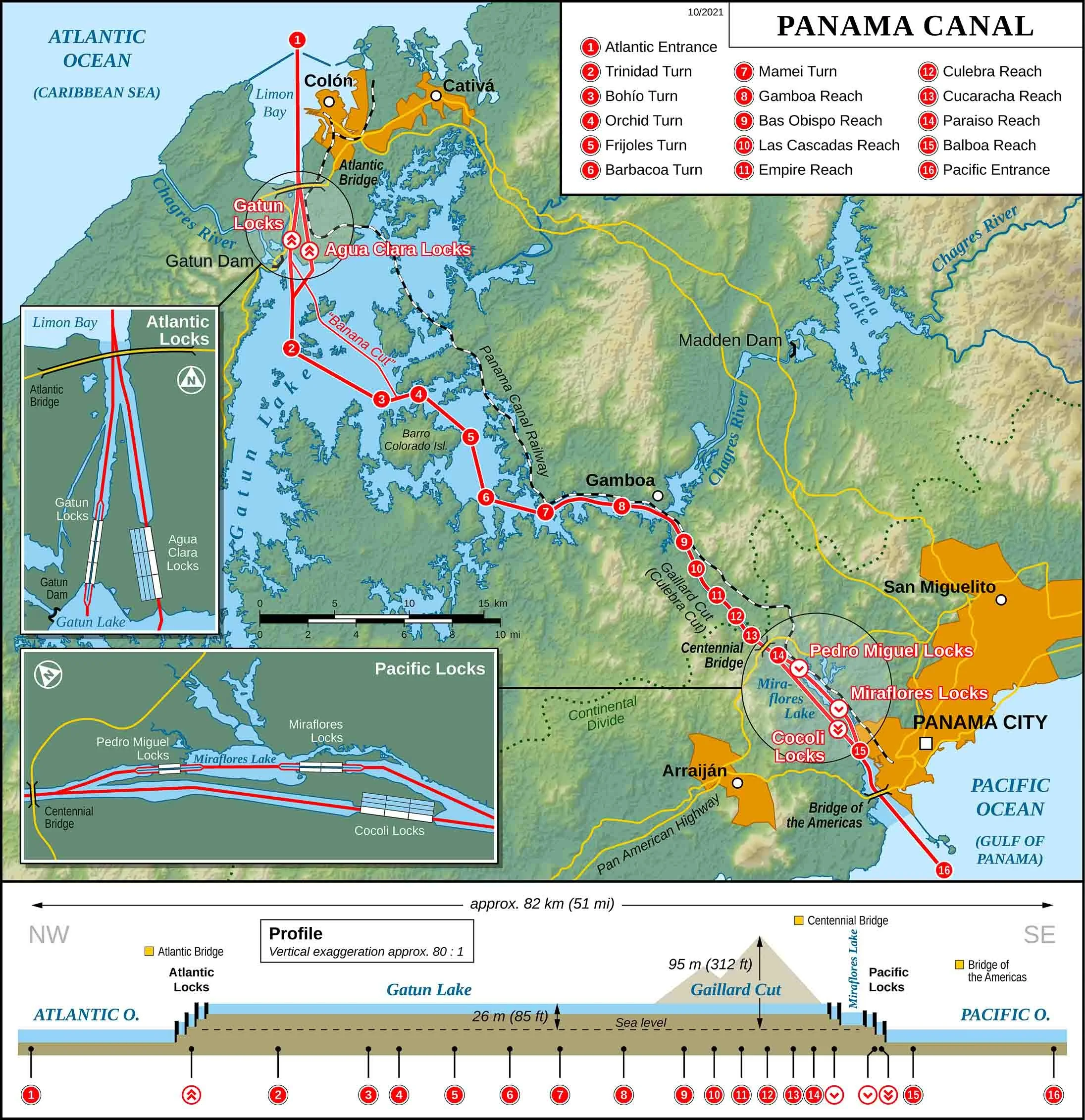
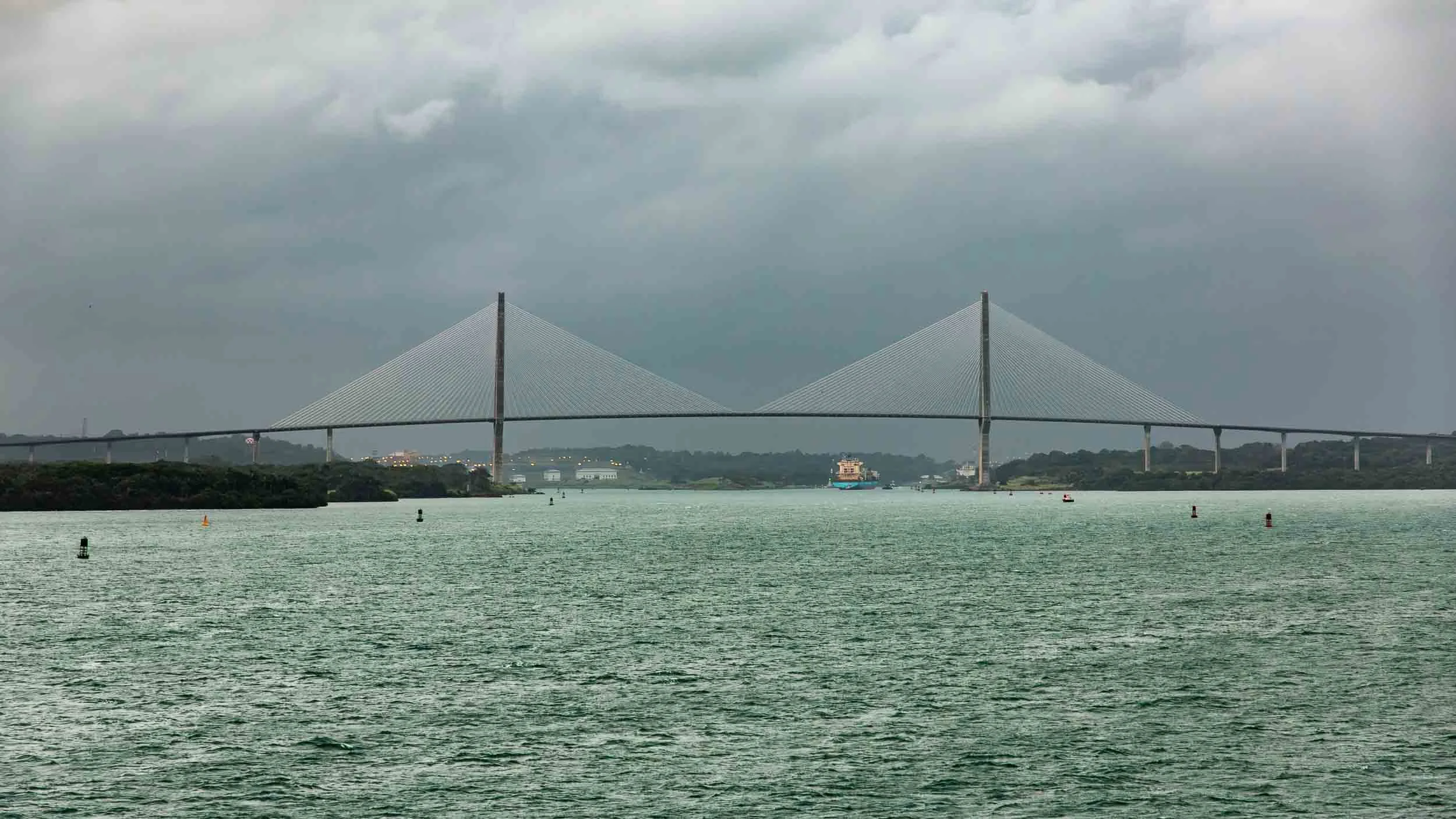
April 19 at 6:25 AM we saw the Atlantic Bridge (Puente Atlantico). The first bridge to span the Atlantic entrance to the Panama Canal. It was opened in 2019 and is located 2 miles north of Gatun and Agua Clara locks in Colon.
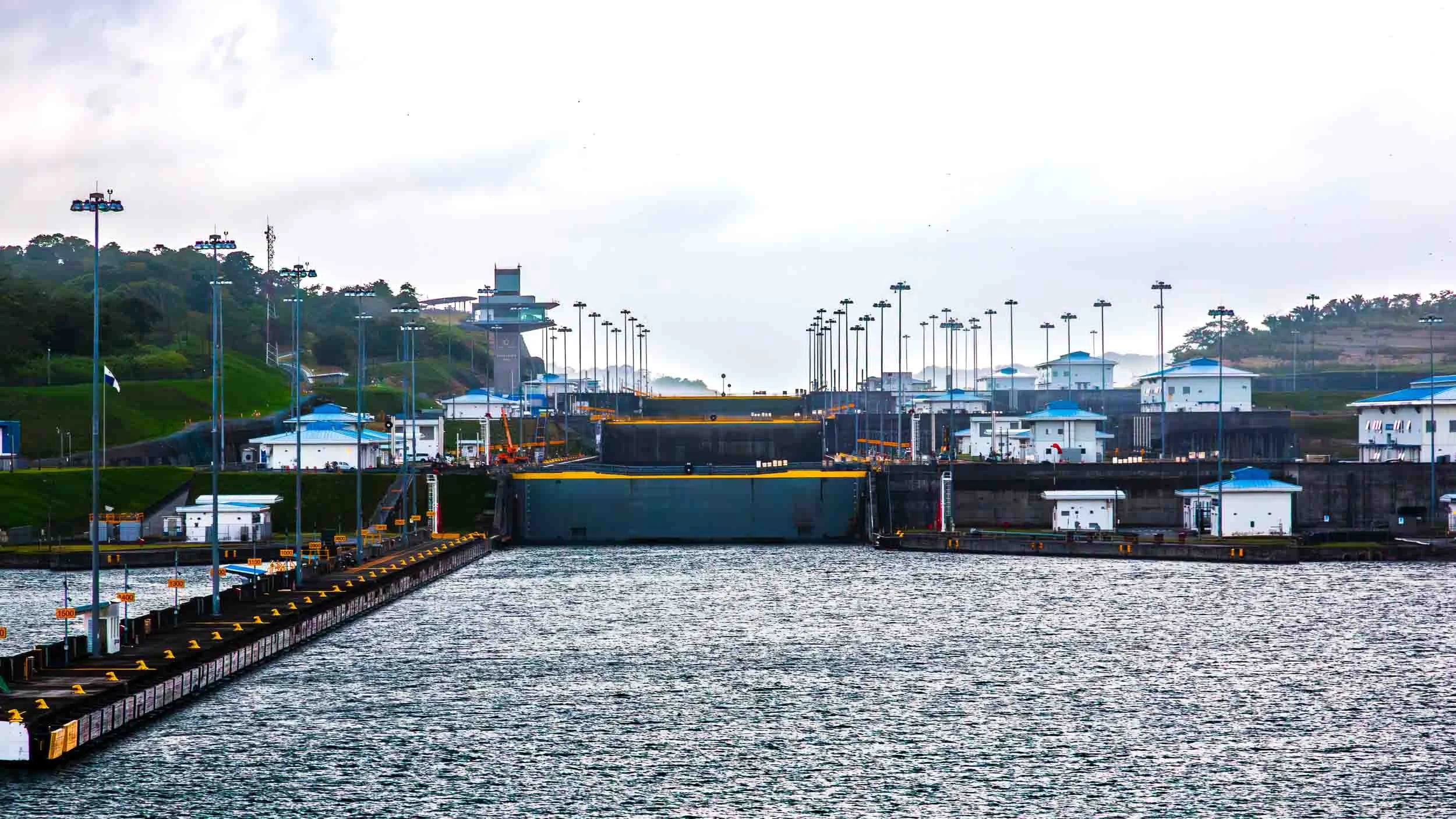
The Agua Clara locks in the Panama Canal. These are the new locks opened in 2016 to allow larger ships to enter the canal. The original Gatun locks which were opened in 1914 became too small of the growing shipping industry.
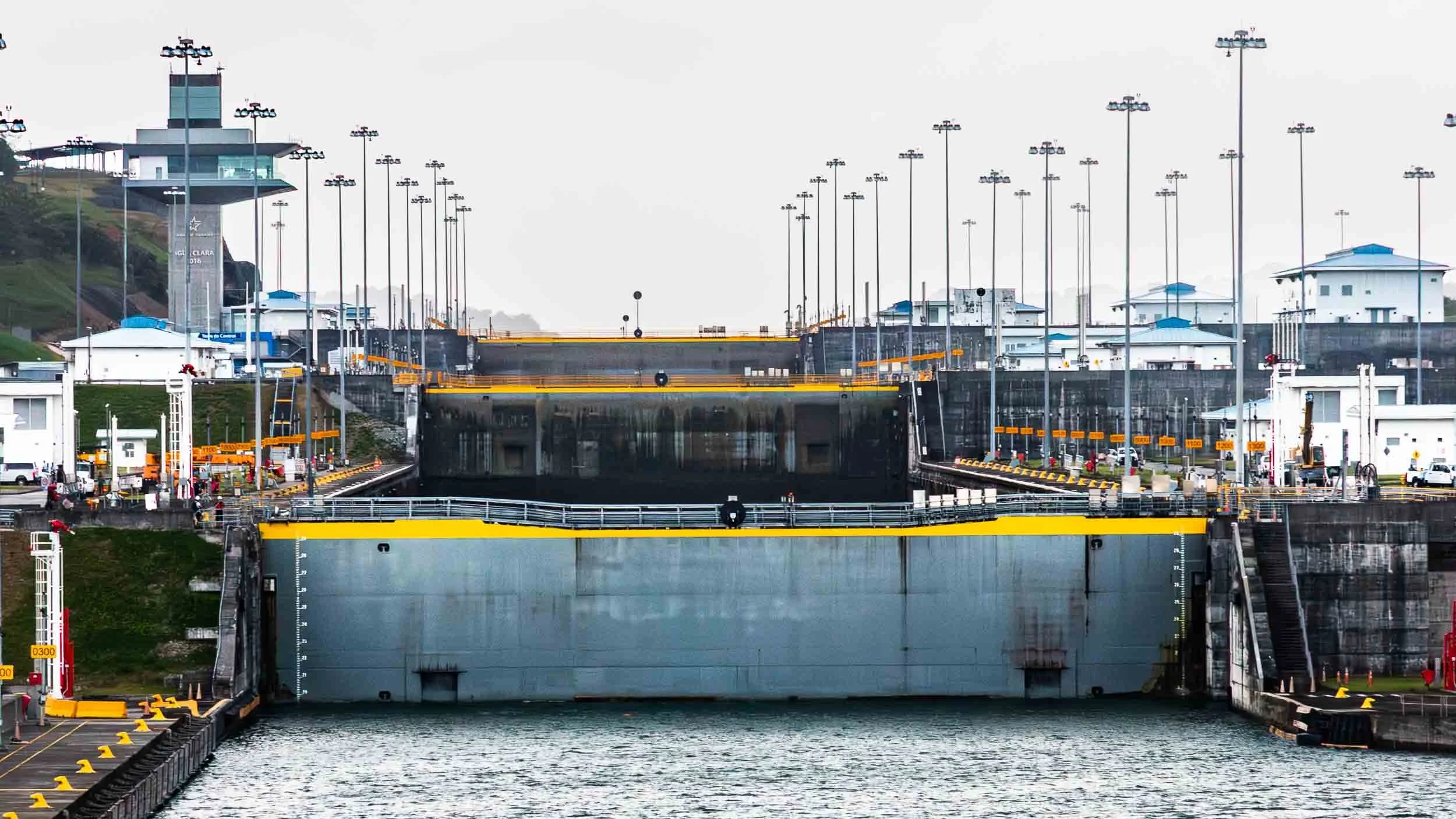
A closer look at the start of the Agua Clara locks just before our massive ship entered the canal.
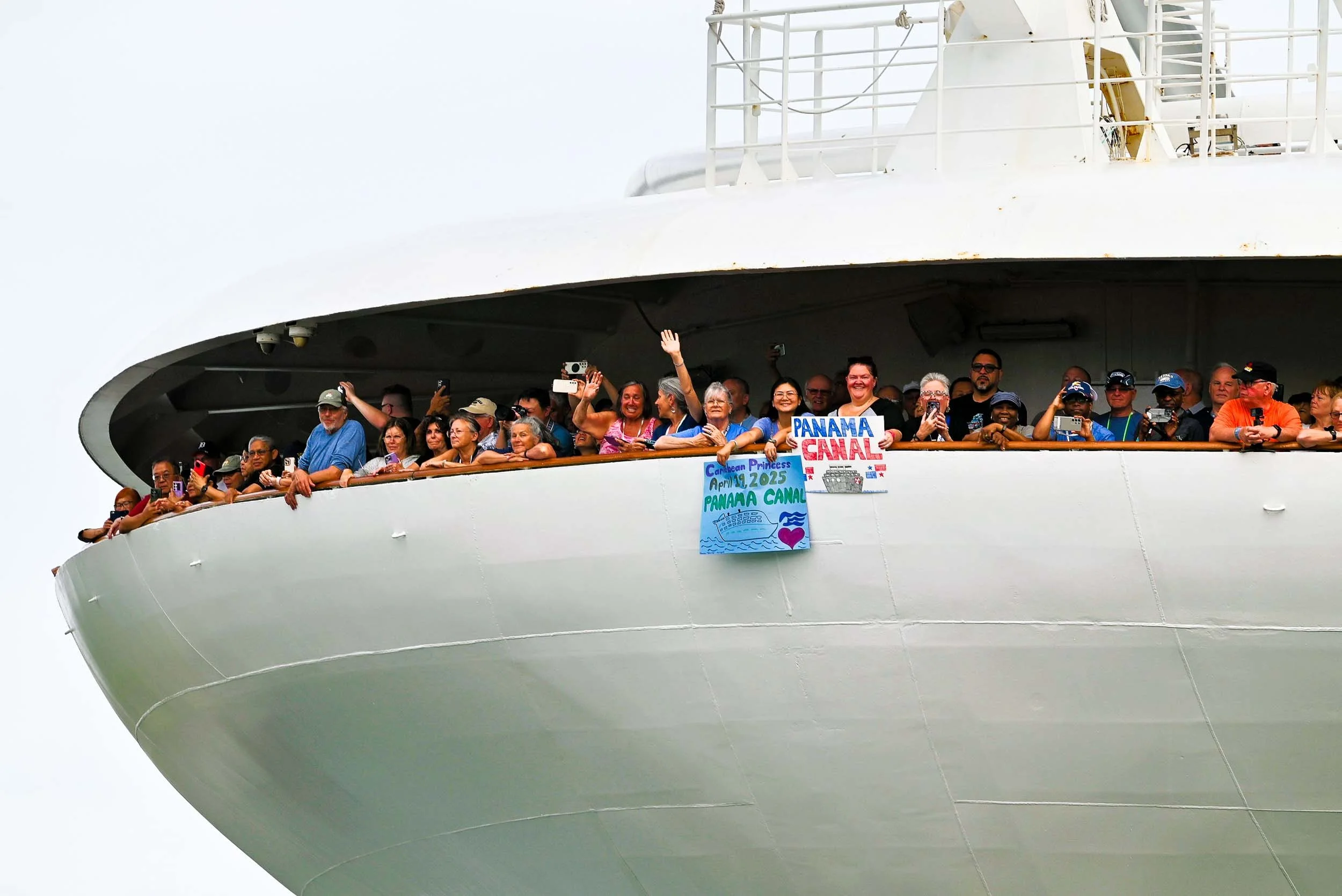
April 19, 2025: The day we transited the Panama Canal. Crew from Caribbean Princess were on the ground taking photos of us. We can be found on the observation deck watching the marvels of engineering.
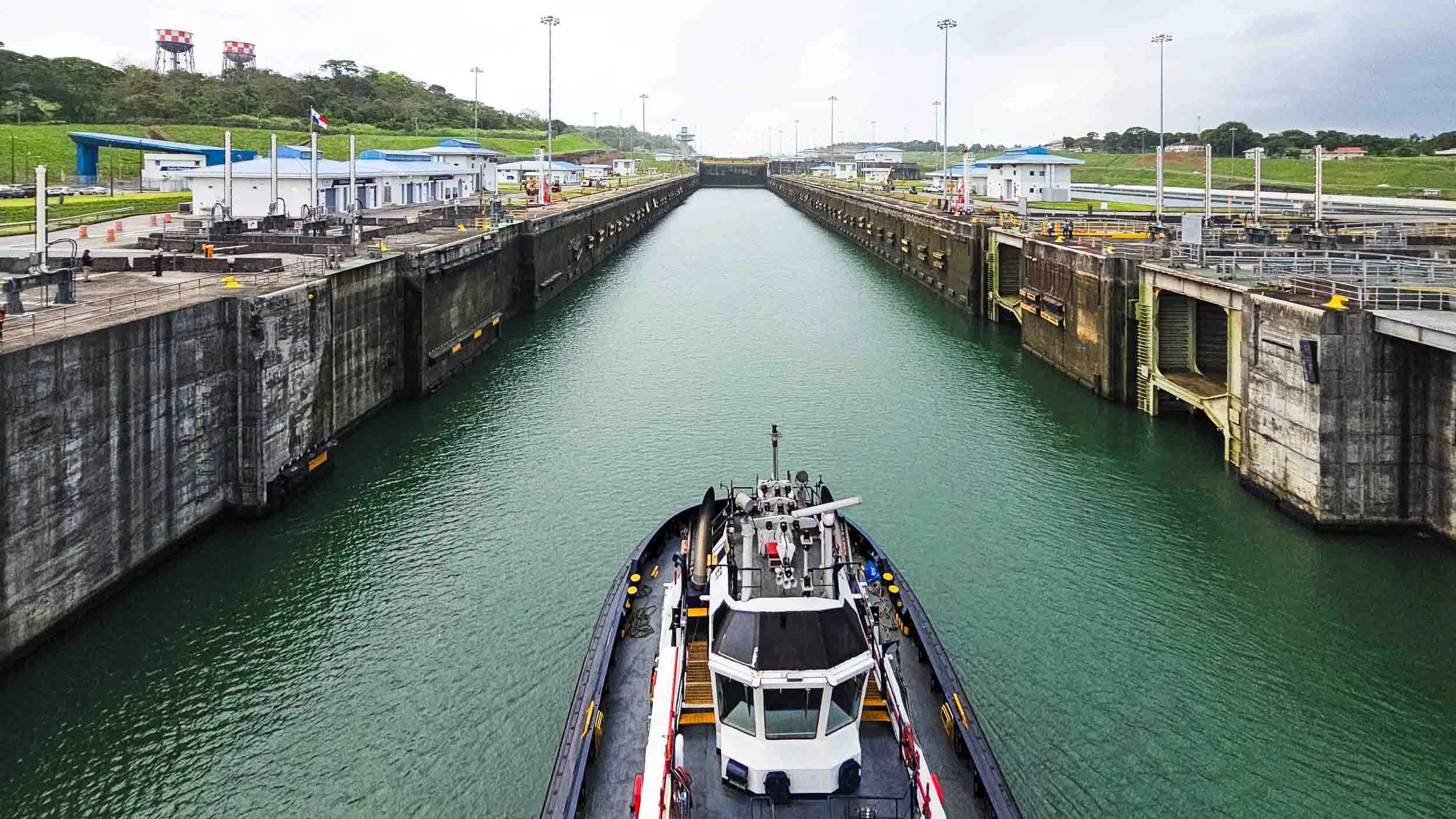
A guide boat leading the Caribbean Princess through the locks.
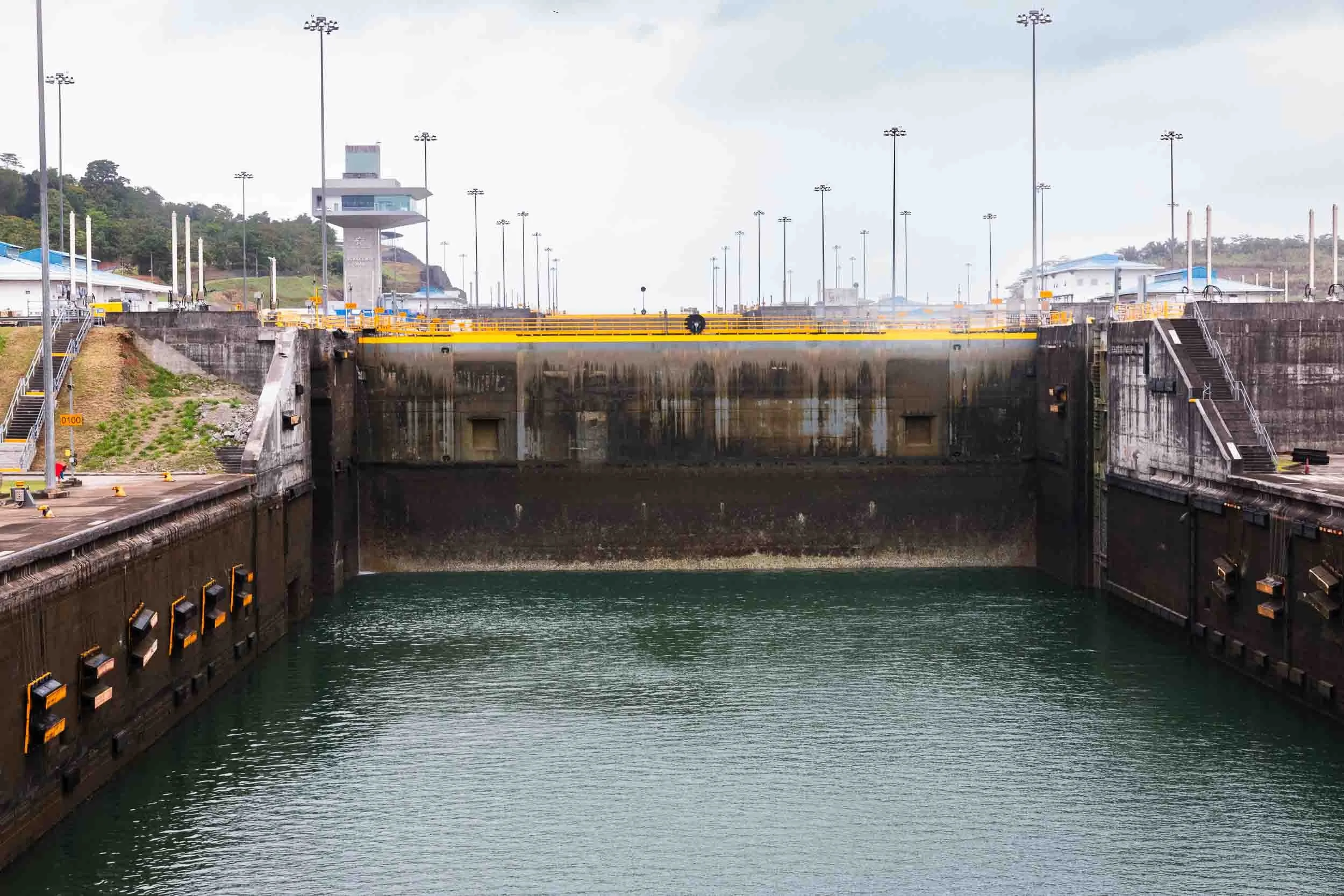
The second stage of the lock operation.
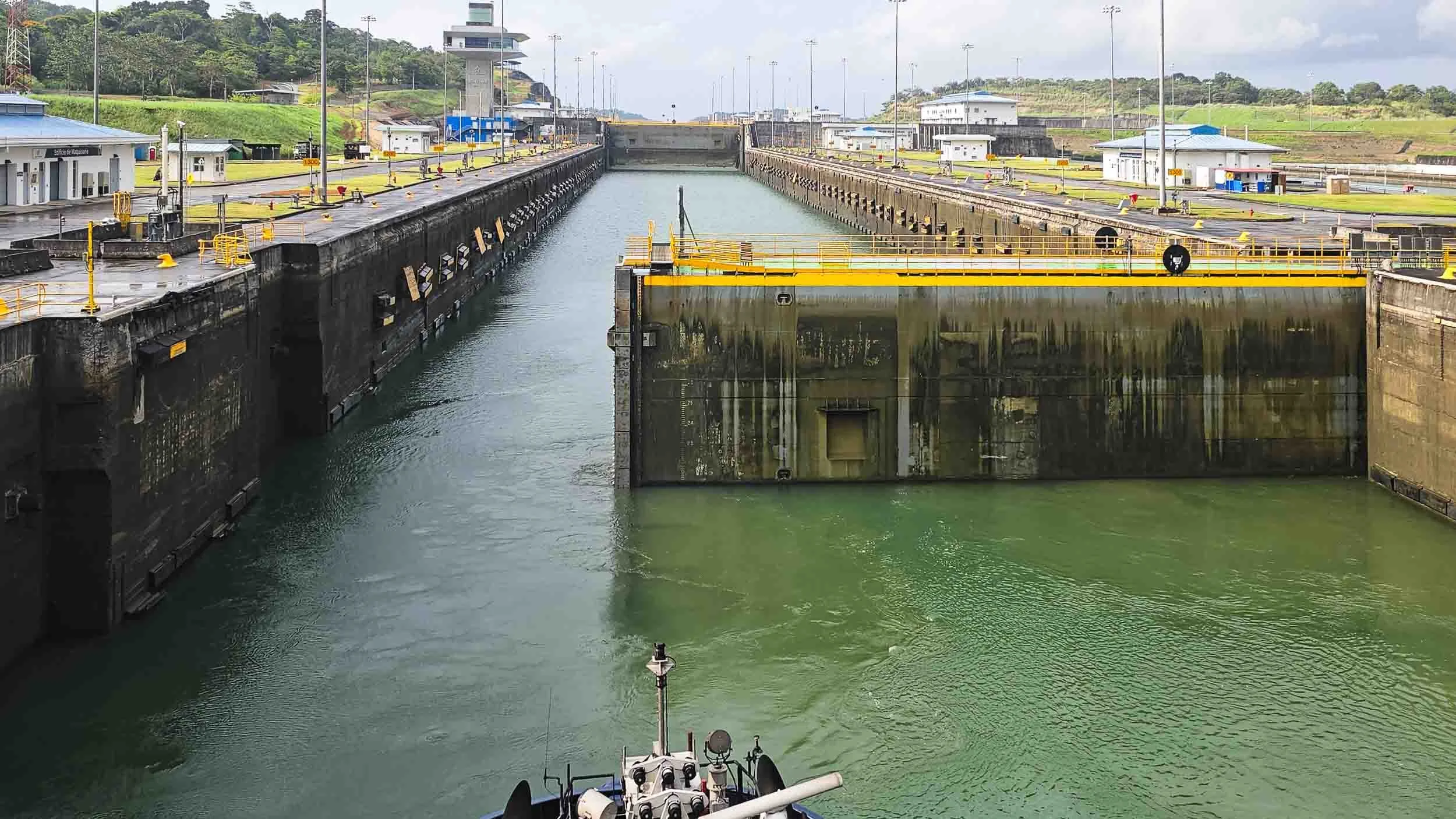
The rolling gate of the locks retracting into the side walls to allow passage for the ship.
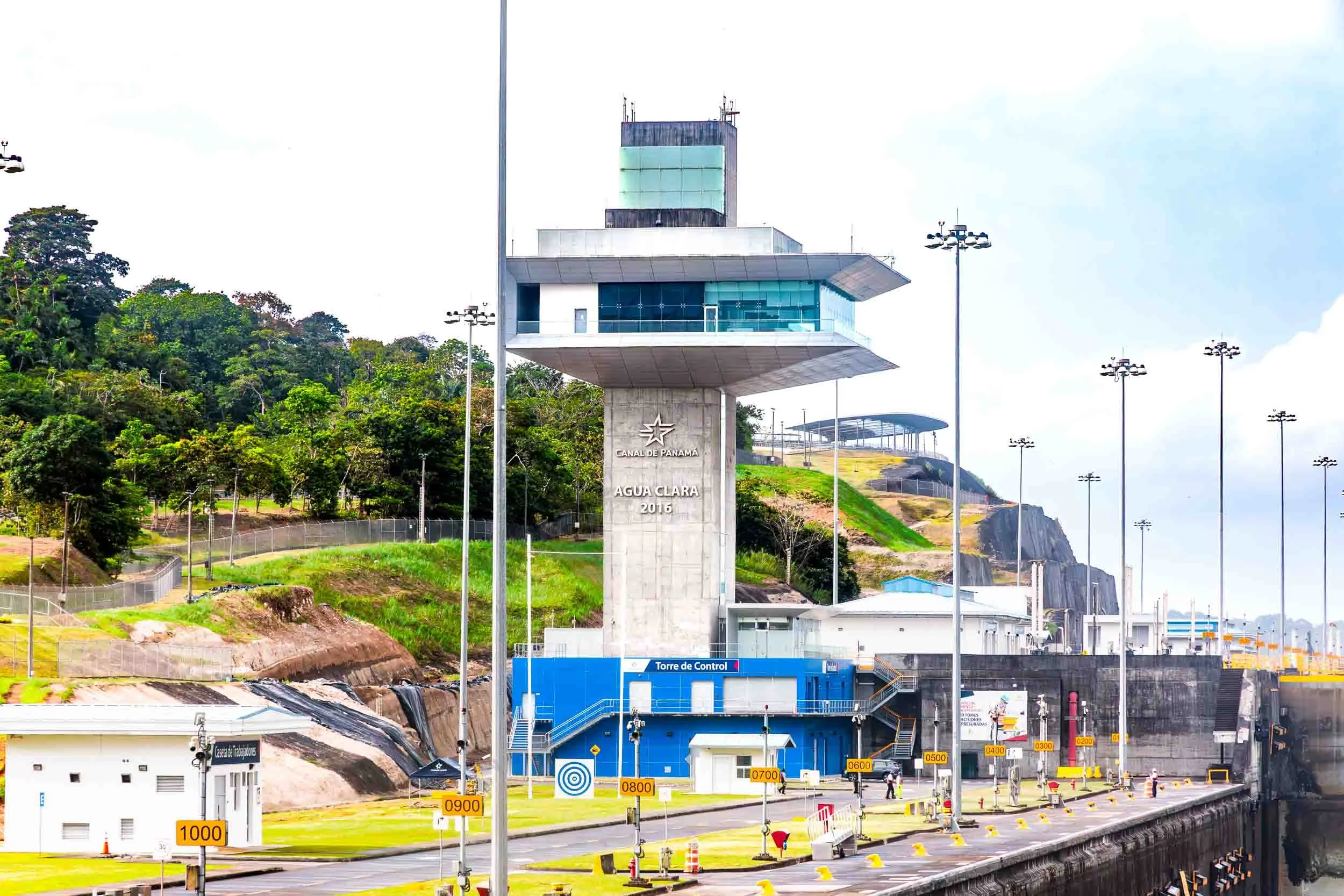
The control tower at the Agua Clara locks
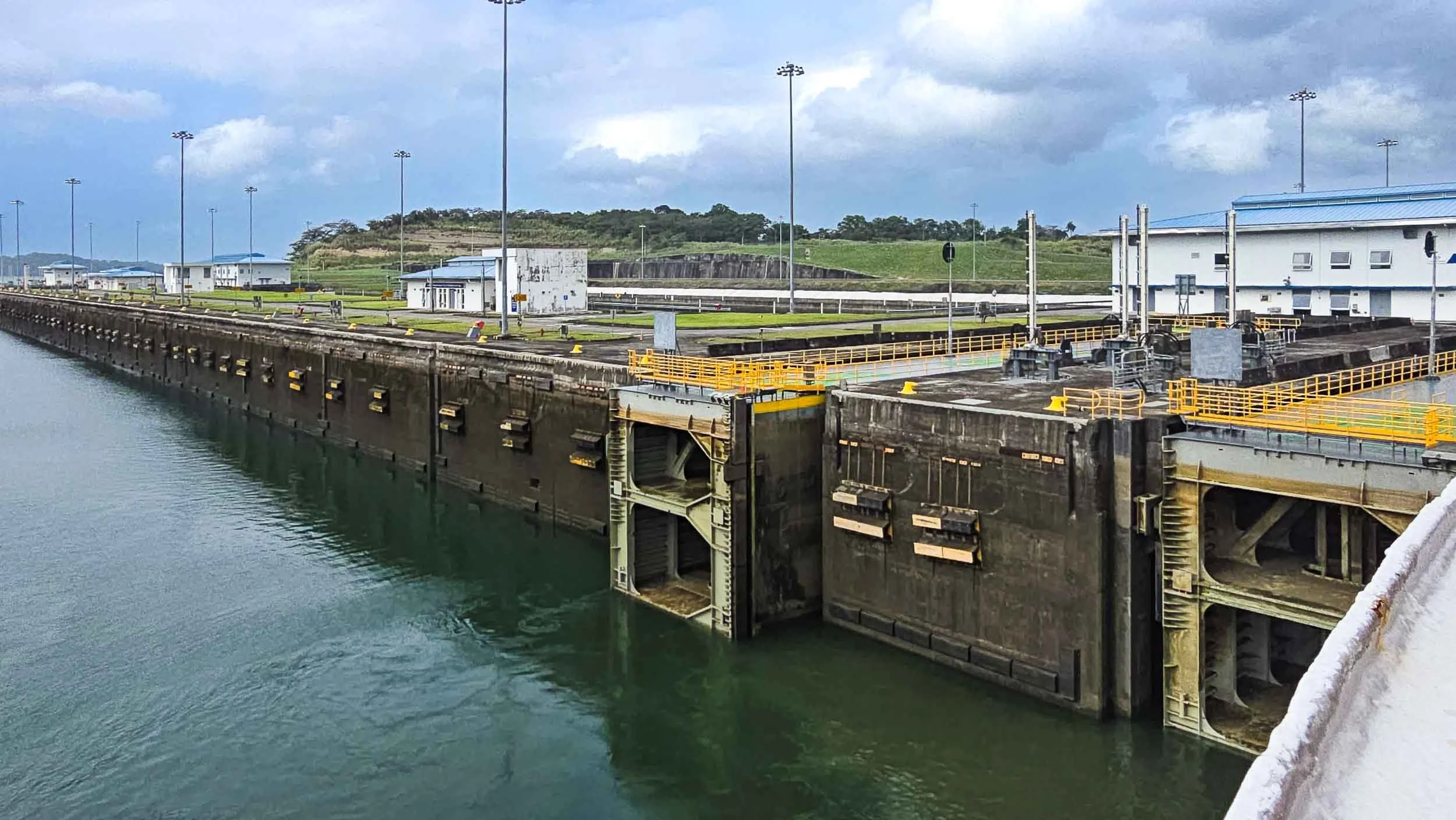
The gate of the locks retracted into the sidewall.
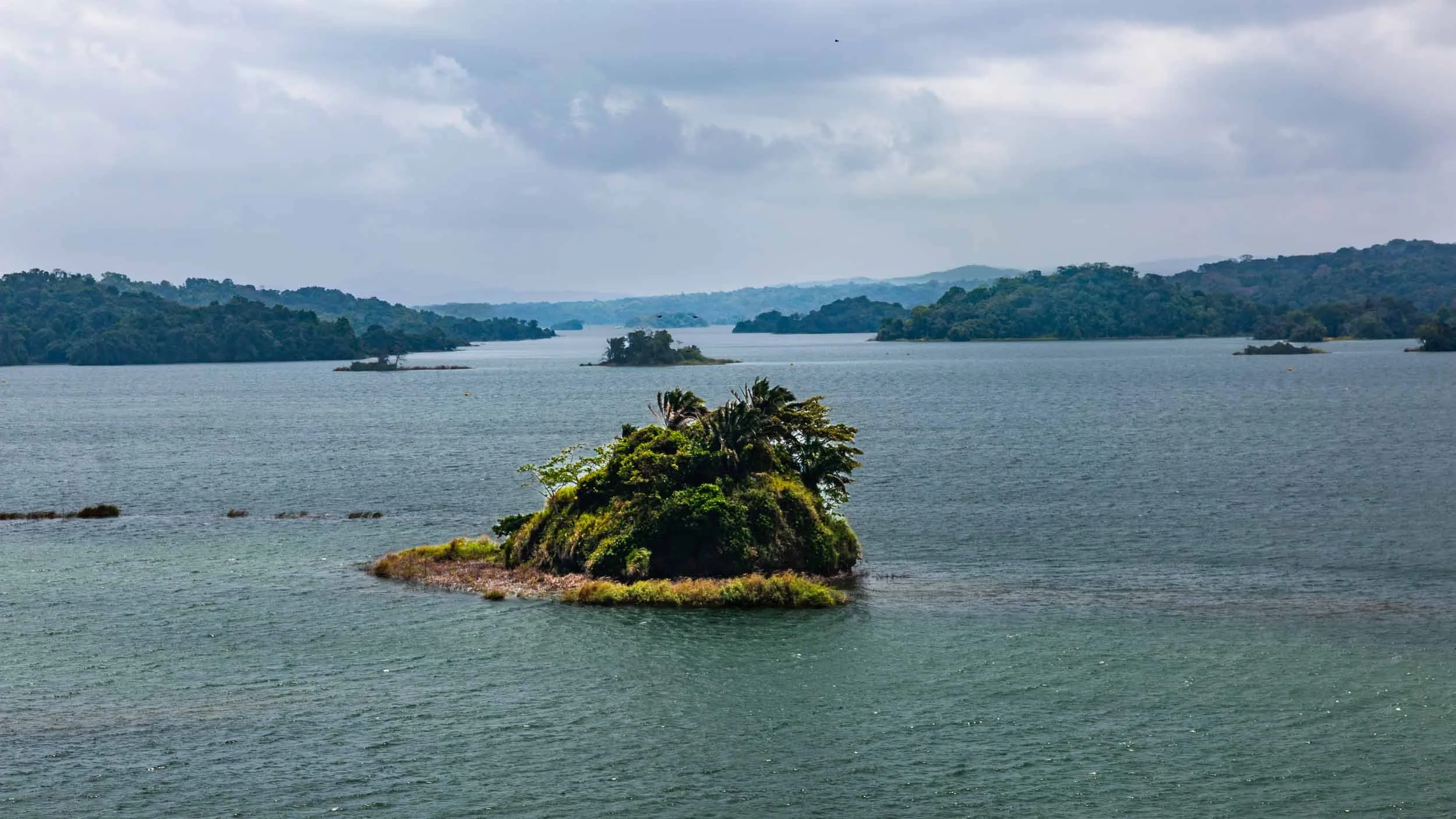
Scene of the Gatun Lake. This 164 square miles lake is what make the Panama Canal possible. Villages and jungles were flooded by the Chagres River to create this lake.
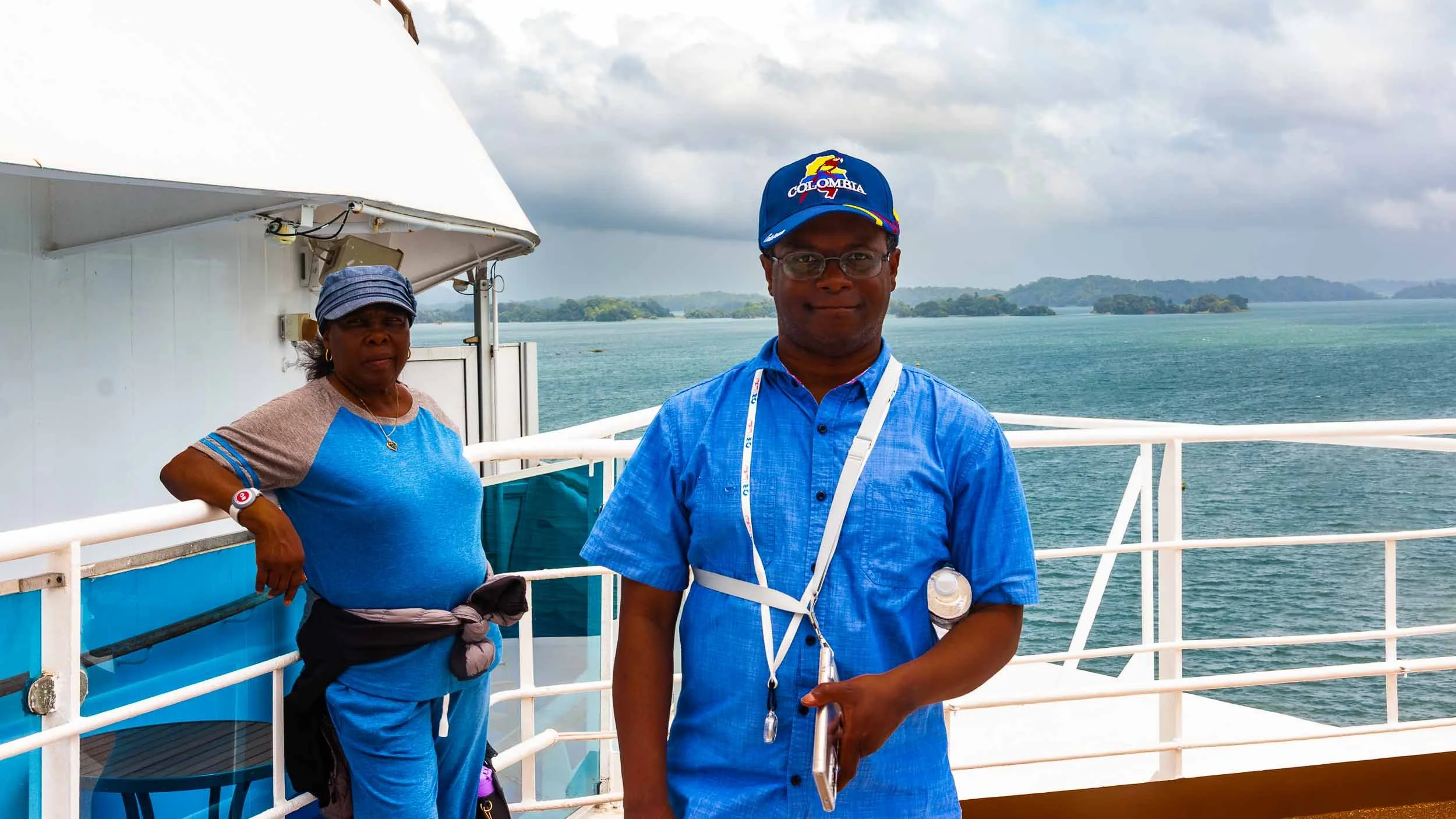
Photo op while cruising on the Gatun Lake.
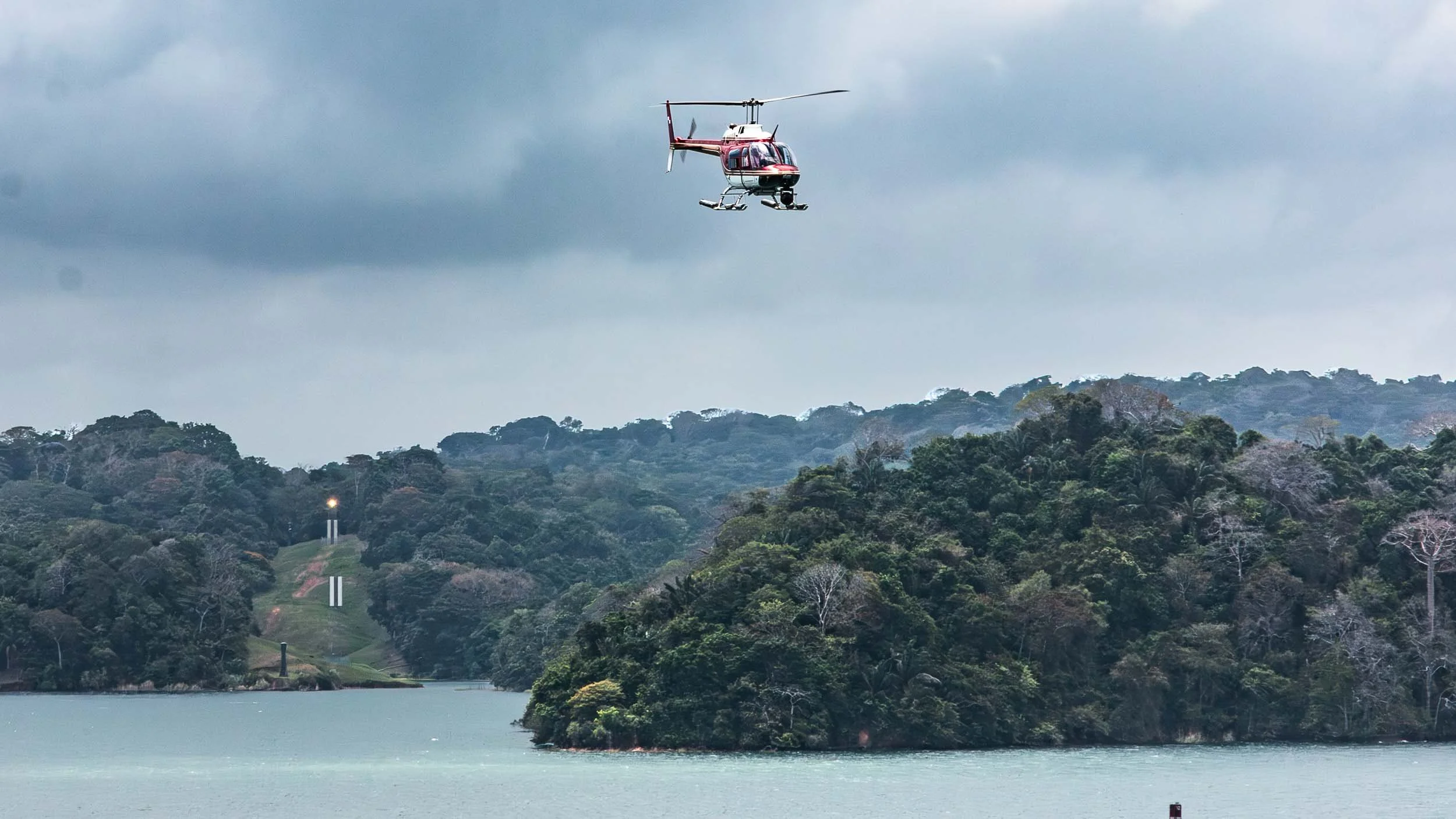
Possibly a tourism helicopter. There are many reasons for helicopters in the area and tourism is one of them.
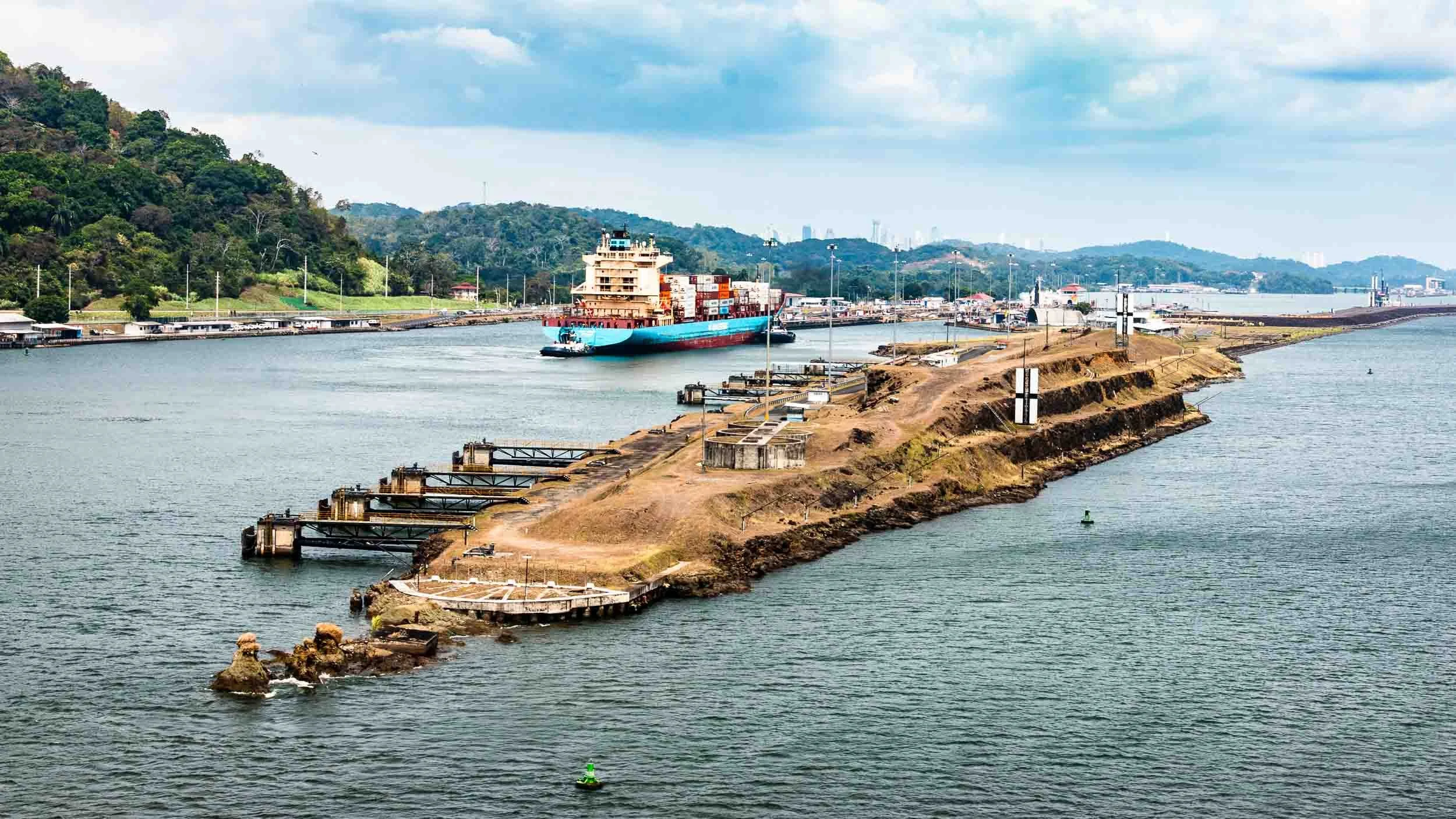
A man-made center pier in the Gatun Lake to help keep ships in their lanes. It separates the lanes to the old locks and the new locks.
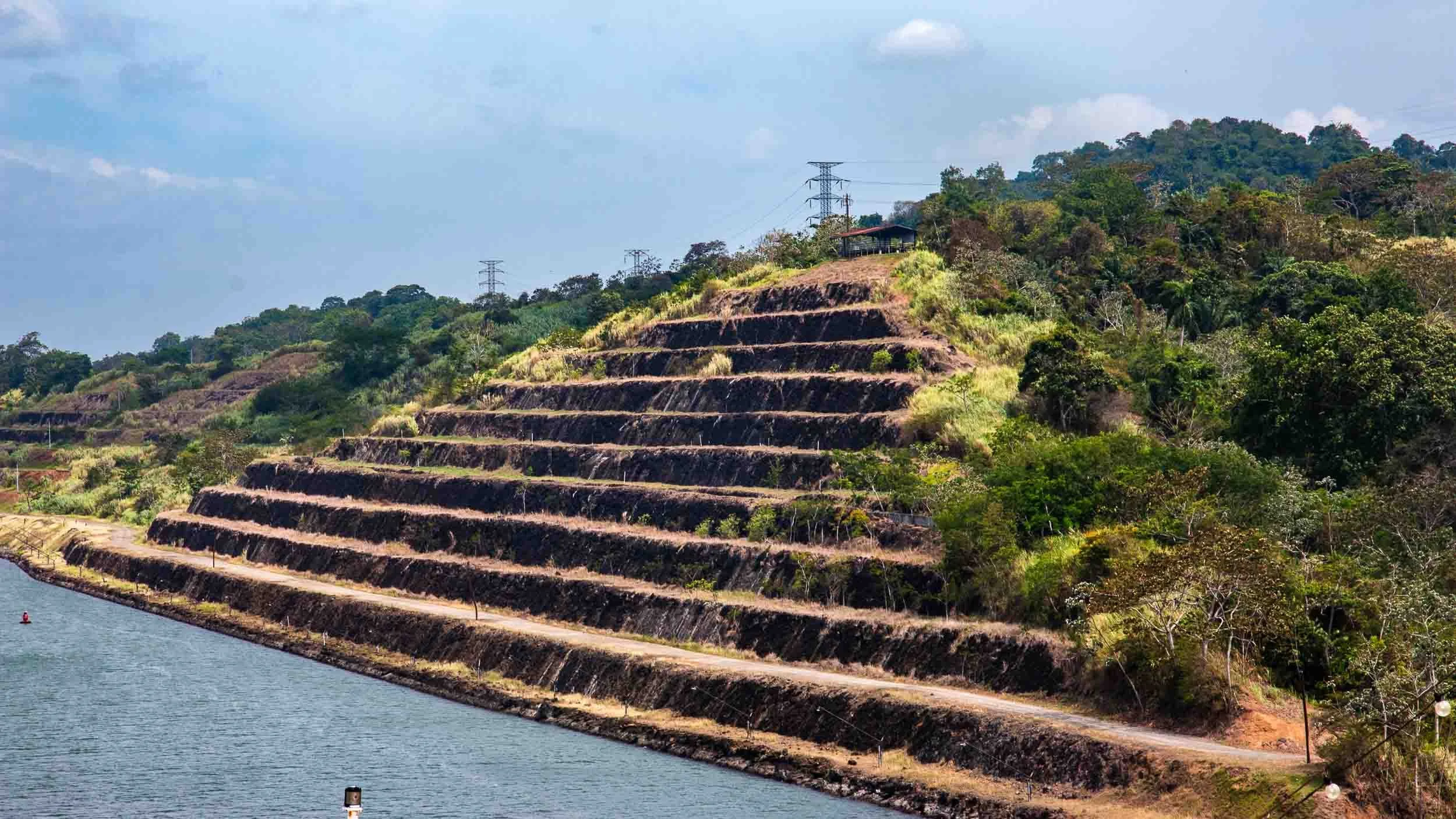
Cucaracha Slide portion of the Culebra Cut (also known as the Gaillard Cut).
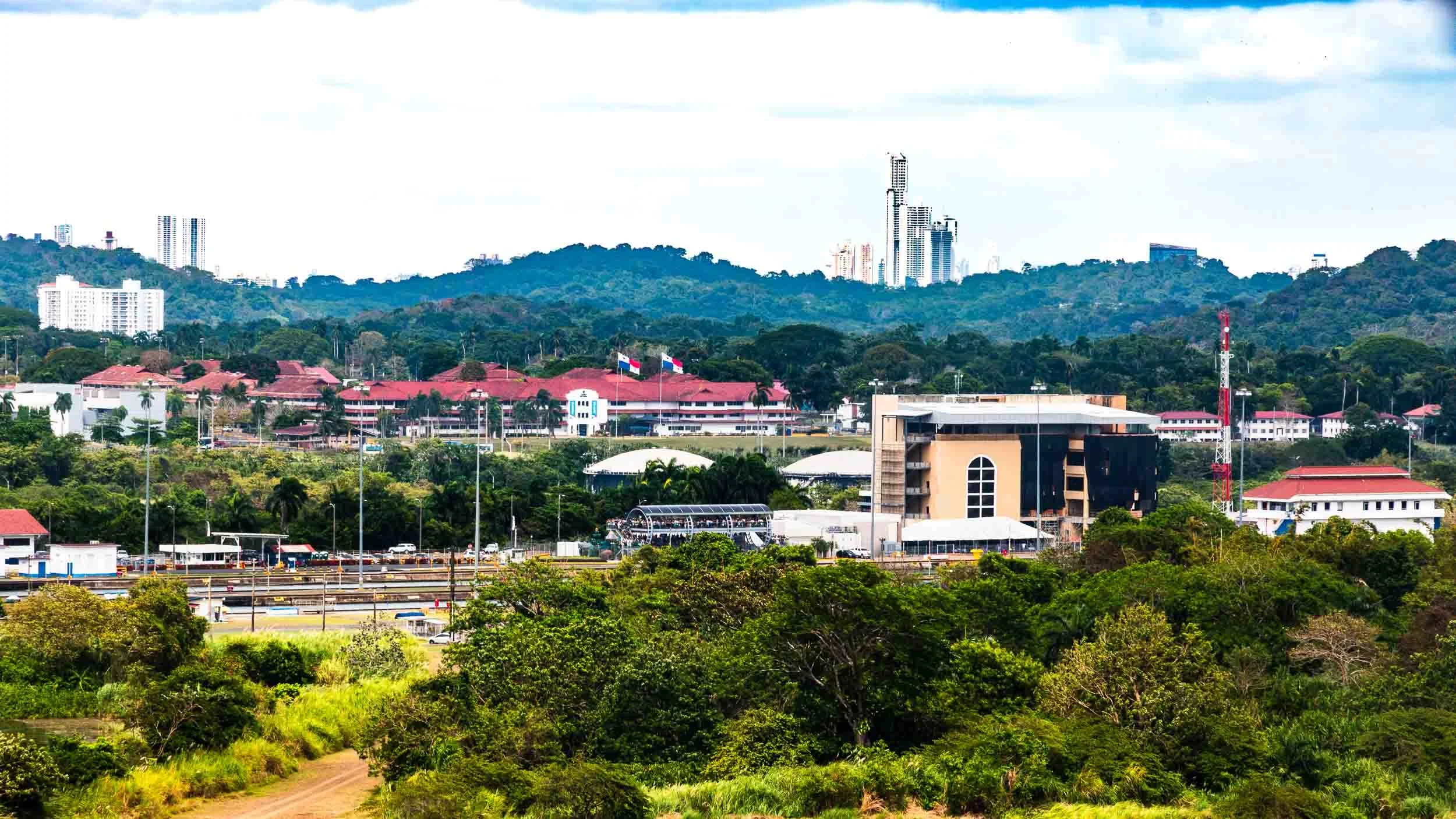
Looking towards the Miraflores Locks and Visitor Center from the Gatun Lake.
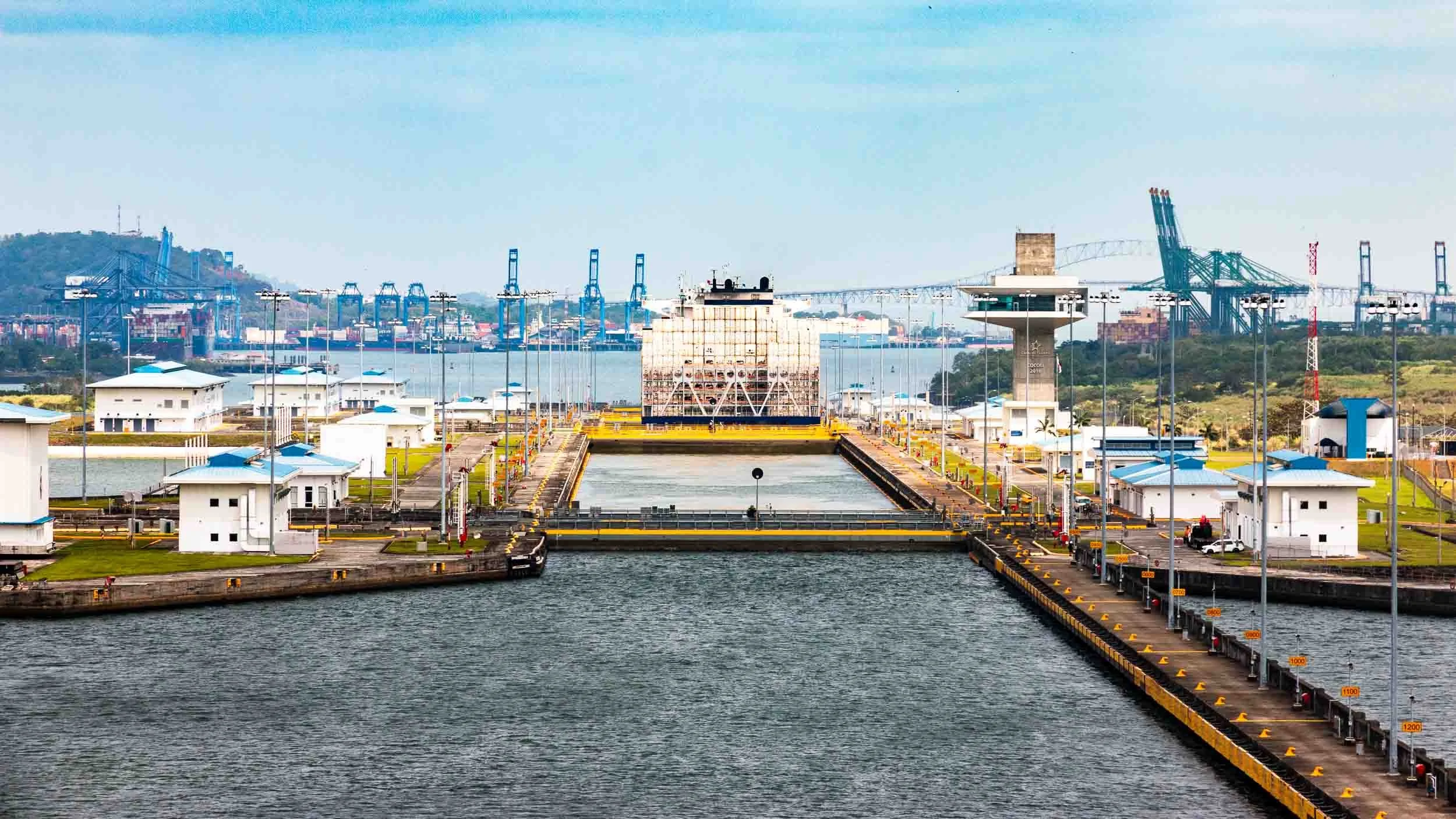
Approaching the Cocoli Locks (the Pacific-side expansion locks) to be brought down to the Pacific level. There is one vessel ahead of us.
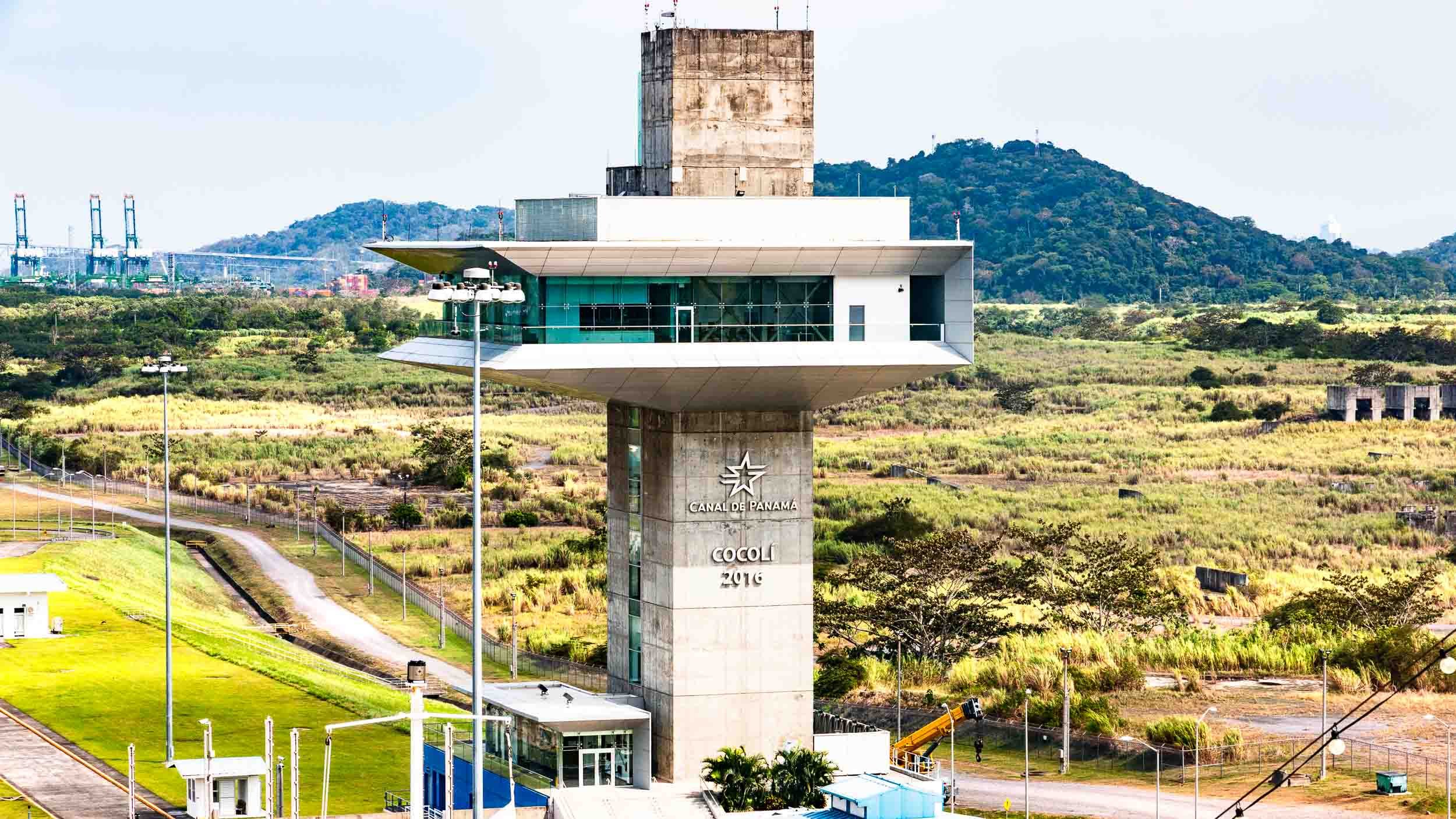
Control station at the Cocoli Locks.
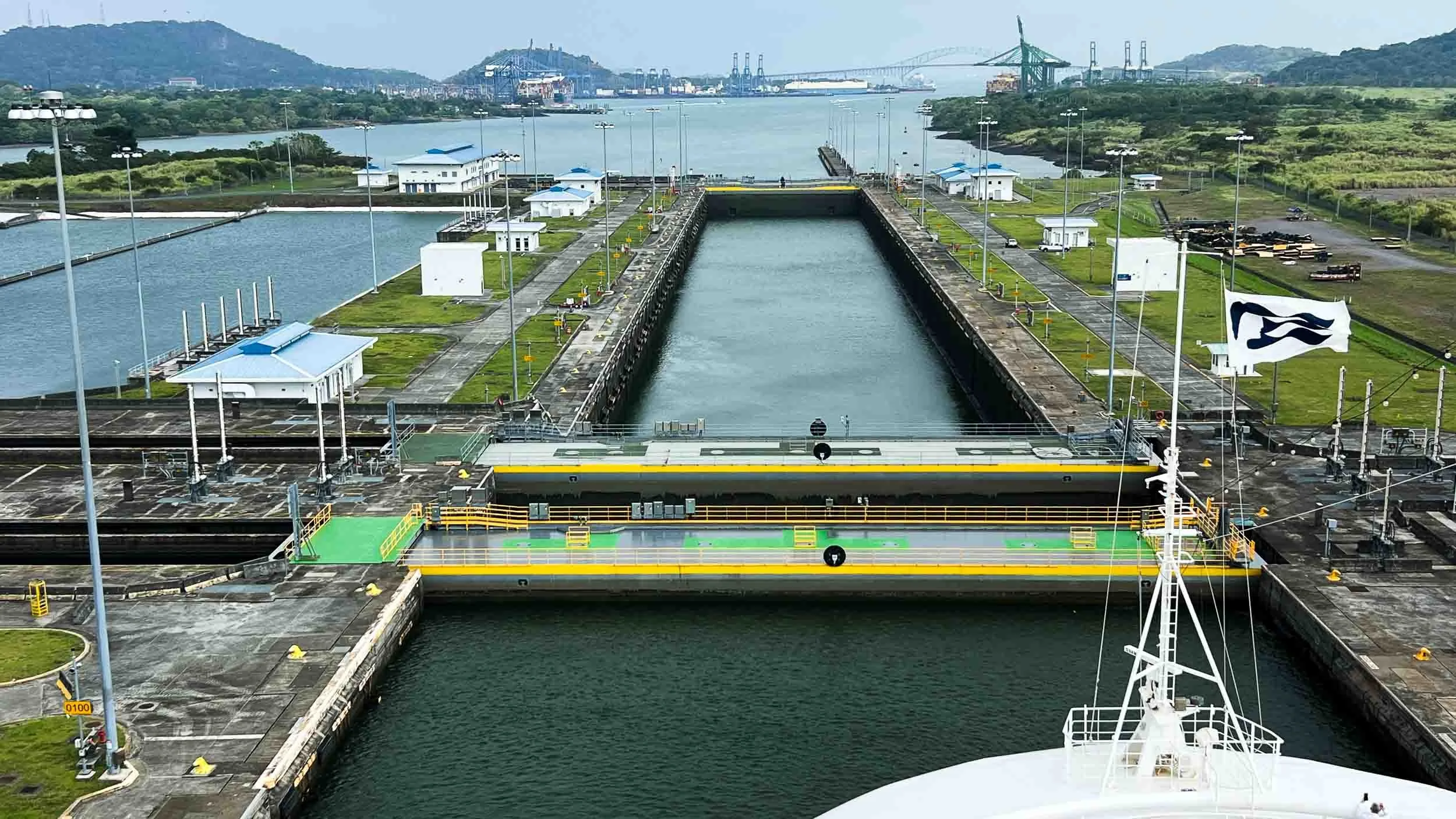
The Cocoli Locks, the last of the new locks before entering the Pacific Ocean.
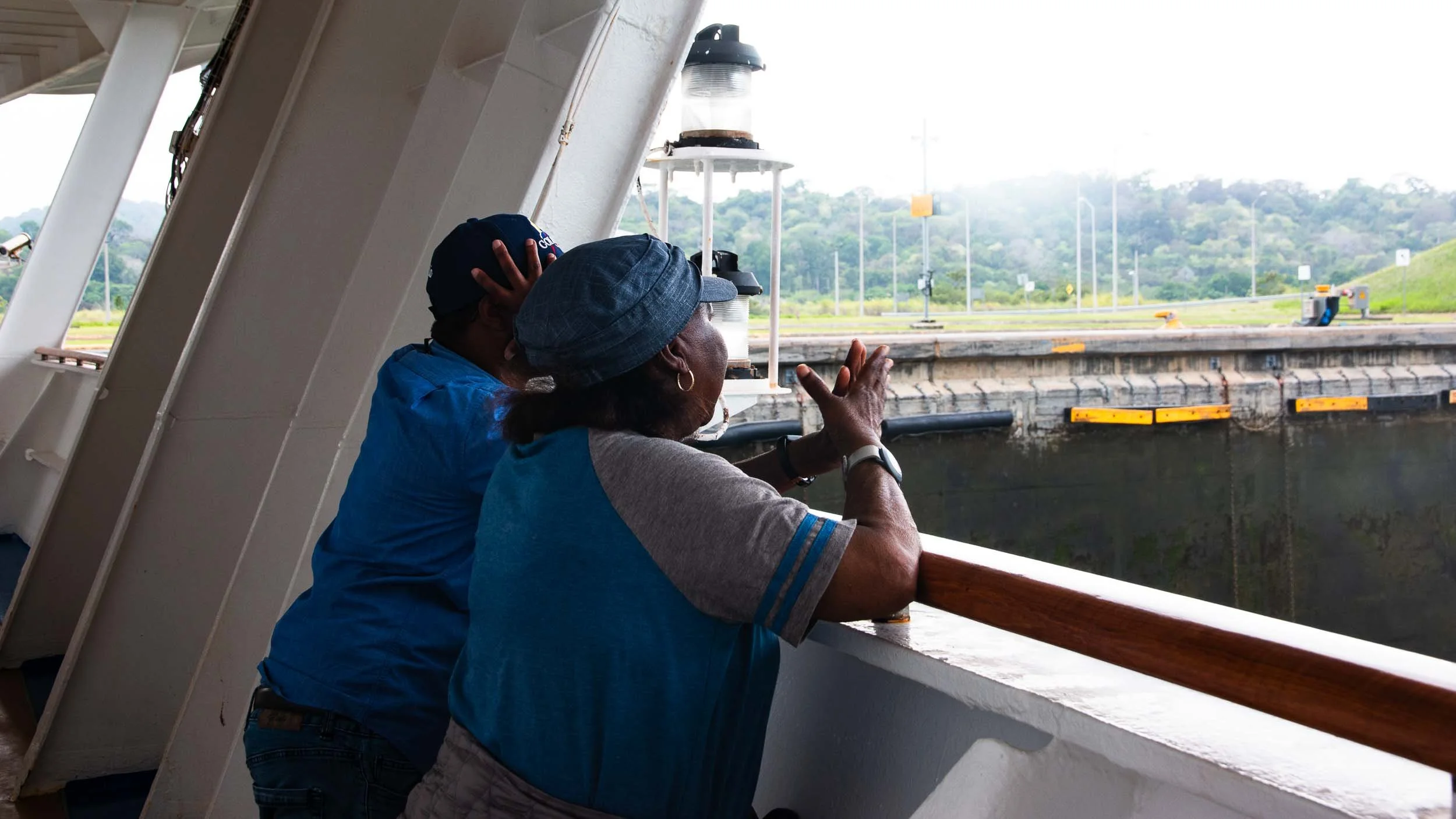
Just taking in the scene.
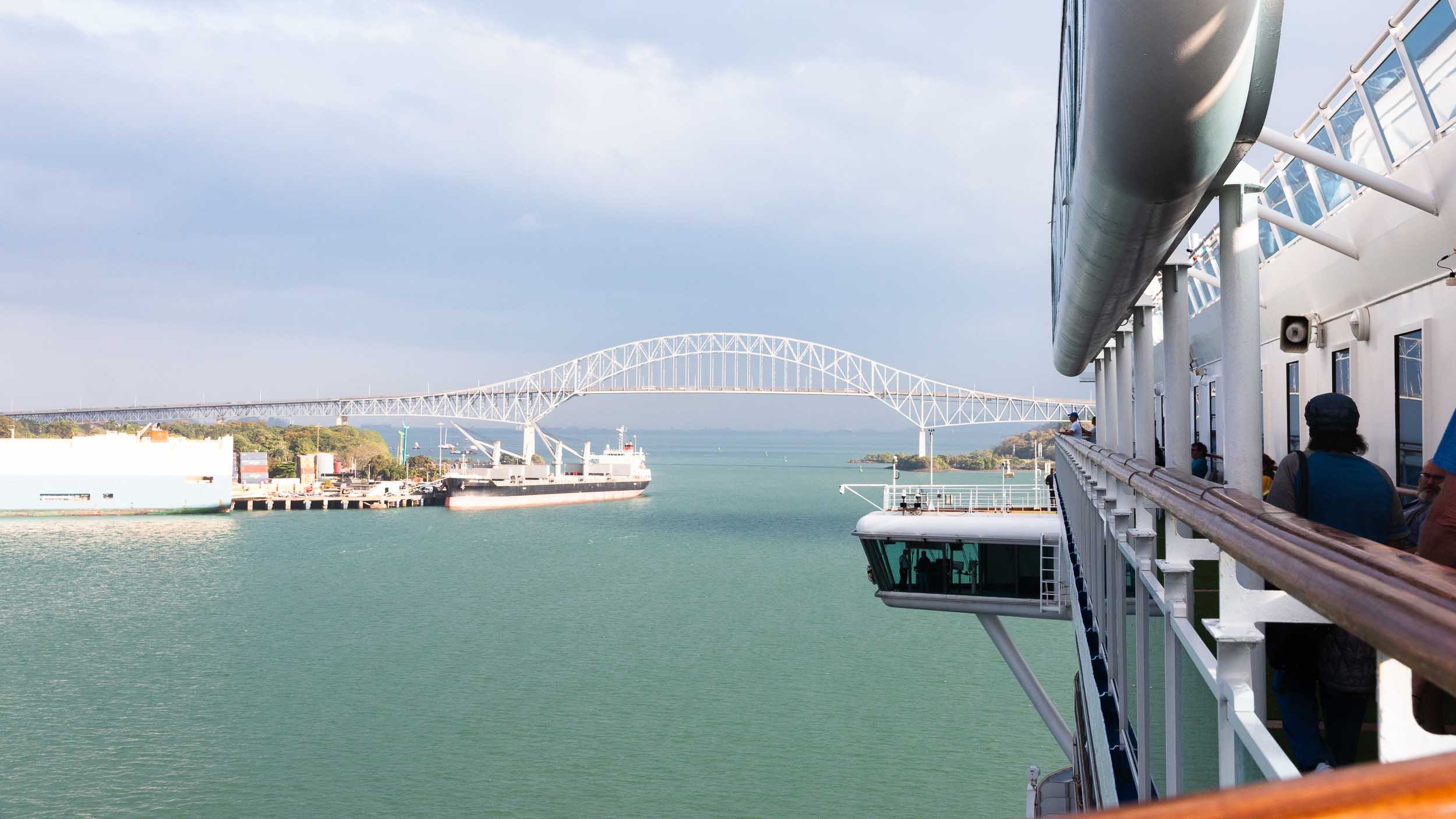
Approaching the Bridge of the Americas
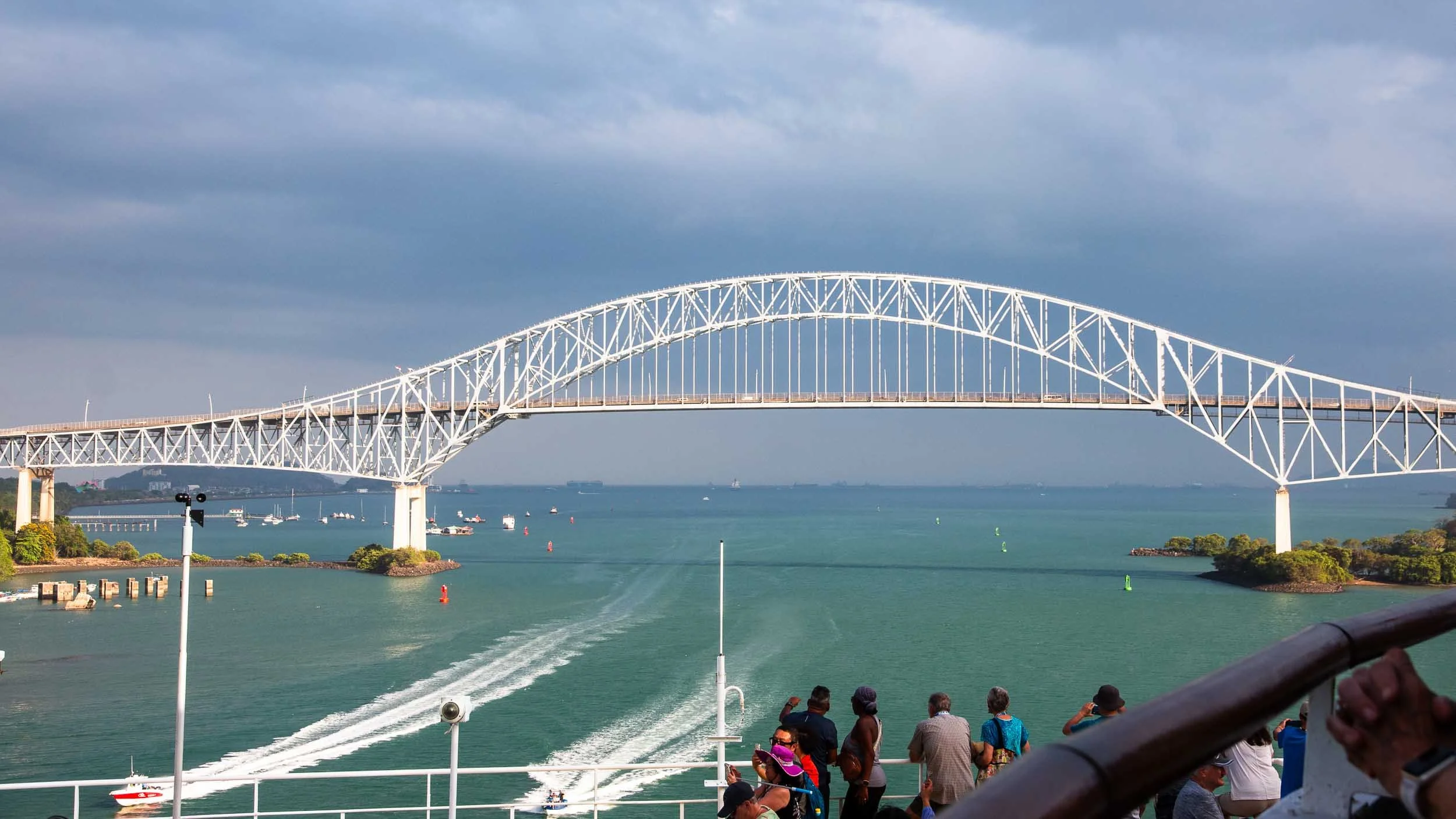
April 19 at 4:52 PM (9 hrs and 27 min later) we are about to pass under the Bridge of the Americas and enter the Pacific Ocean.
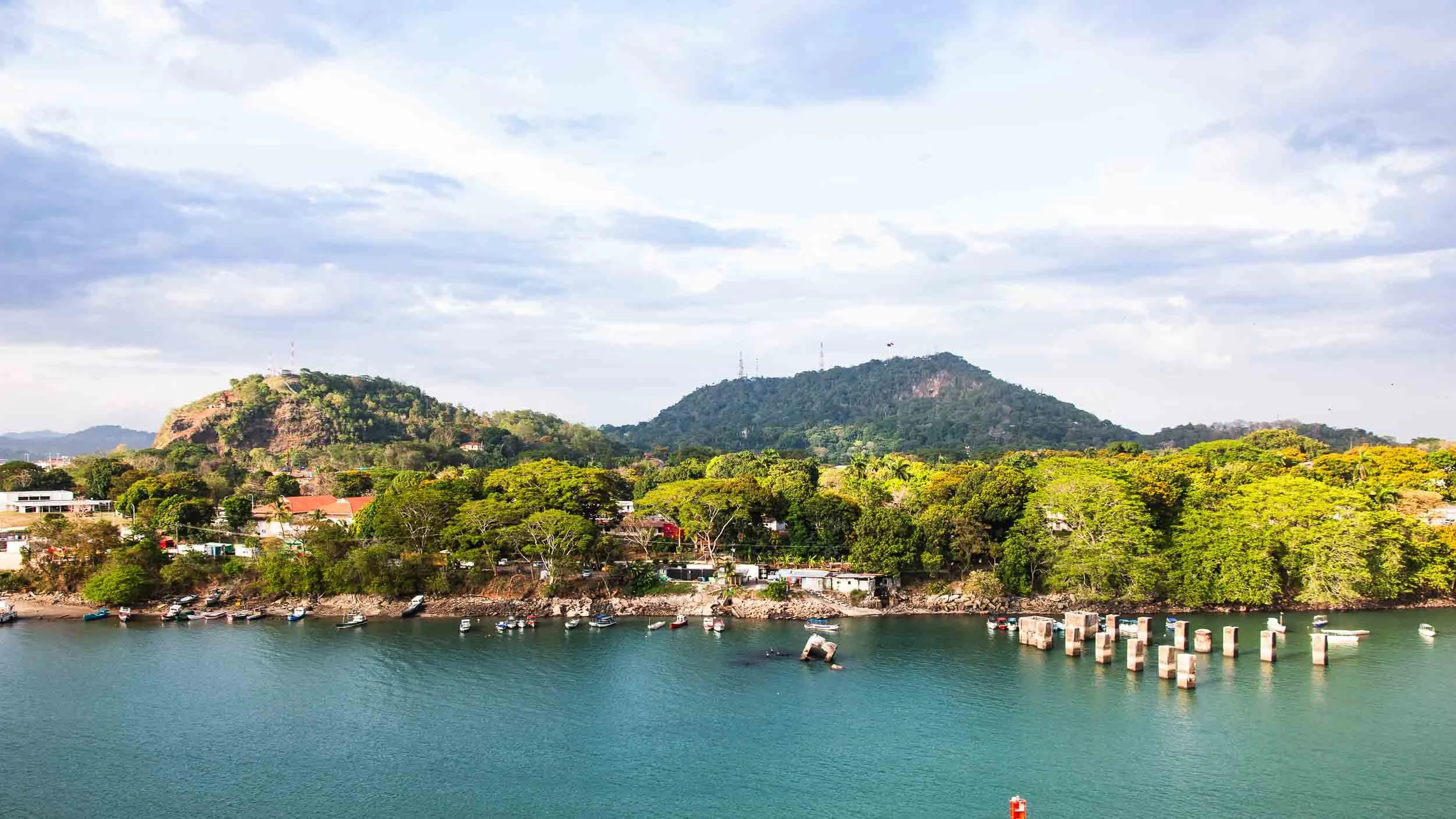
Another view of Ancon Hill, the highest peak in Panama City.
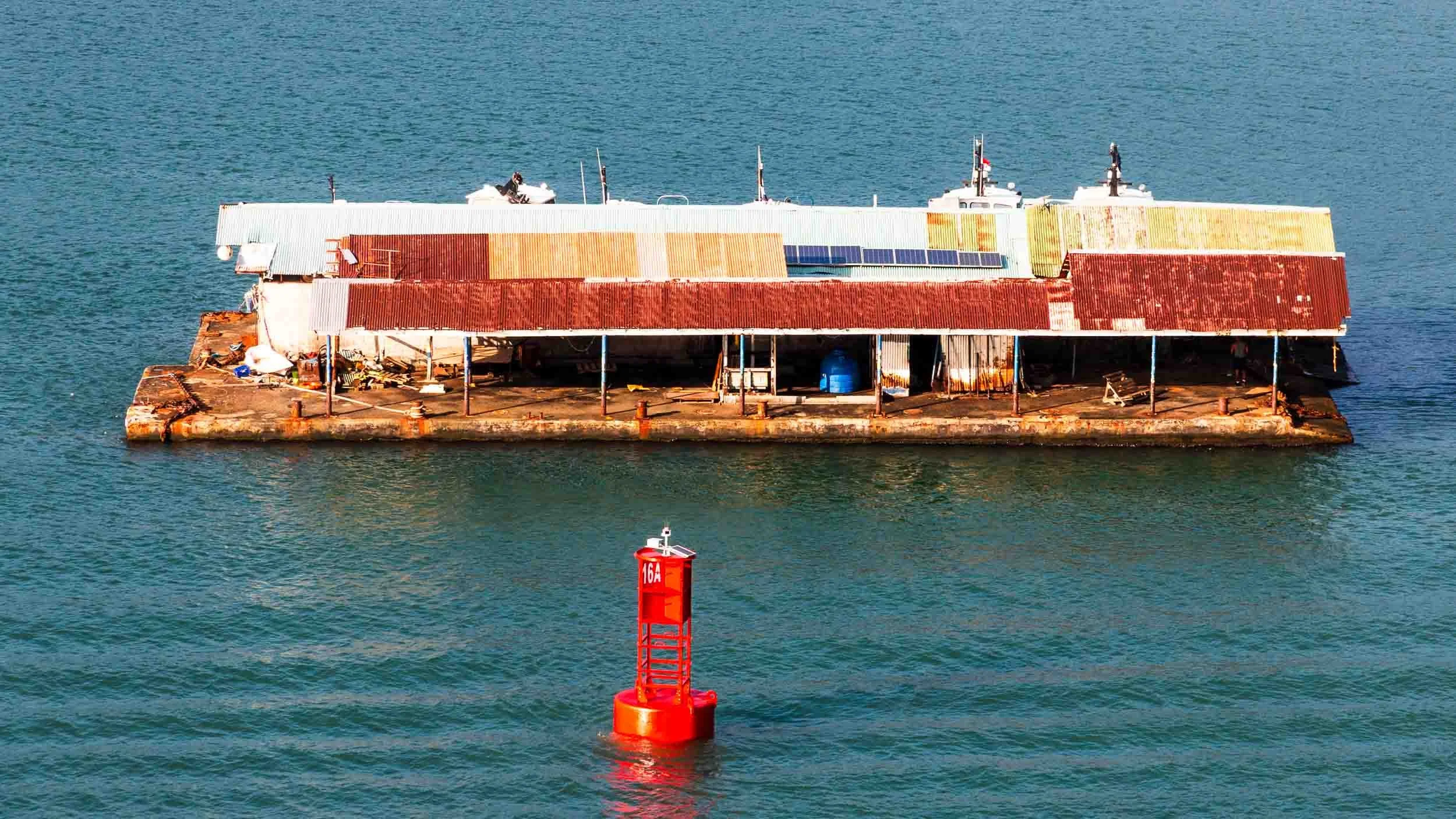
A floating maintenance or support barge near Cocoli Locks.
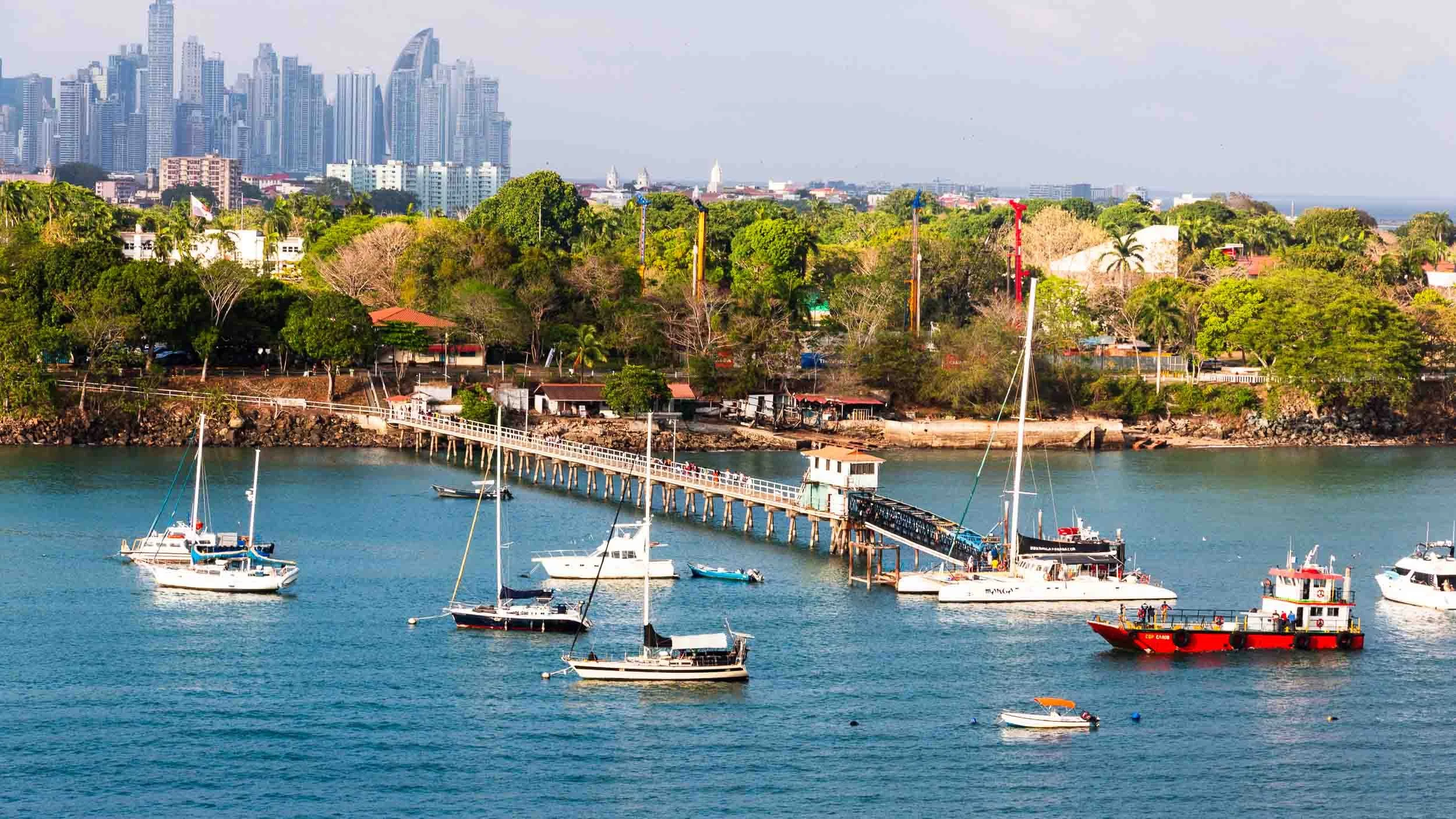
A view of Panama City taken from the Bay of Panama. The buildings in the background are in the Financial District.
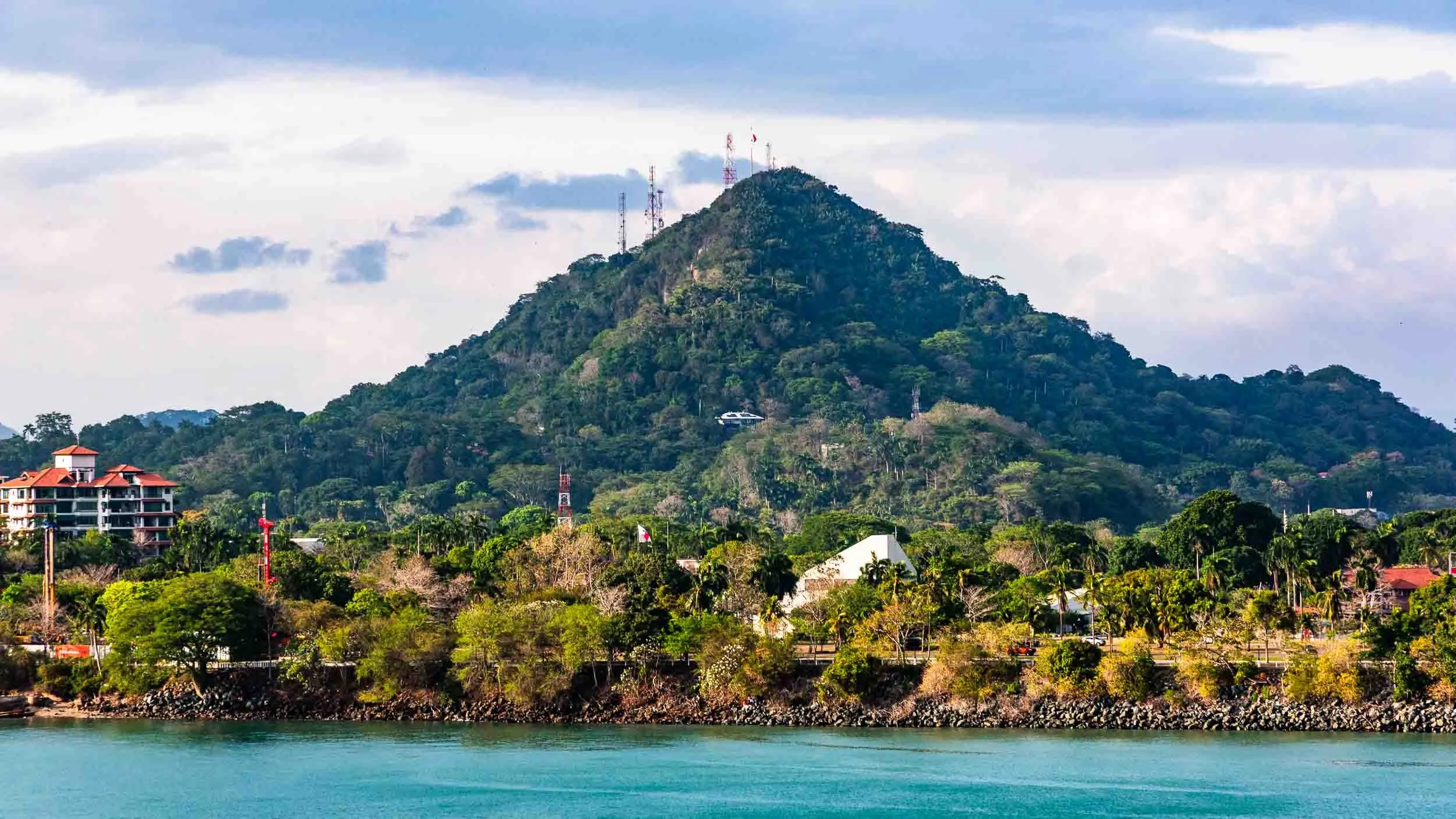
Ancon Hill (Cerro Ancon), the highest point in Panama City, overlooking the Pacific entrance of the Panama Canal.
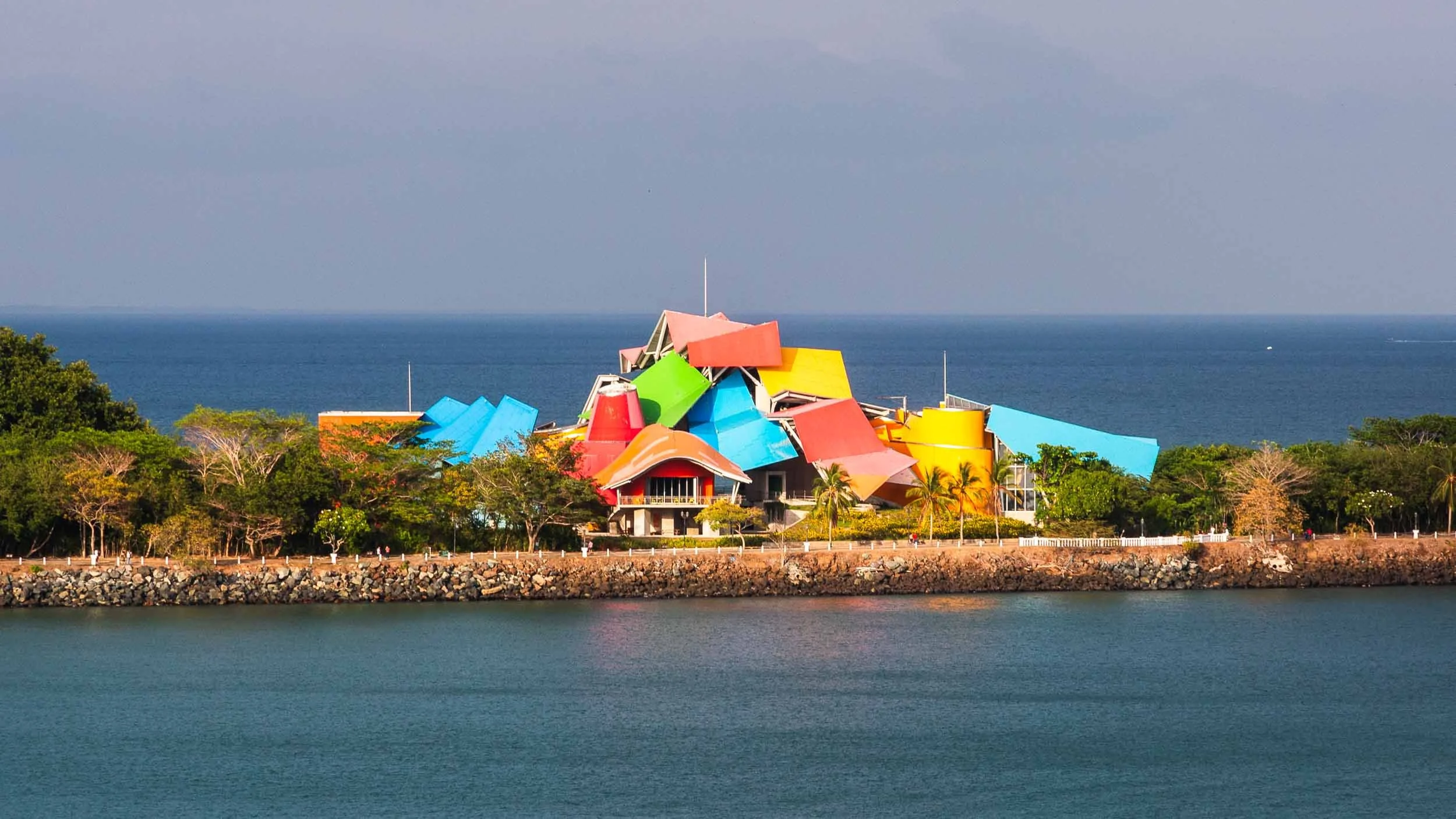
Biomuseo (Biodiversity Museum) by Frank Gehry

Our very friendly crew on the Caribbean Princess.
PART 2
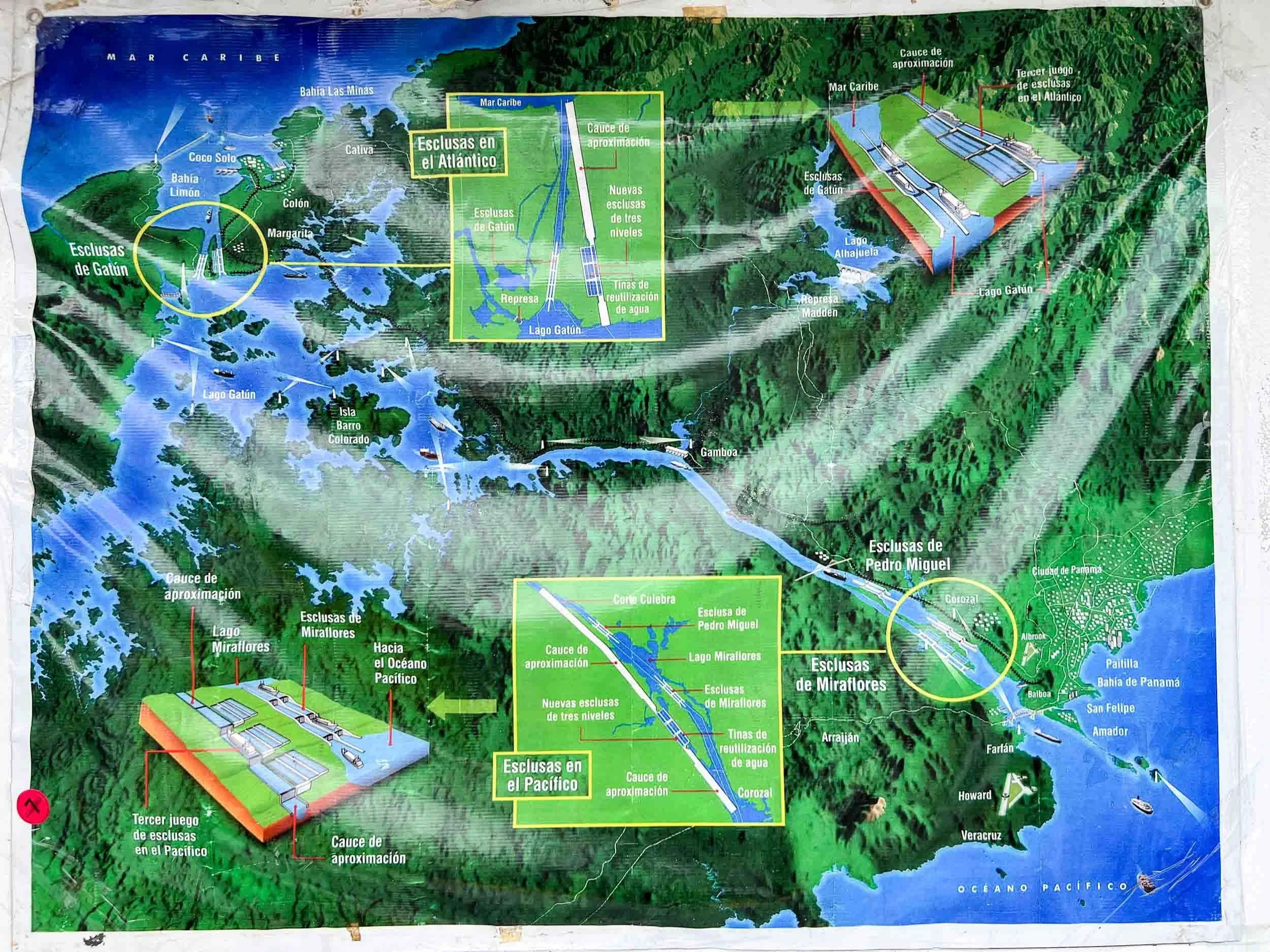
On April 20 we boarded a tour boat at Gamboa and toured the Canal heading south via two of the “old” 1914 Locks, the Pedro Miguel and the Miraflores. We exited at the Pacific Ocean. The photos below capture that portion.
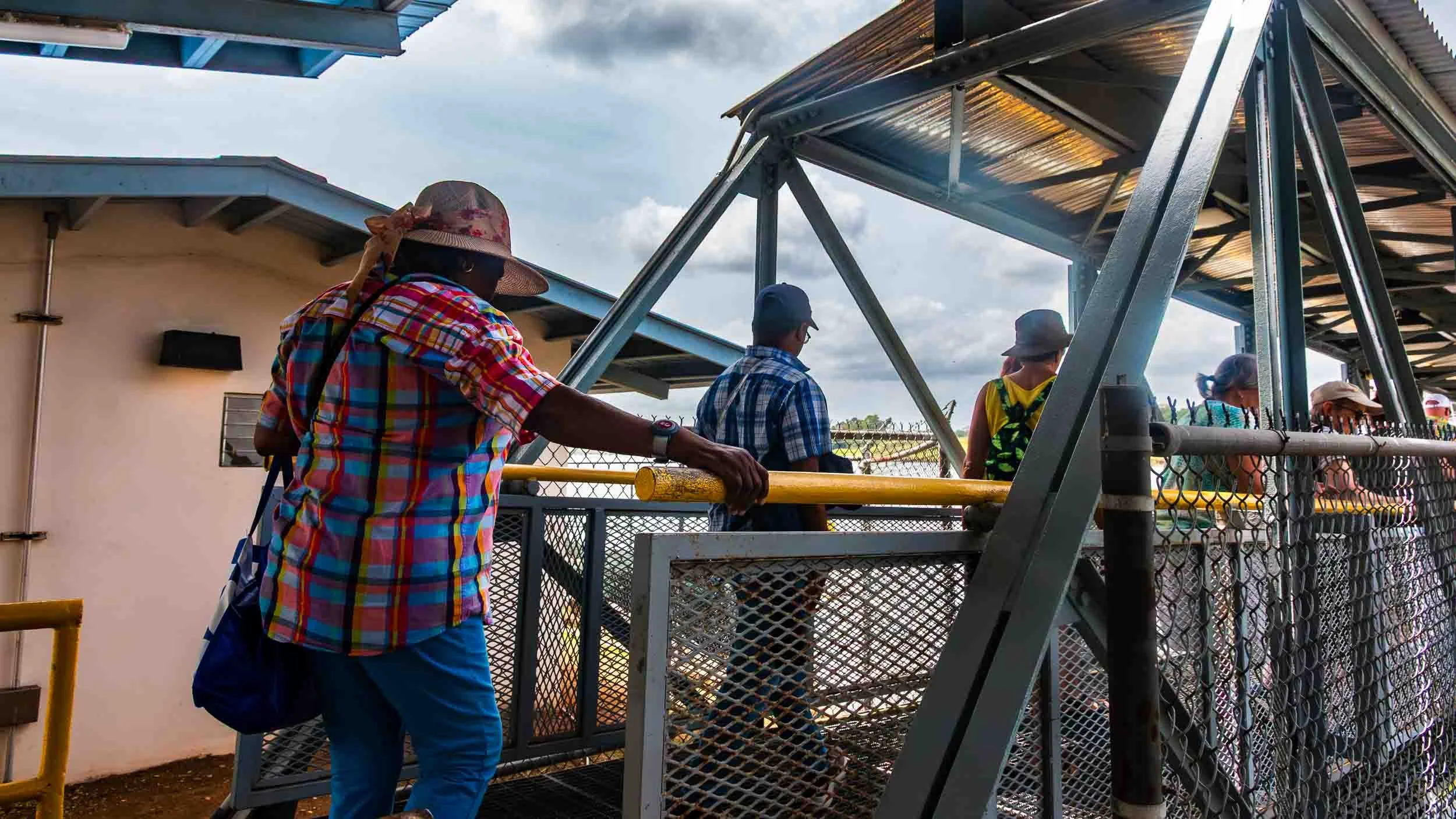
Boarding our tour boat in Gamboa.
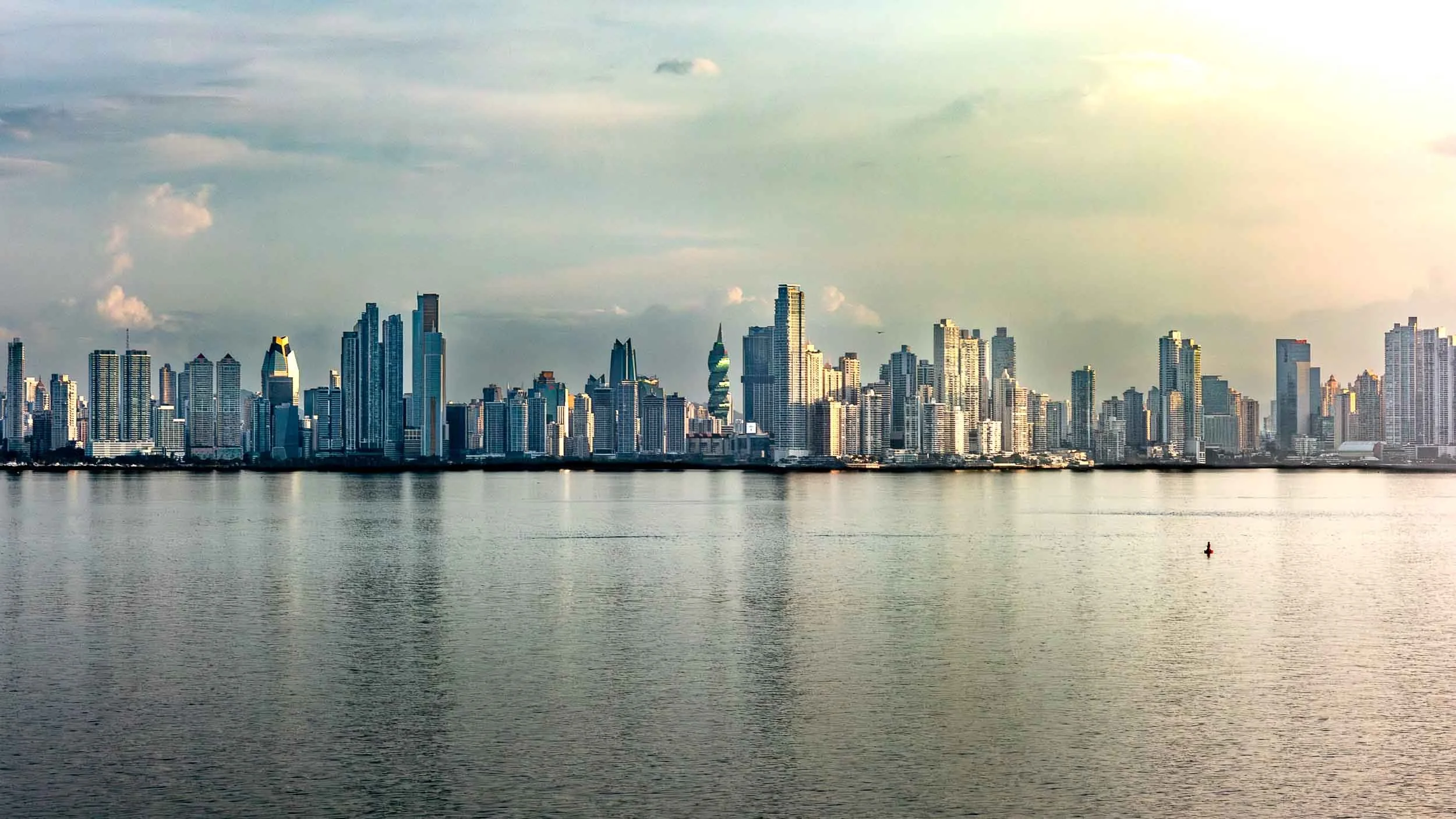
Financial district of Panama City with the world recognizable F&F Tower in the center. it is known for its spiral or corkscrew shape.
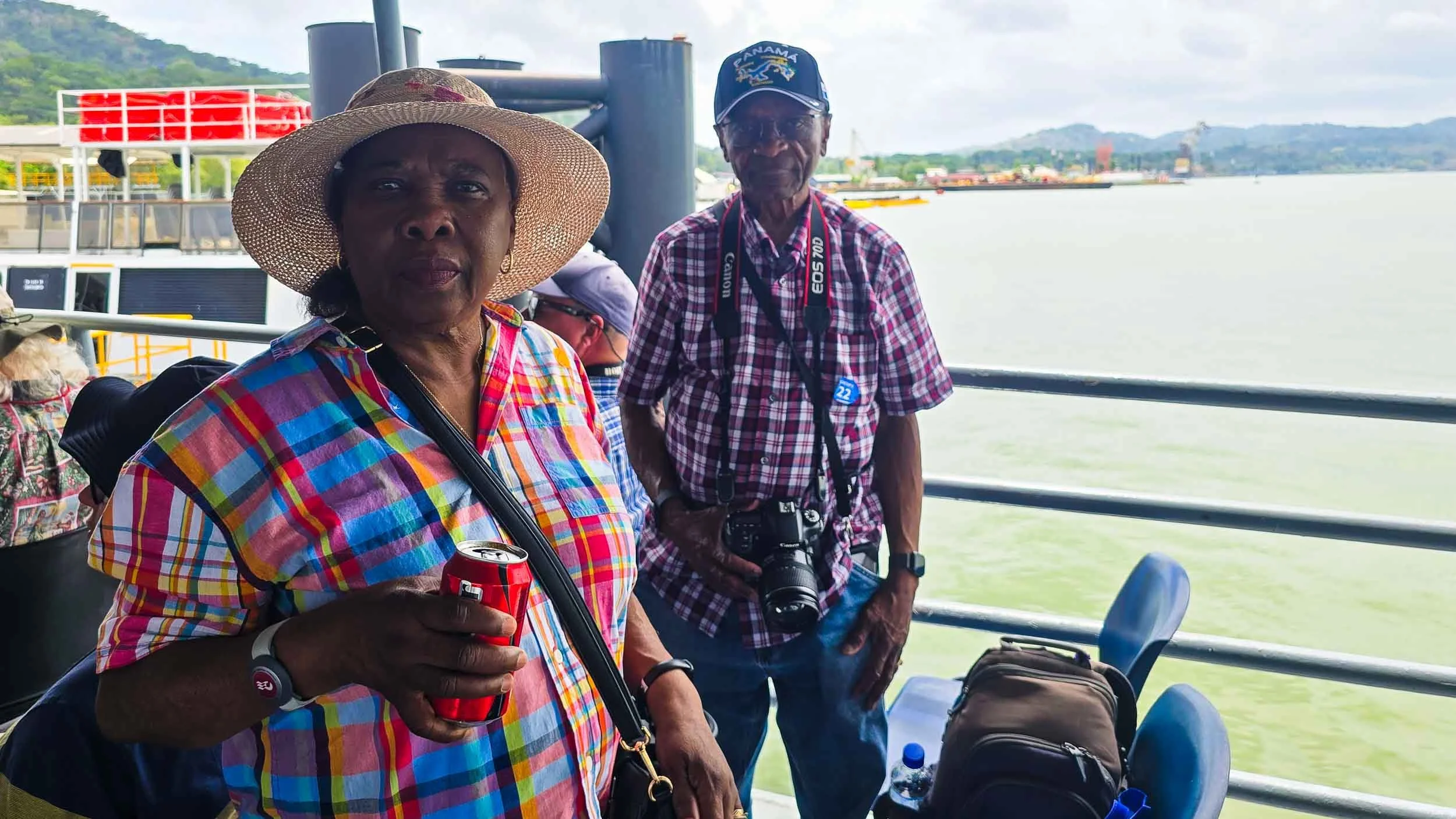
April 20, 2025: We are about to tour the Panama Canal on one of the tour boats. We boarded at Gamboa and will be heading south to exit into the Pacific Ocean.
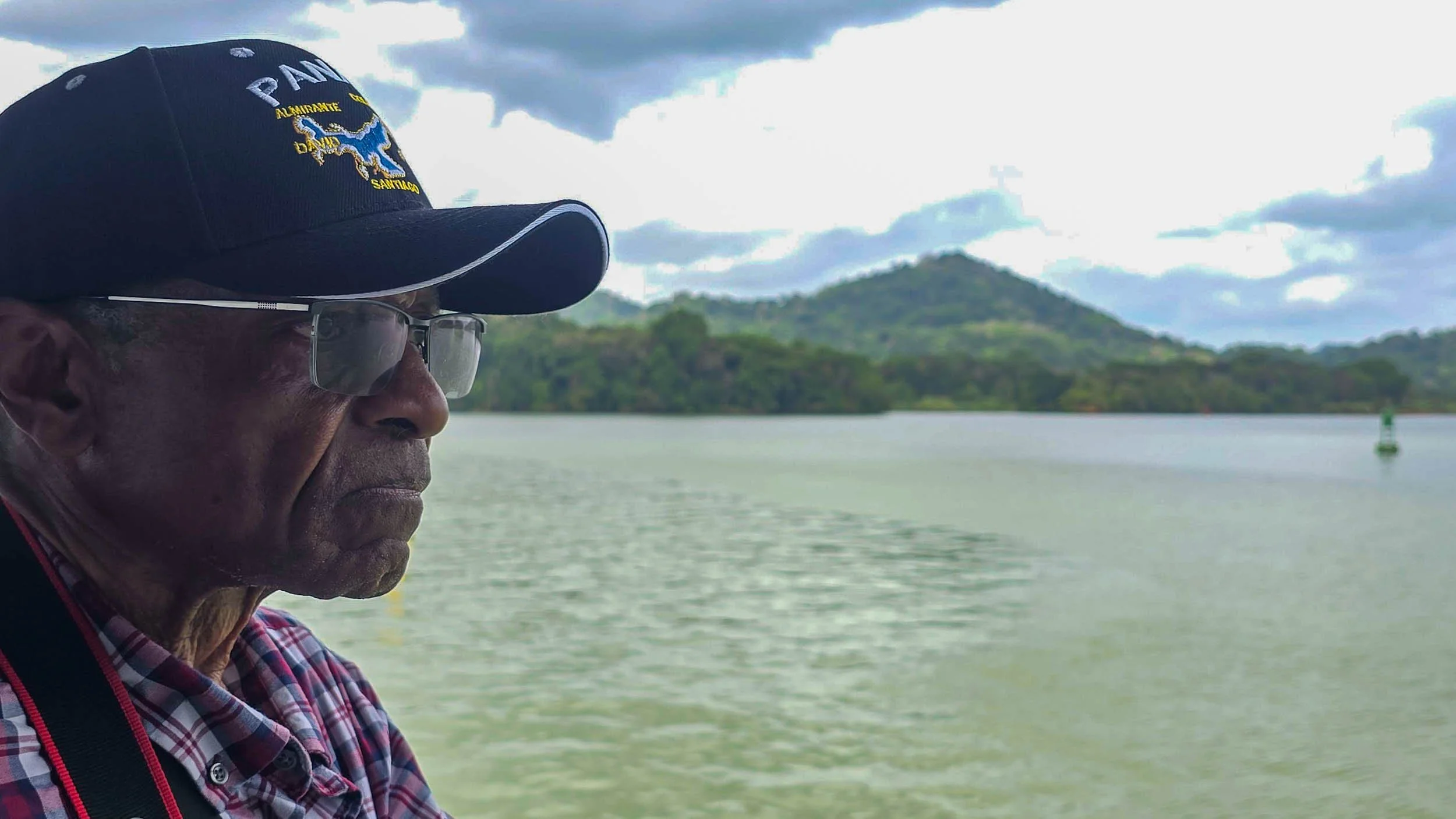
Cruising the Gatun Lake.
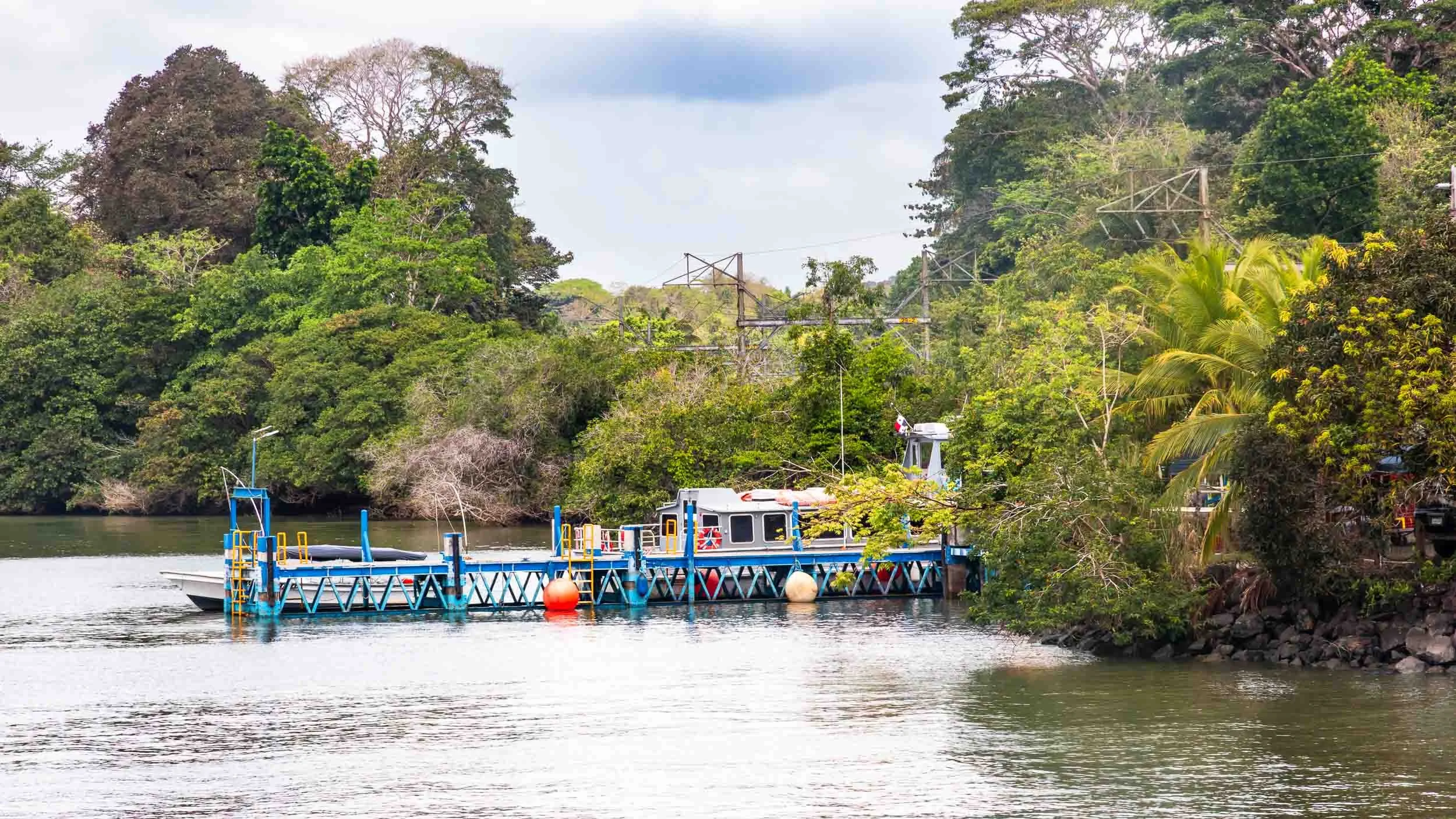
A service vessel and a floating maintenance dock.
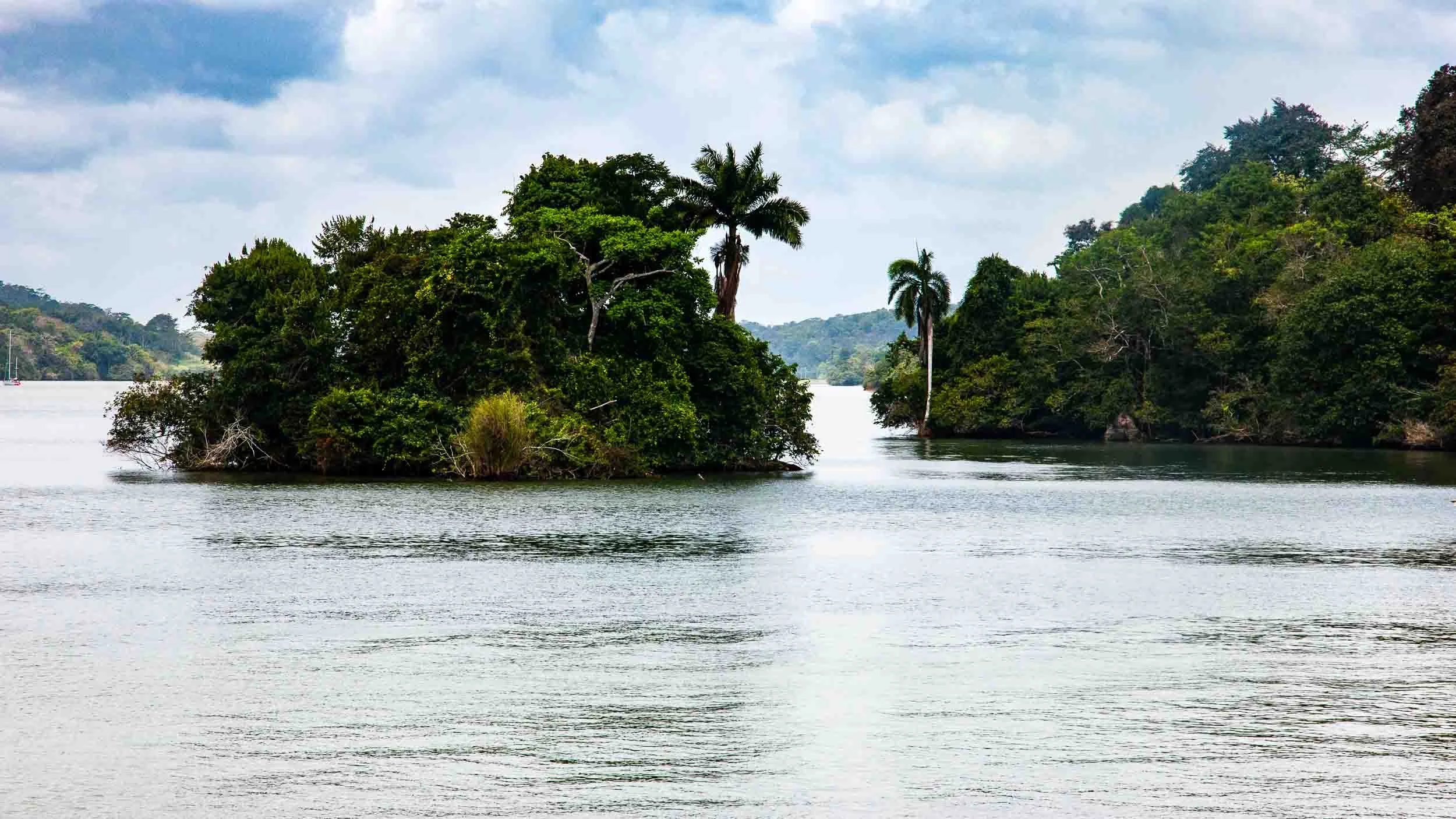
Cruising the Gatun Lake.
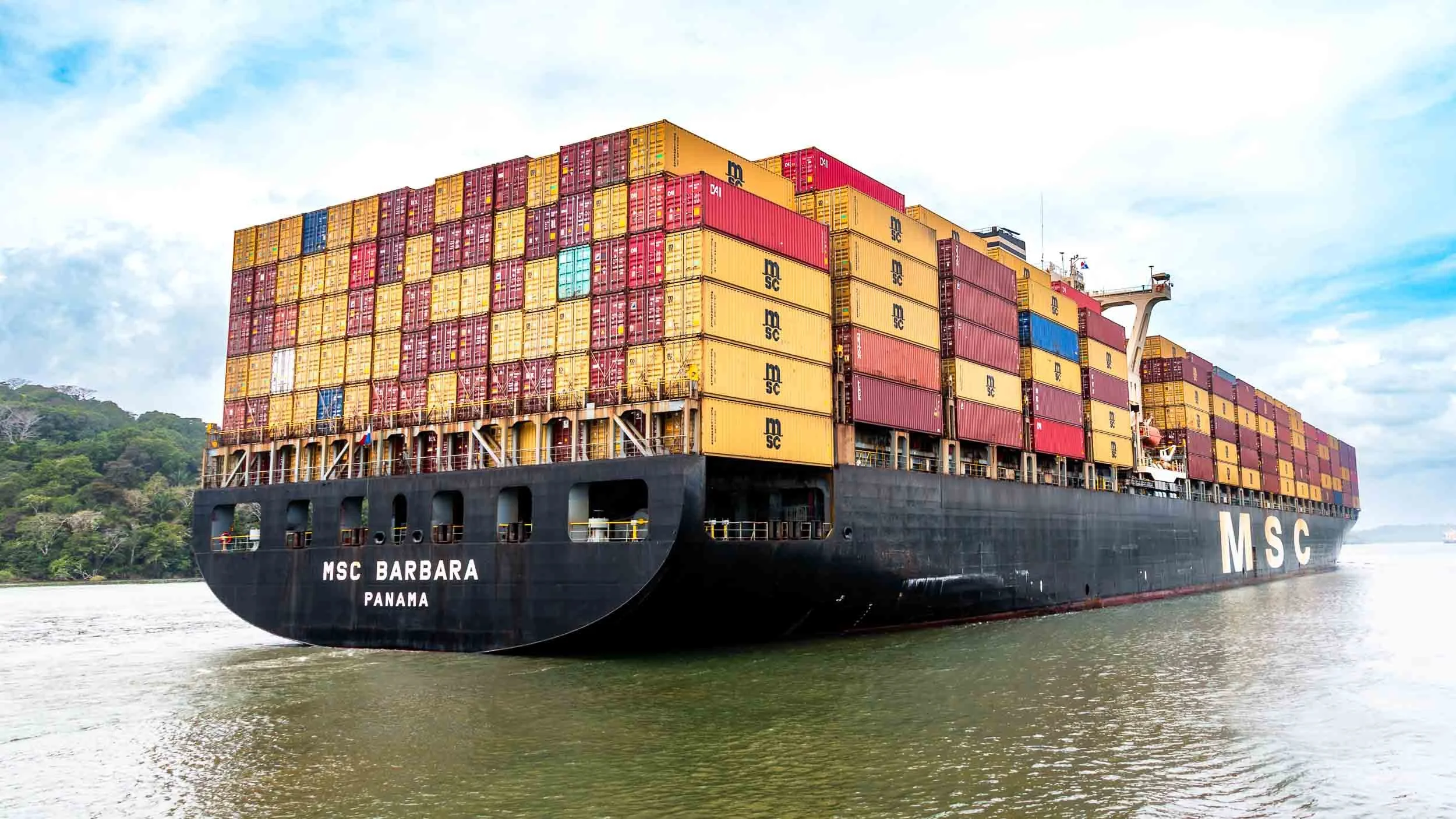
Fully laden container ship heading for the Locks.
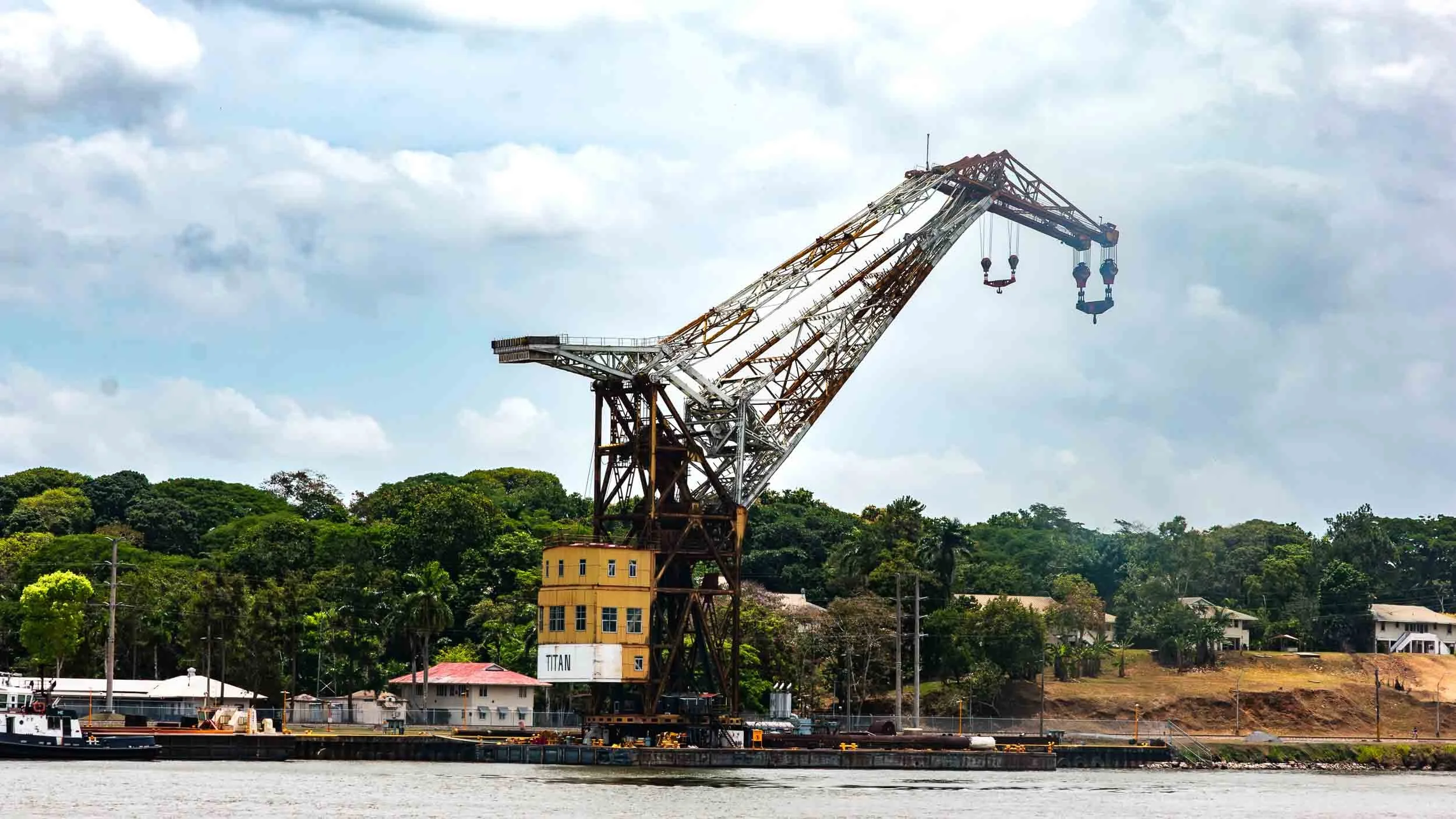
This Titan crane was built by the Germans during WWII but was captured by the US after the war, and was used at the Long Beach Naval facility in California for 50 years before being brought to the Panama Canal in 1996. It was nickname "Herman the German" while in Long Beach.
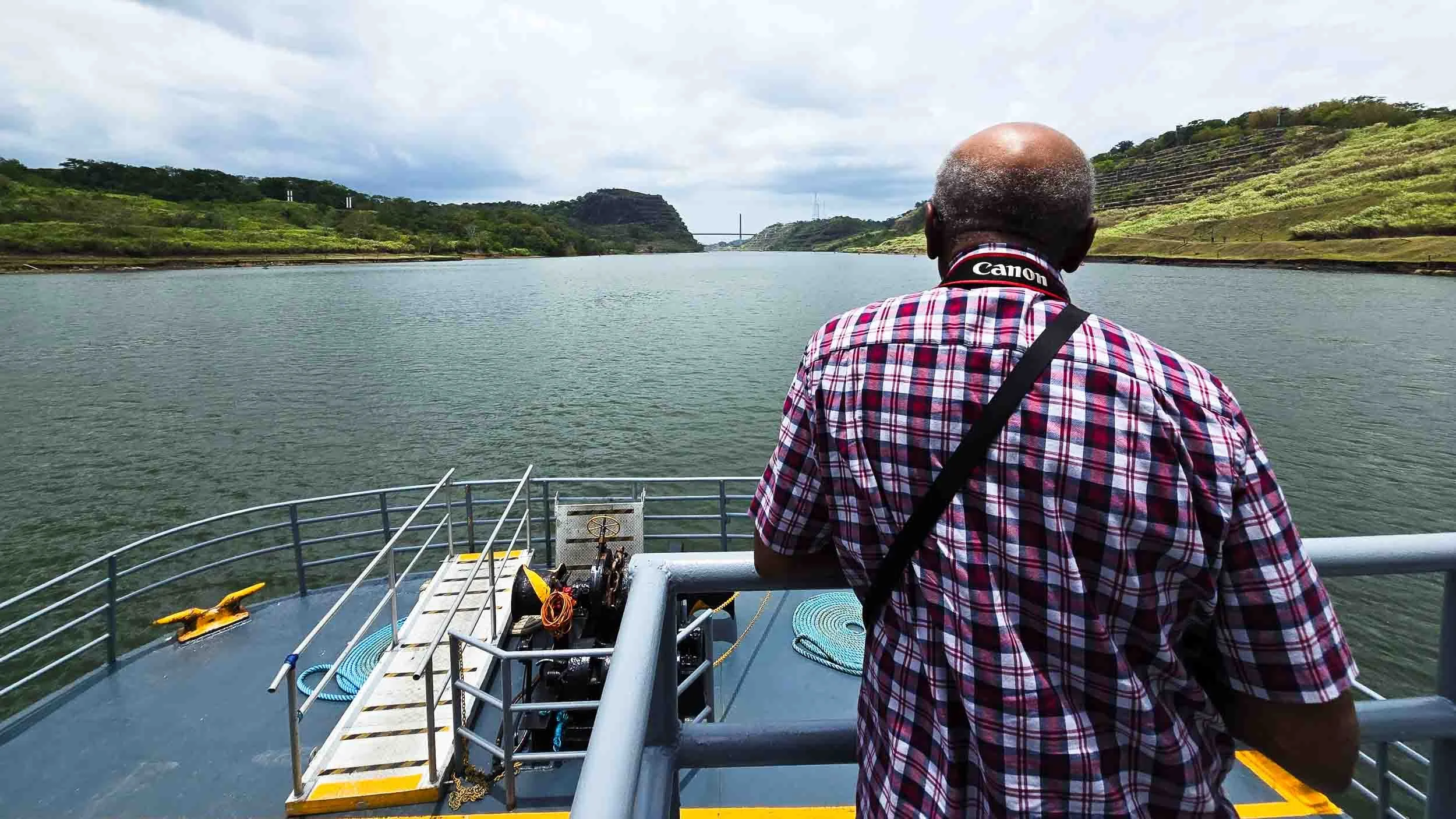
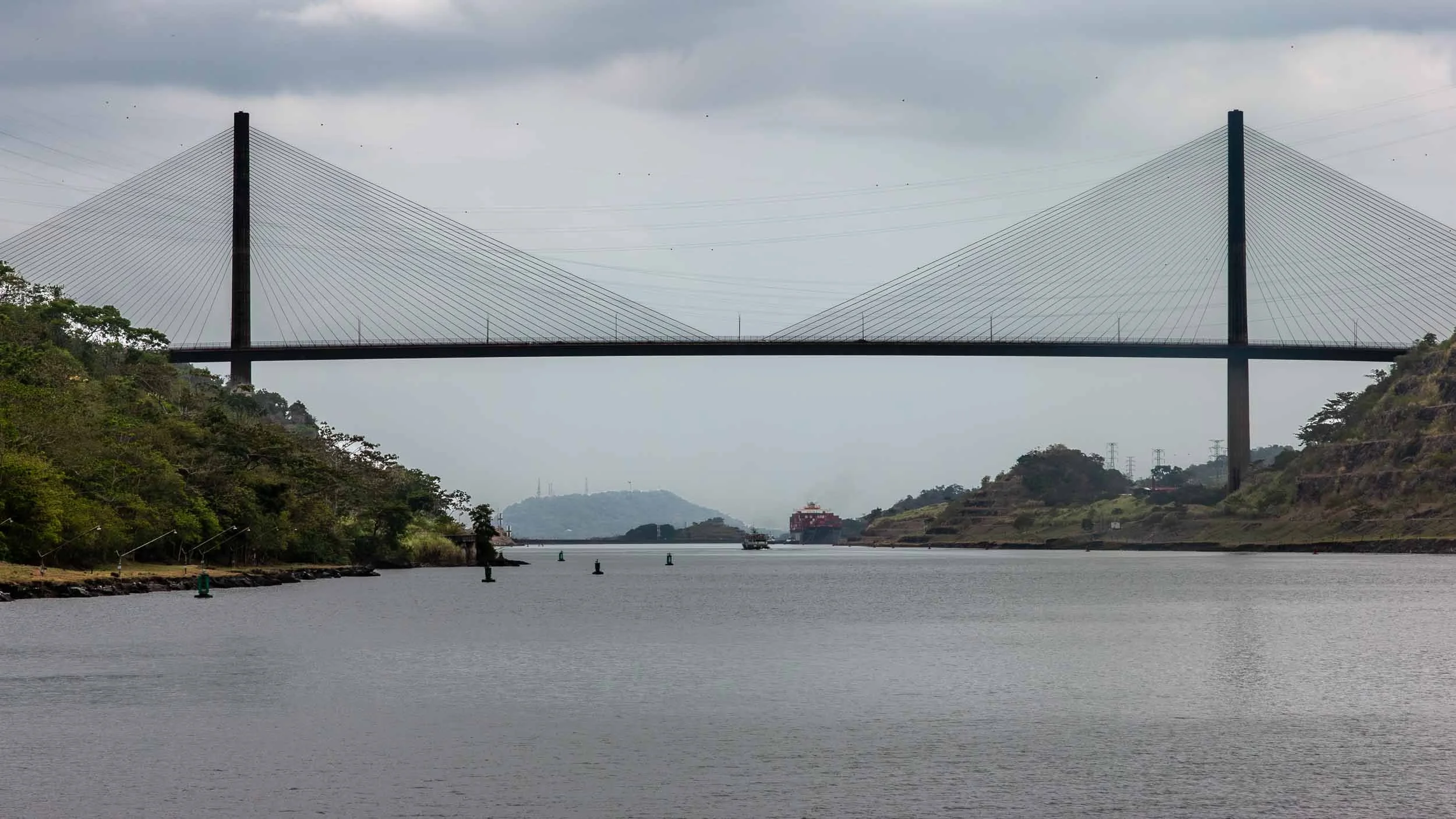
Centennial Bridge (Spanish: Puente Centenario) spanning the Culebra Cut. Inaugurated in 2004, it is notable for its two 604-ft towers.
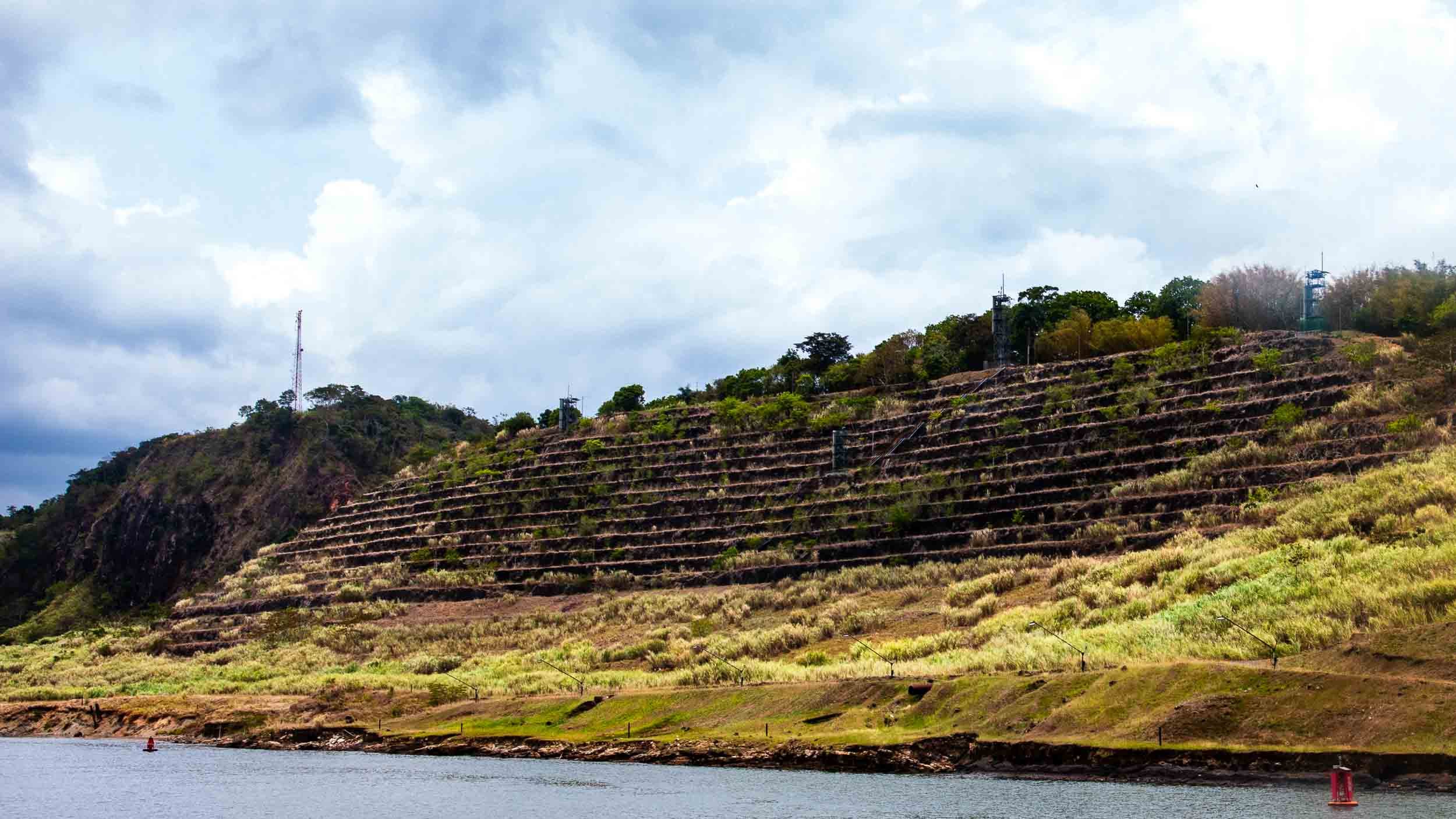
Contractors Hill section of the Culebra Cut.
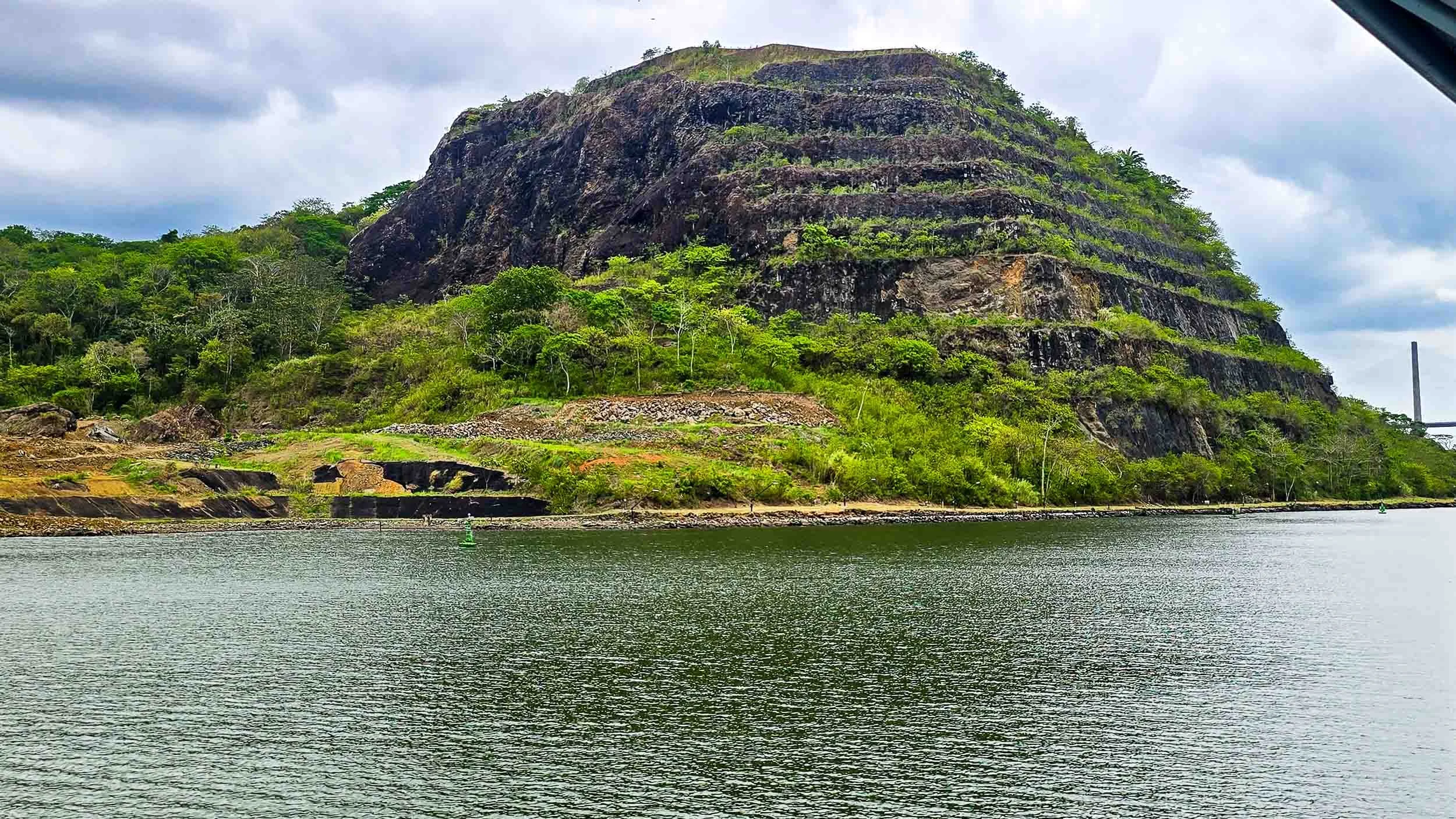
Gold Hill, the highest peak in the Culebra Cut (also known as the Gaillard Cut).
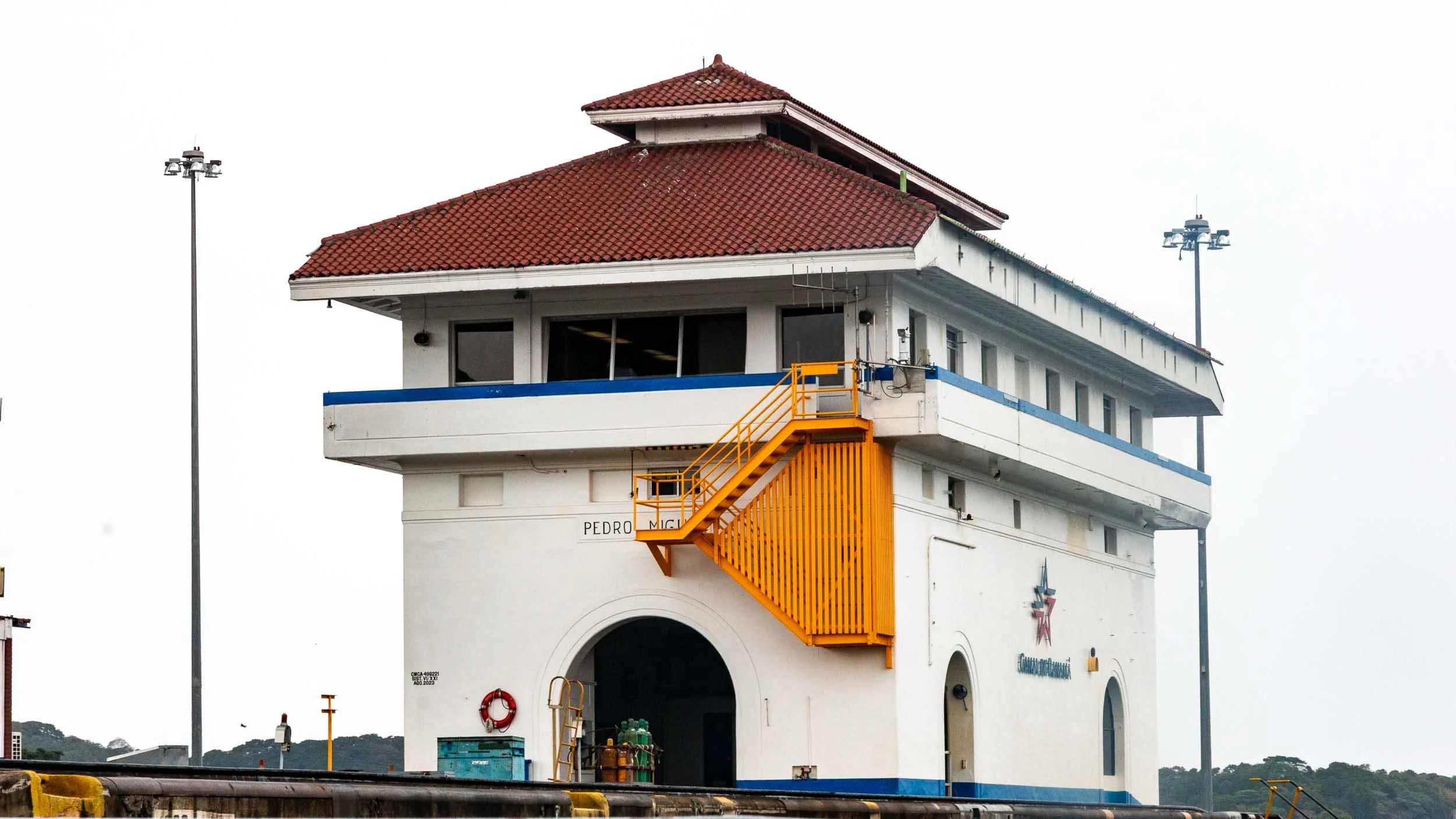
Station at the Pedro Miguel Locks
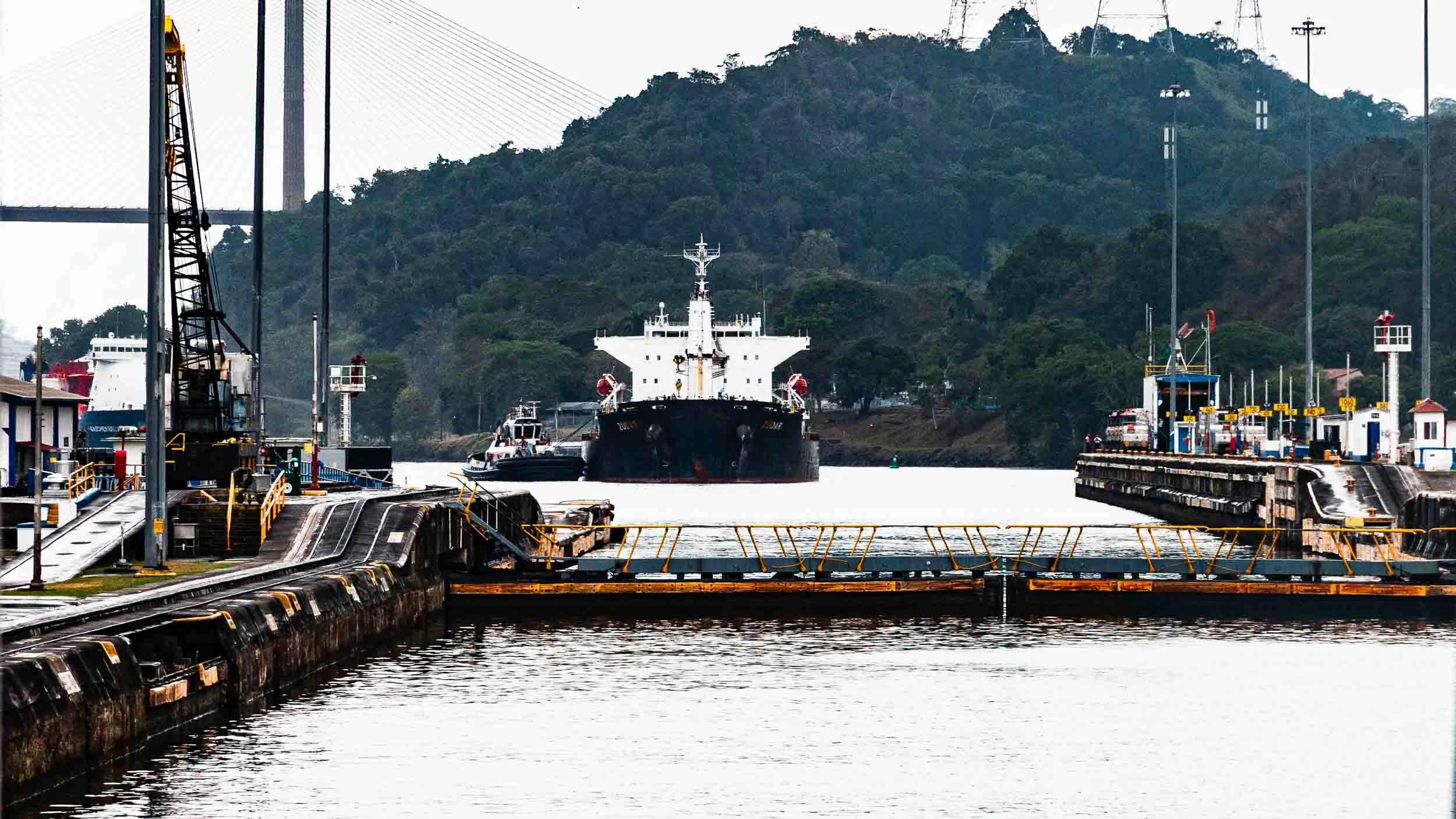
We are in the Pedro Miguel Locks and waiting for the large cargo ship to join us to make the ride through the locks more cost effective.
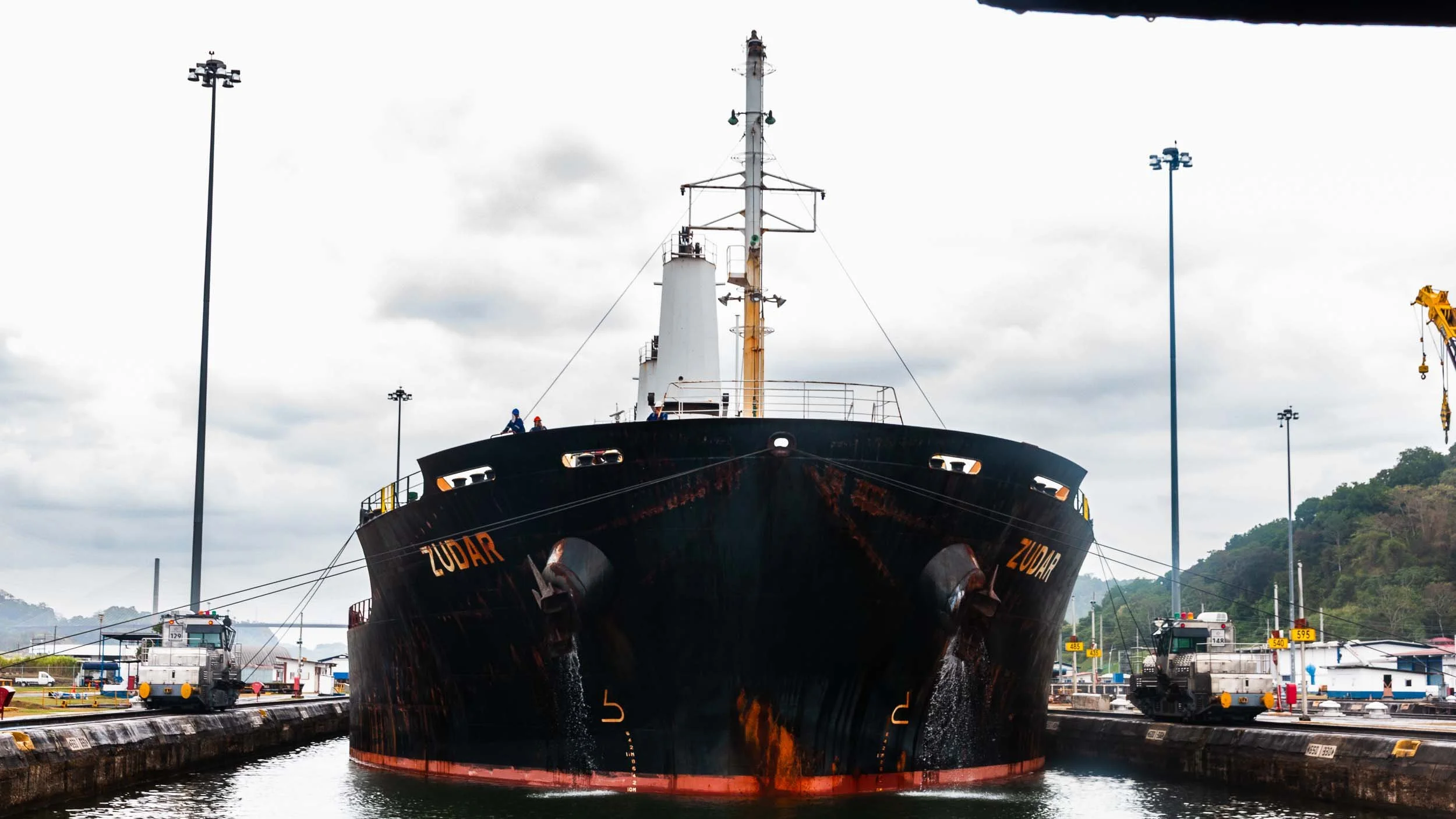
The ship is in and we are ready to go.
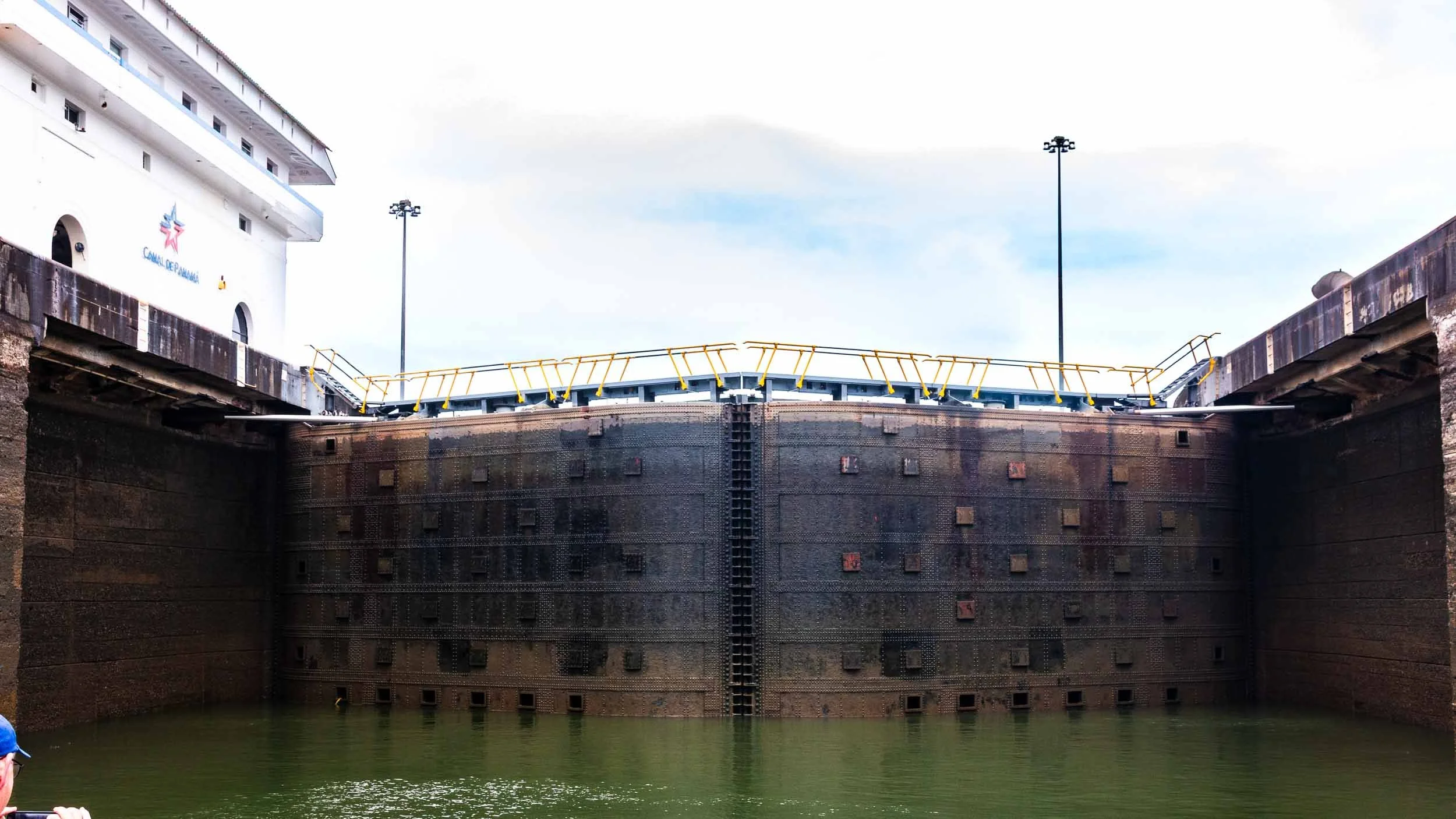
This is one of the miter gates of the "old" 1914 locks. This gate is hinged and when it opens we move forward through the locks.
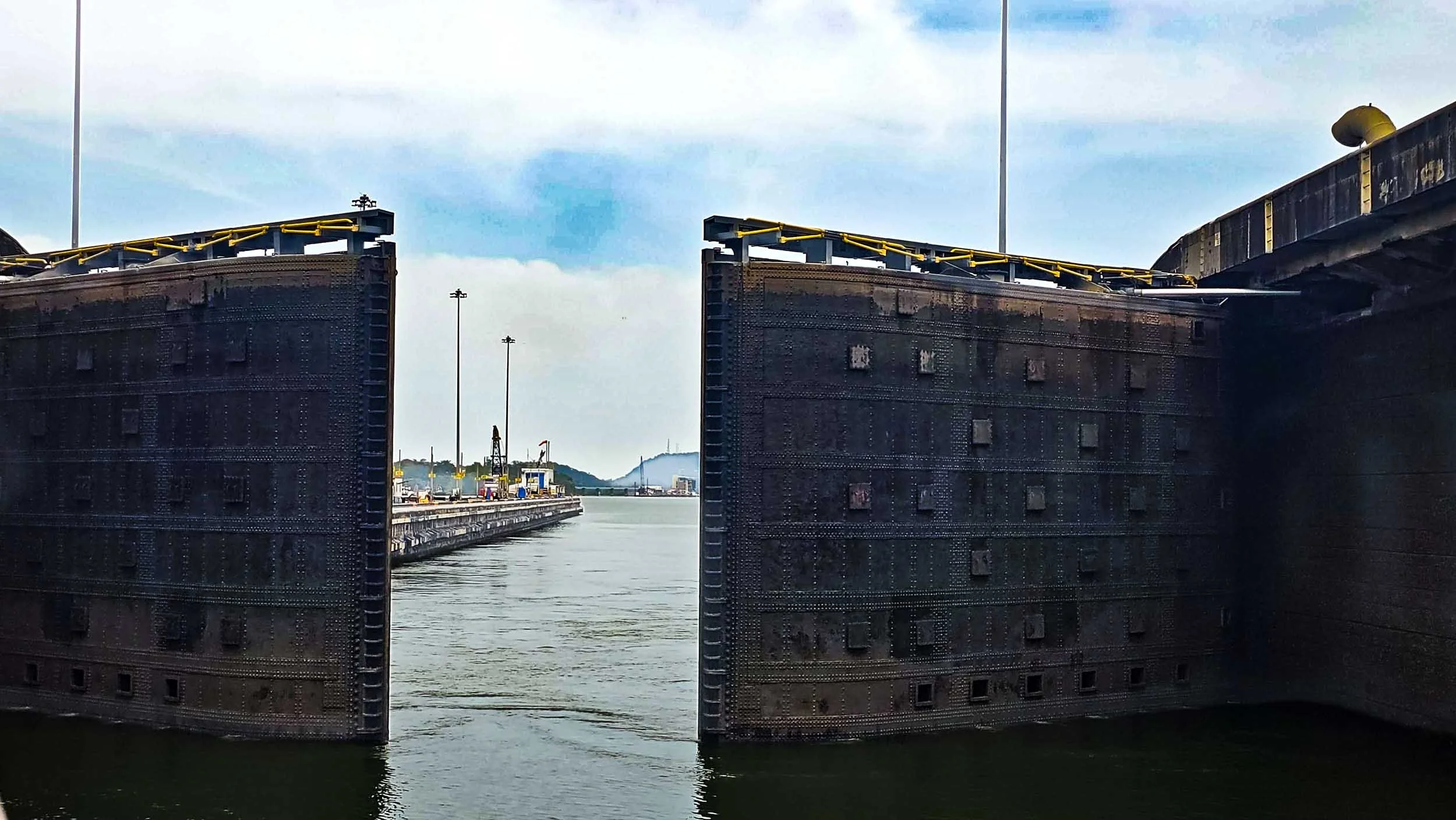
The gates to the locks start to open for us.
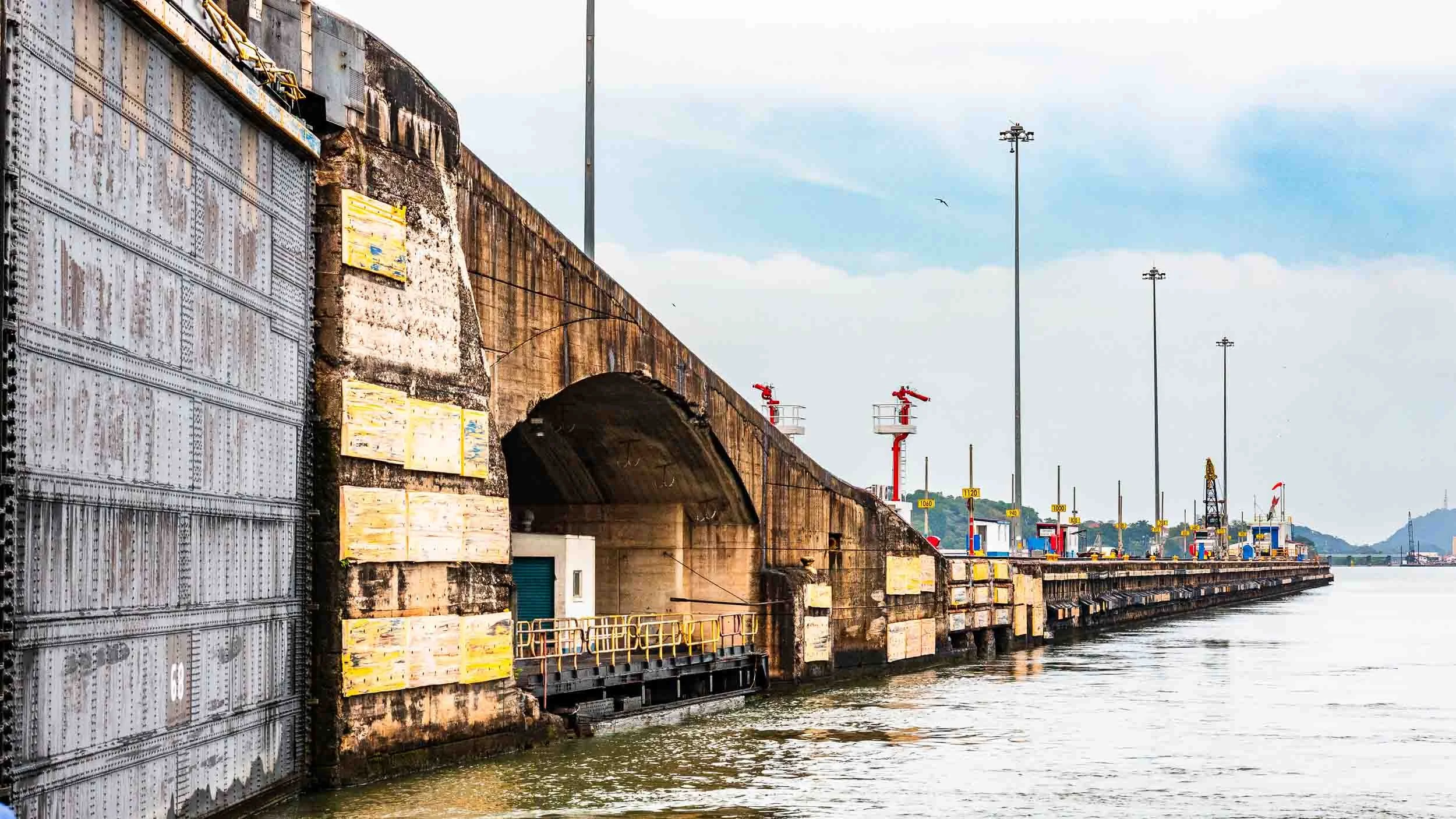
The gate to the locks is now fully open and we can pass through.
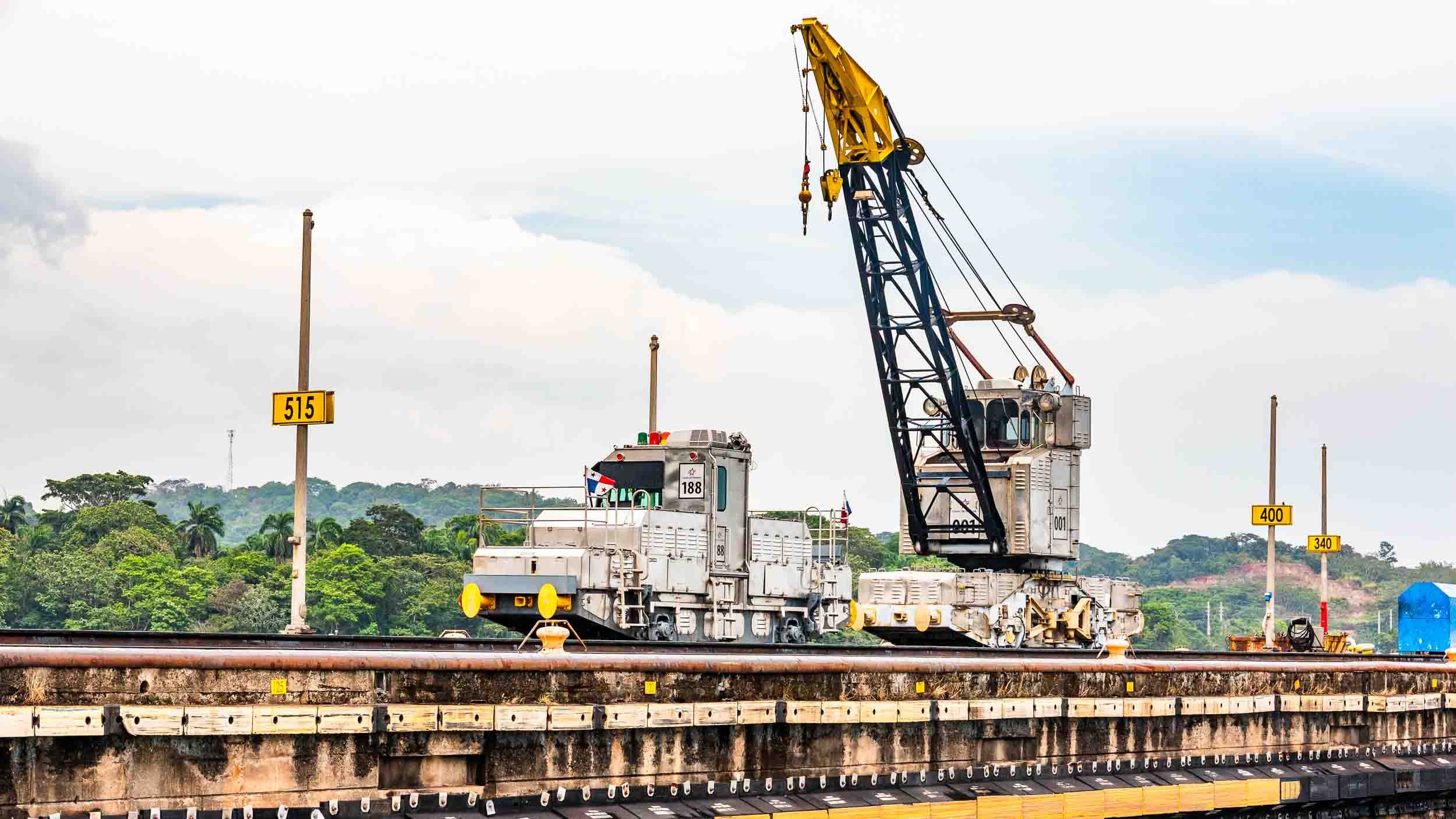
The "Mule" (Towing Locomotive), used for the locks at Gatun, Miraflores and Pedro Miguel. These keep the ships centered in the locks - they do not pull the ship.
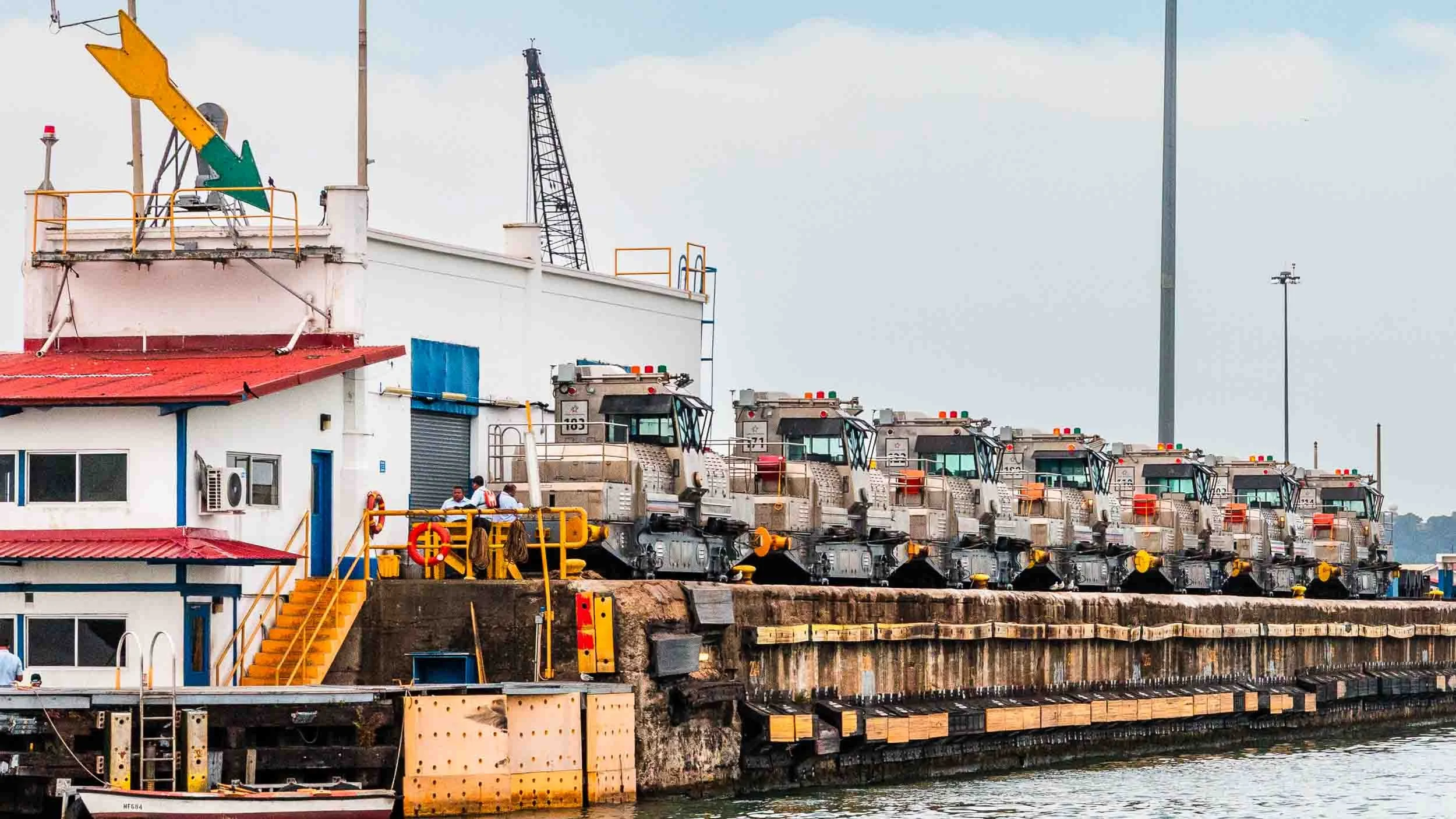
Mules
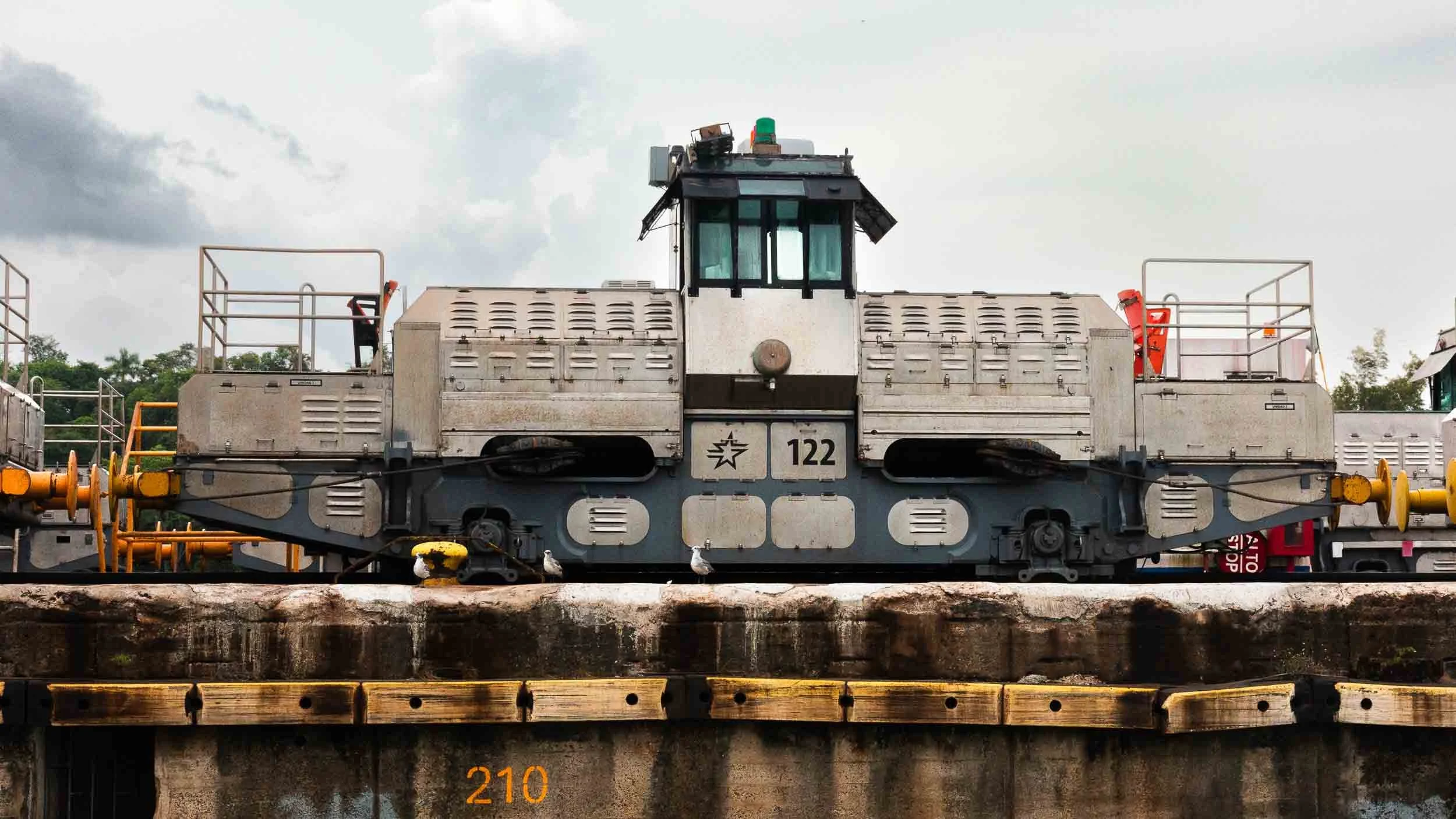
Mula
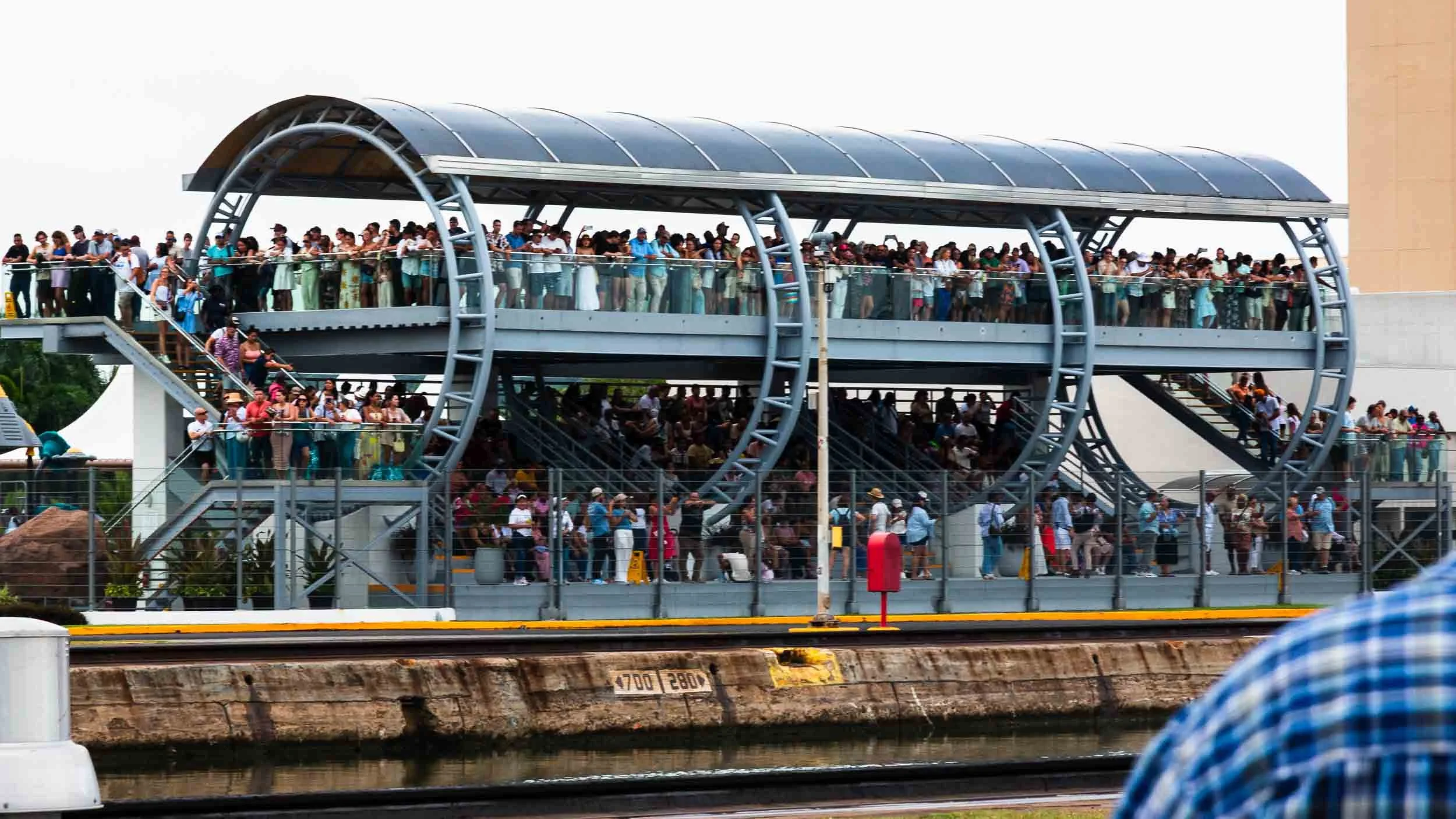
Visitors Center by the Miraflores Locks
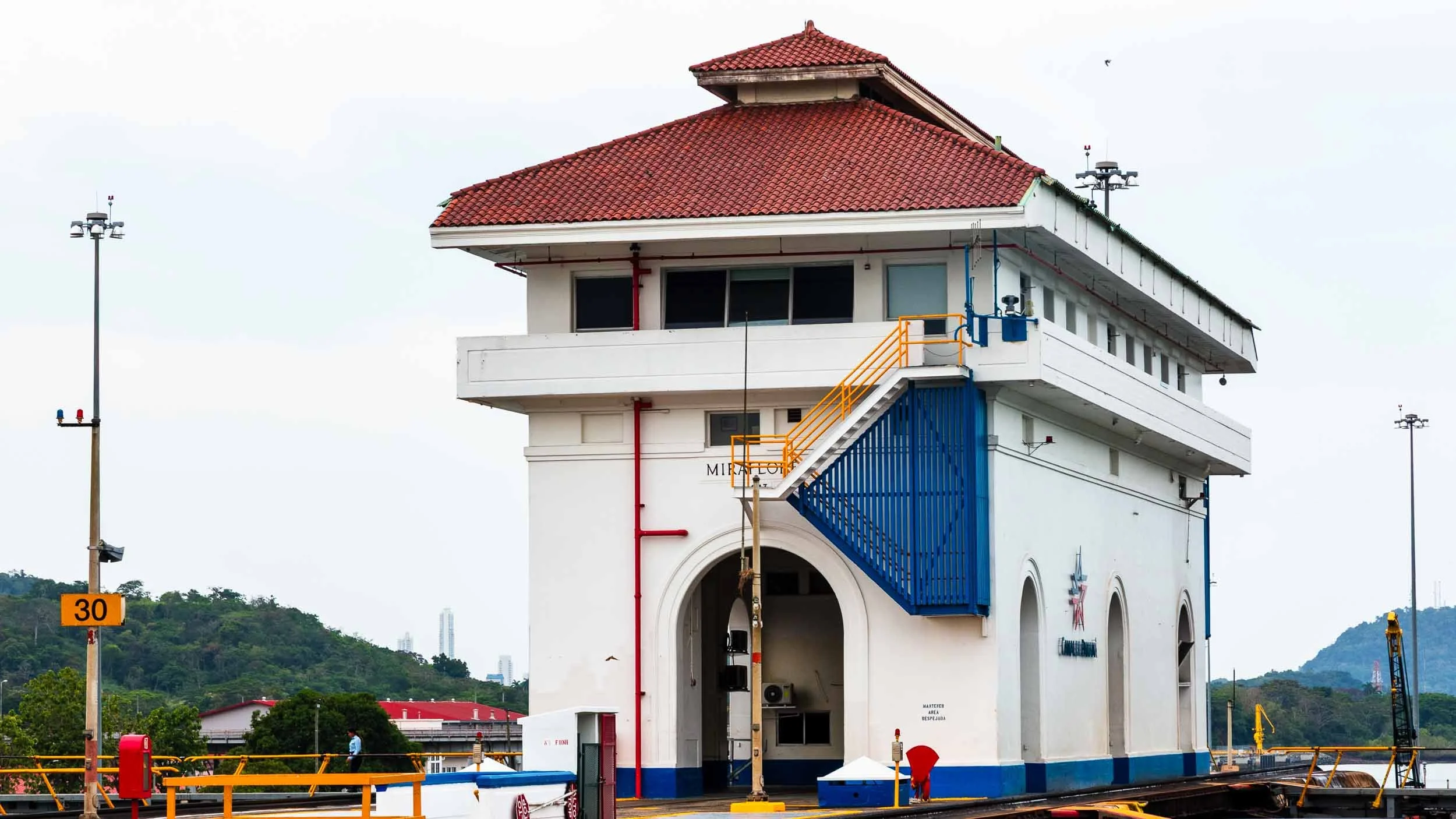
Station at the Miraflores Locks.
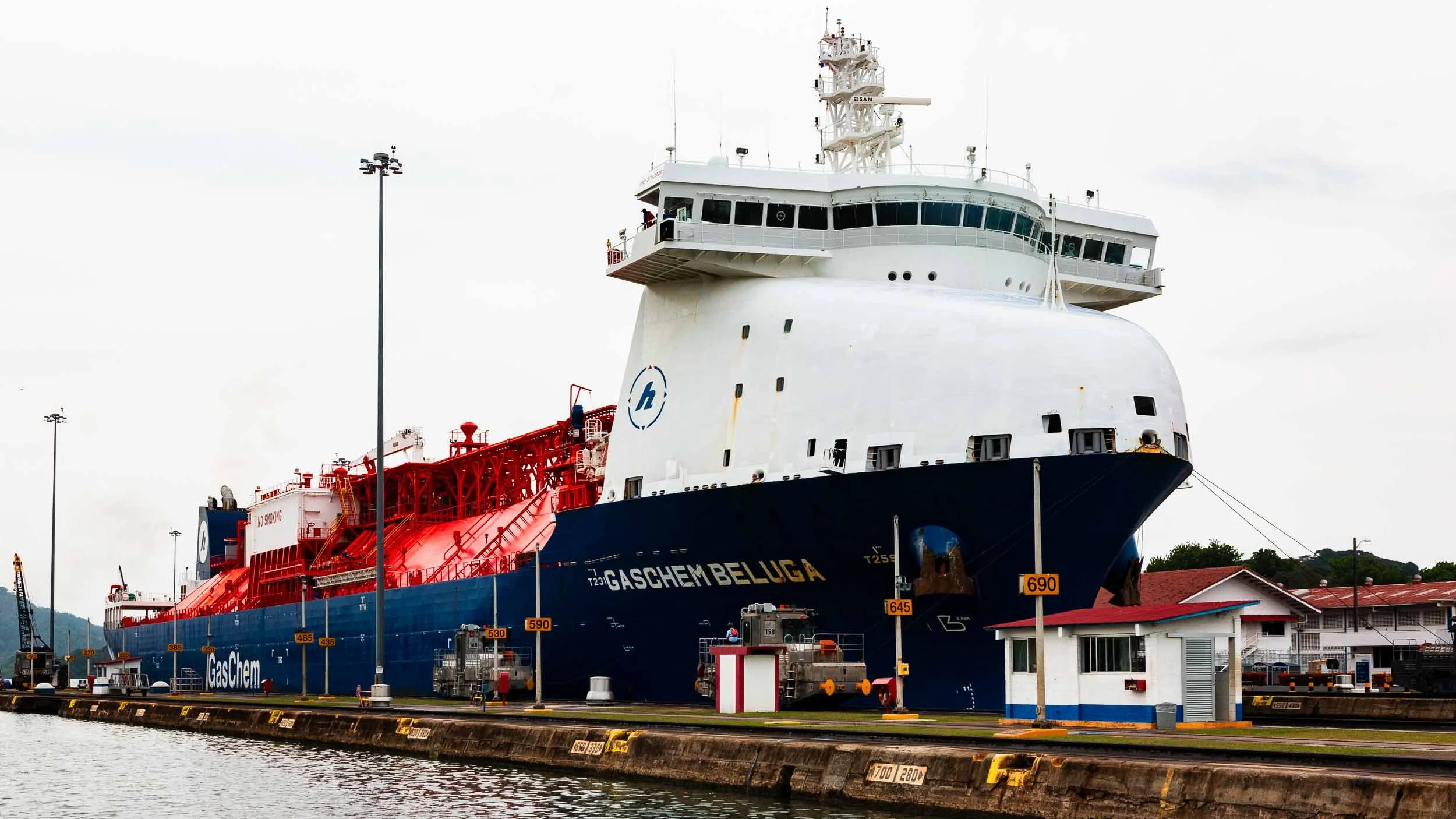
One of the large natural gas ships making its way through the locks.
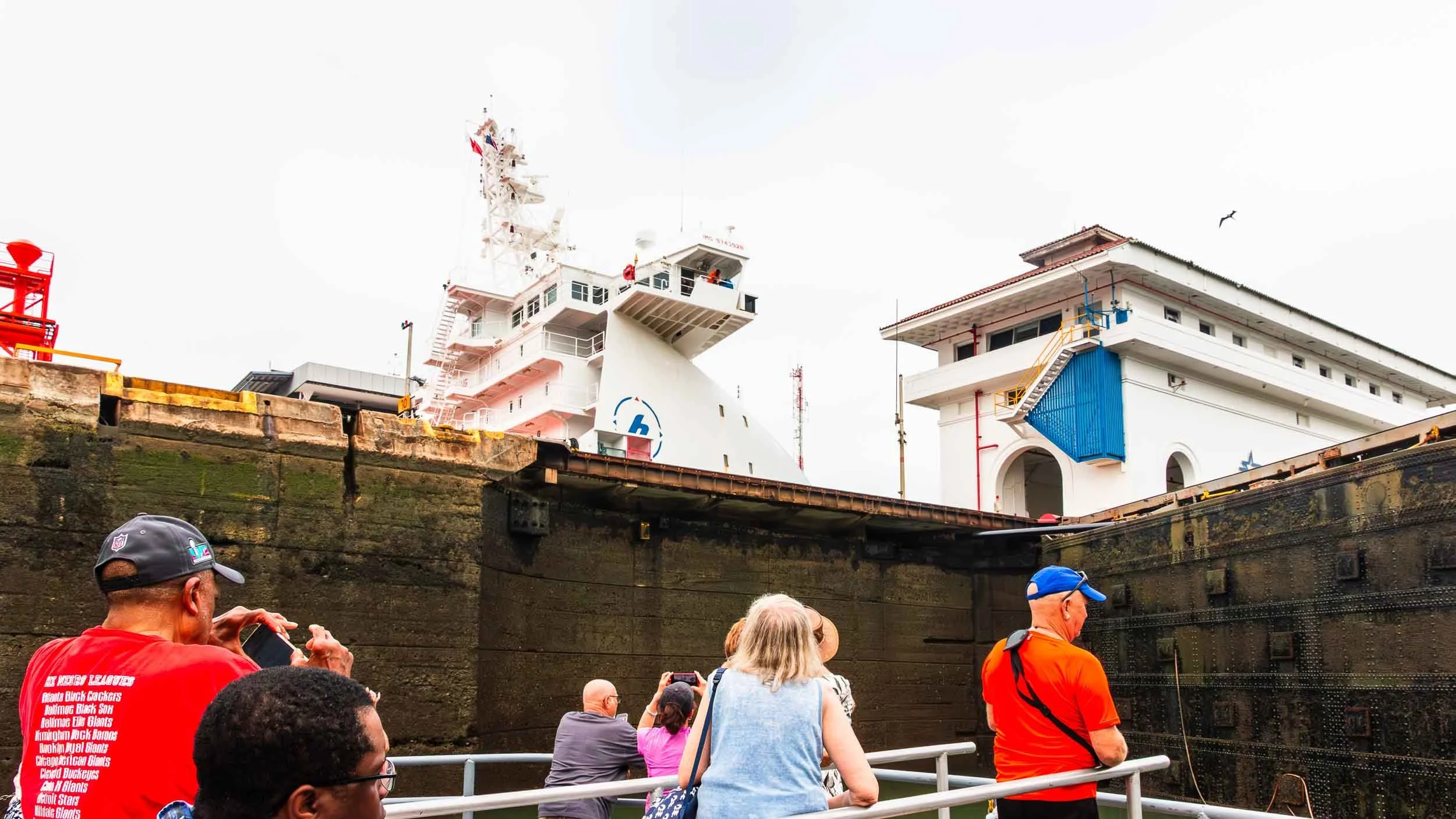
Now in the Miraflores Locks waiting for the gates to open
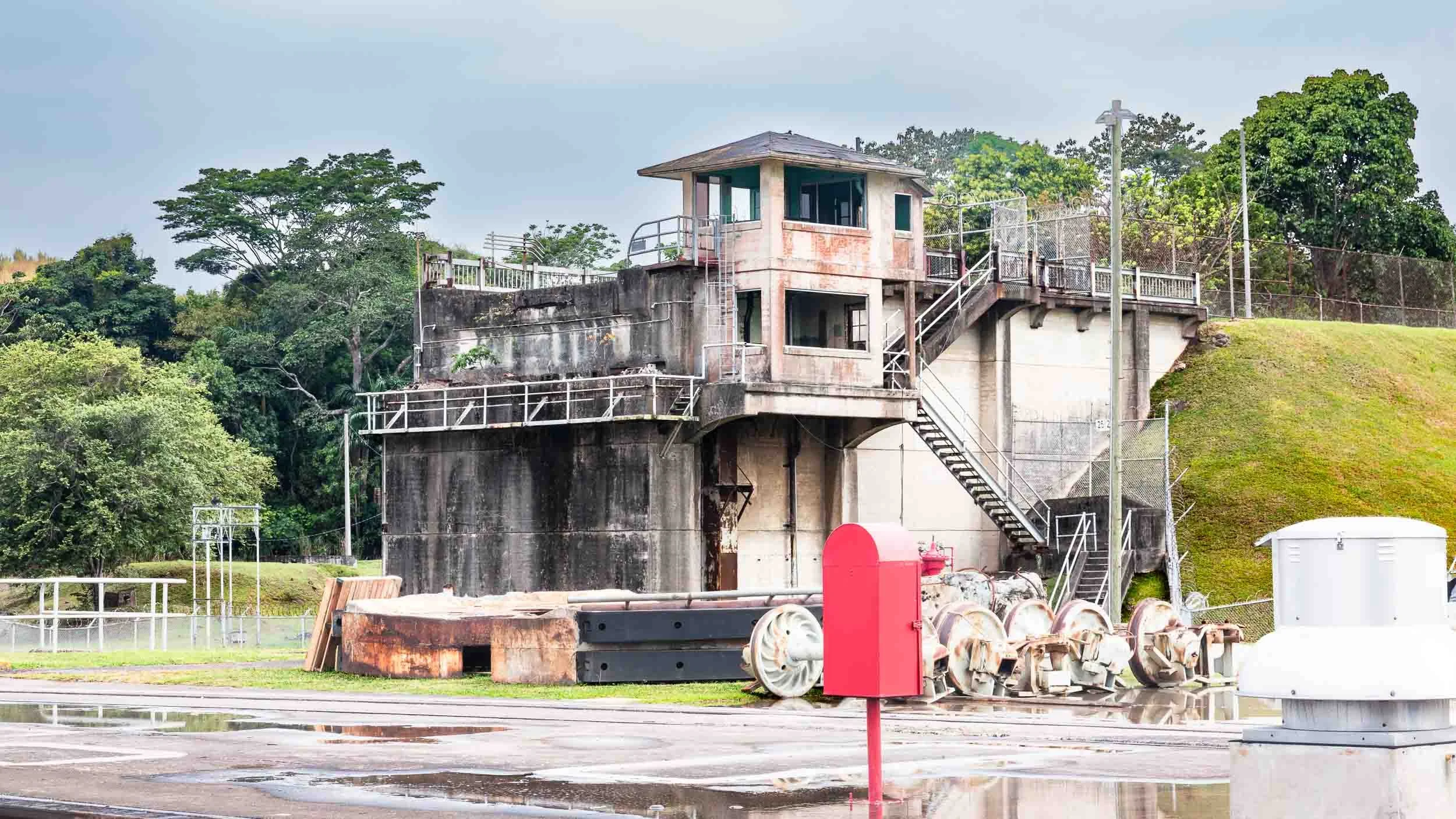
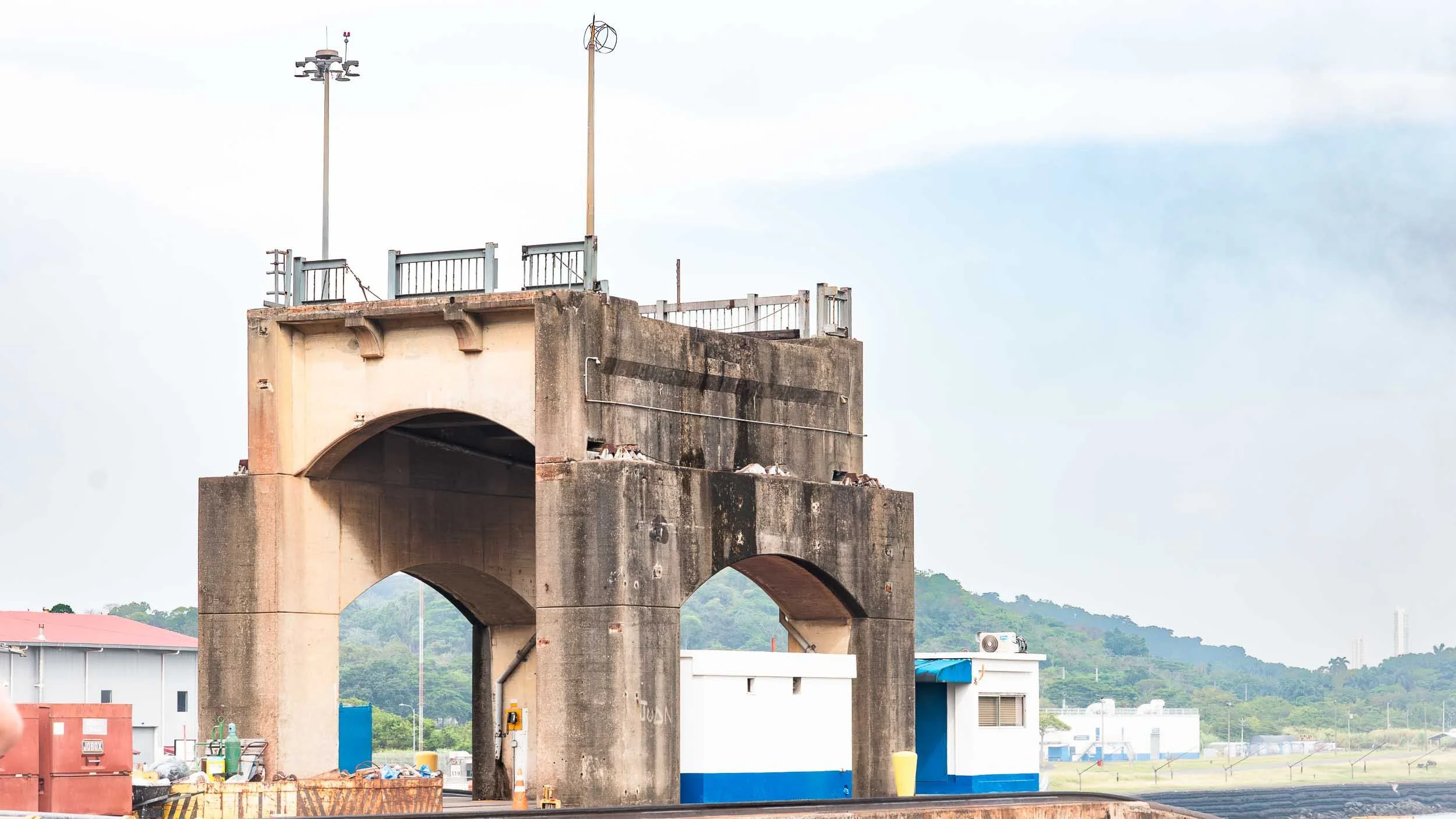
One of the original control tower and maintenance station in the Panama Canal. This one is on the Pacific side of the canal.
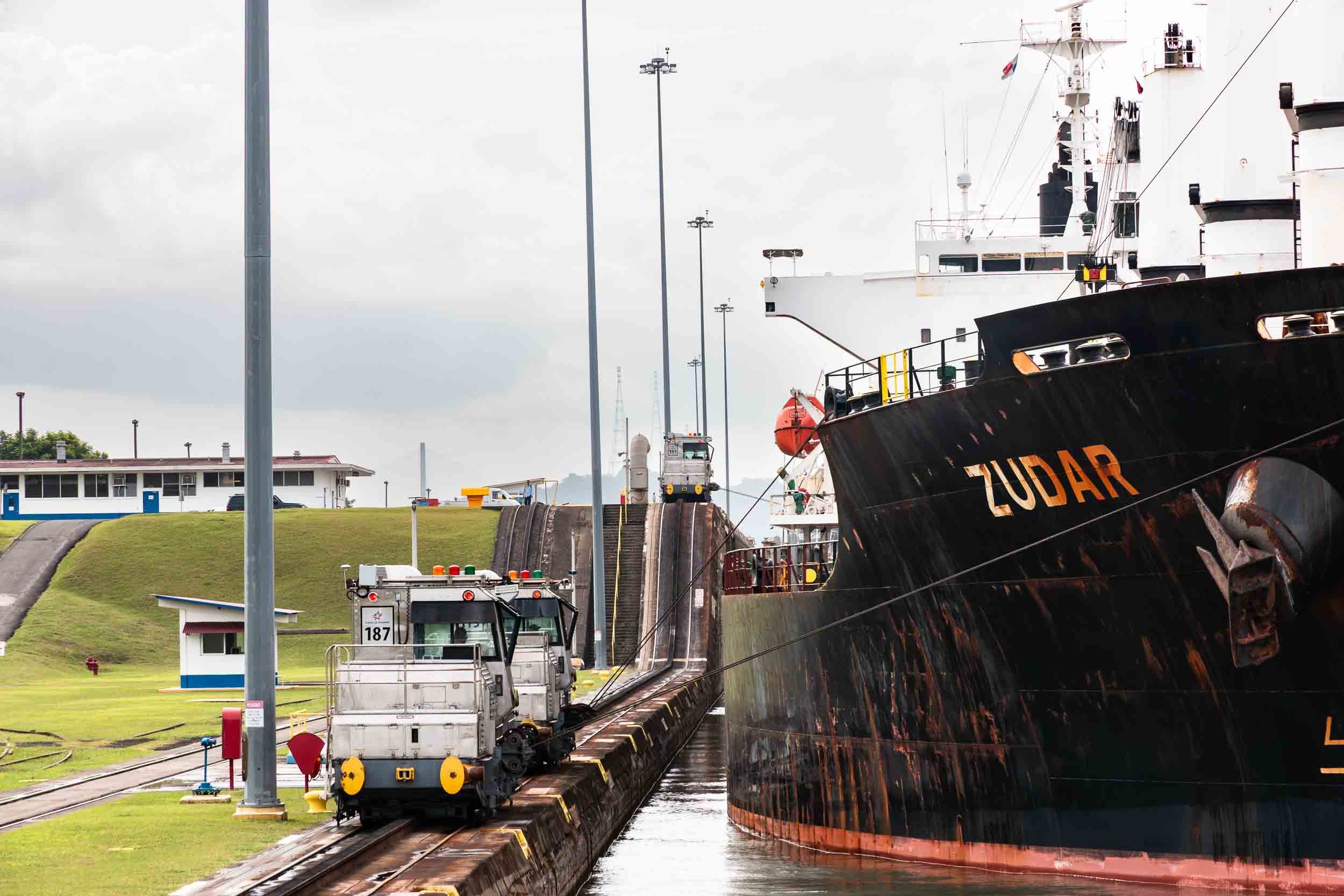
Here you can see the "Mules" at the side of the cargo ship to keep it straight in the Locks. The ship uses its own power to move forward.
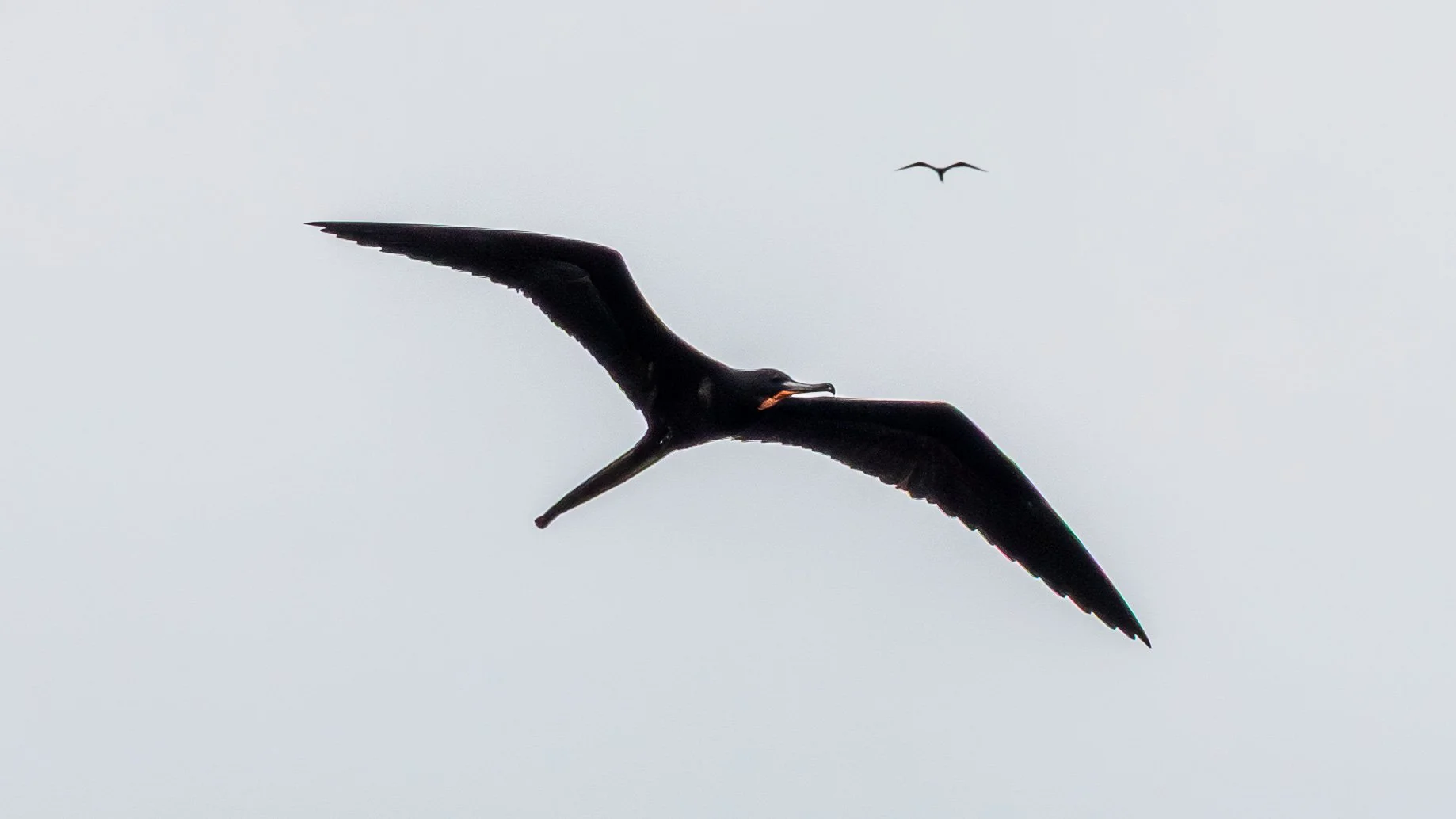
These opportunistic frigate birds wait until the fish surface when the salt water mixes with the fresh water, then make they attack.
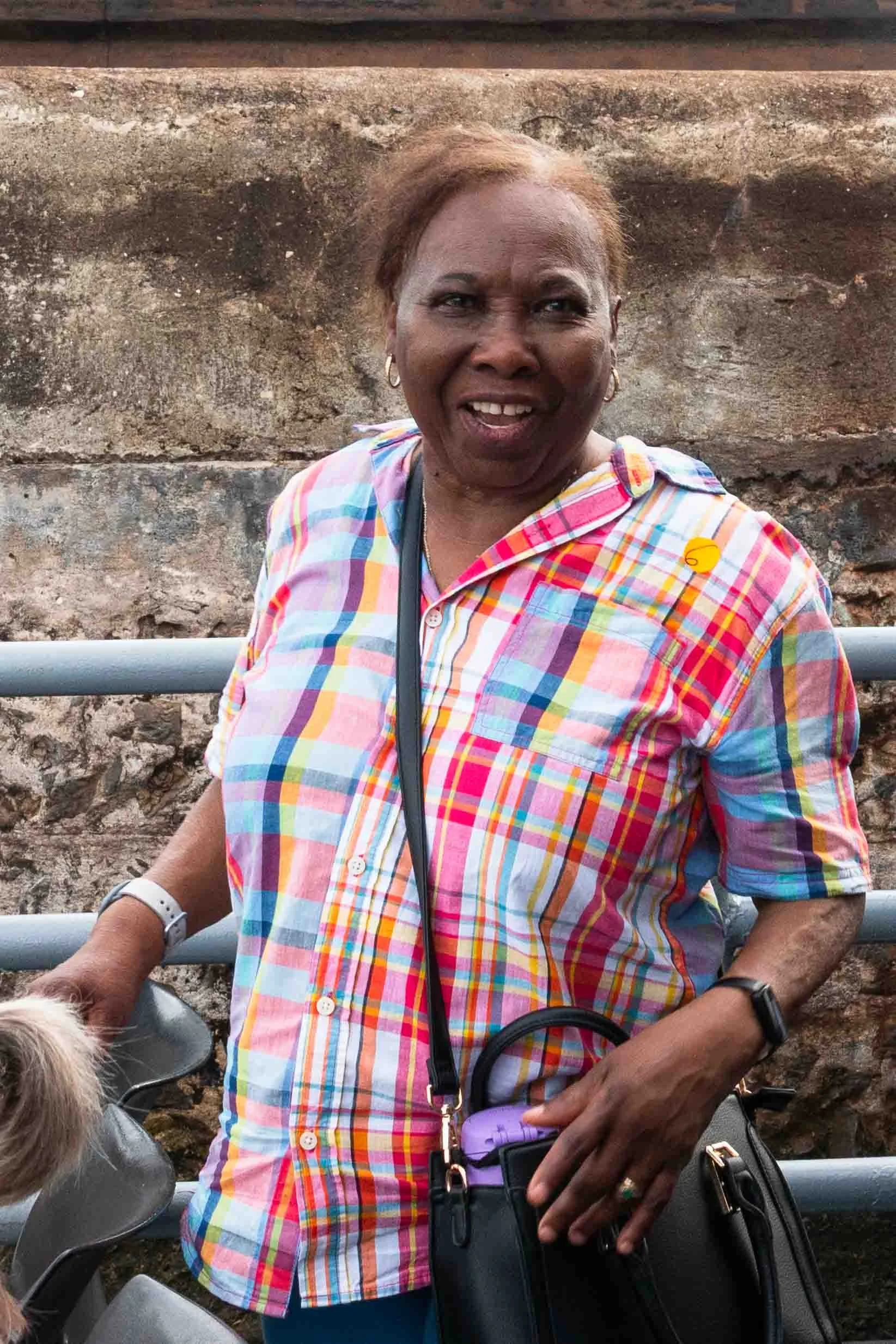
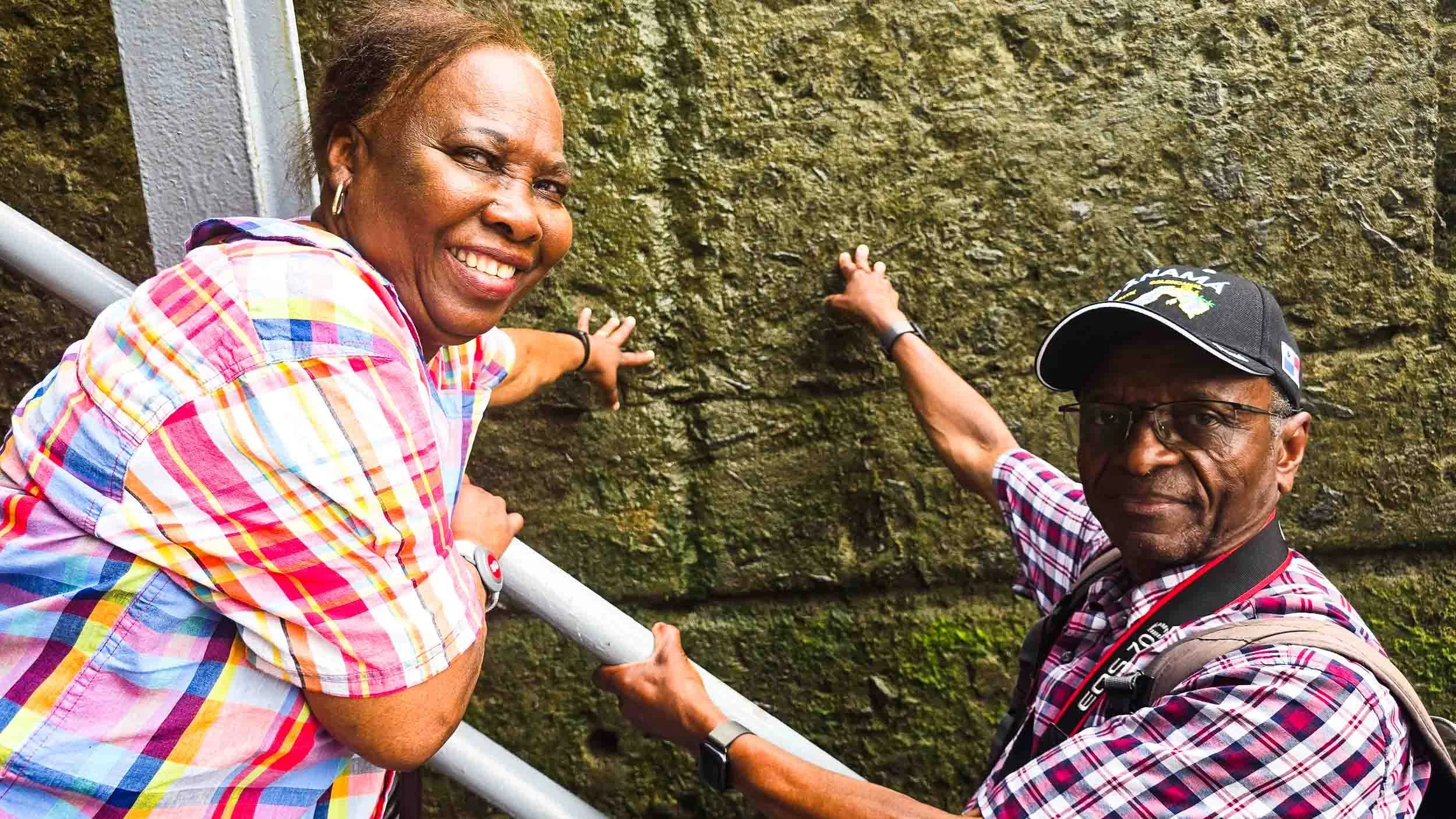
Touching the rock wall while transiting the locks is a legendary tradition - so we did it.
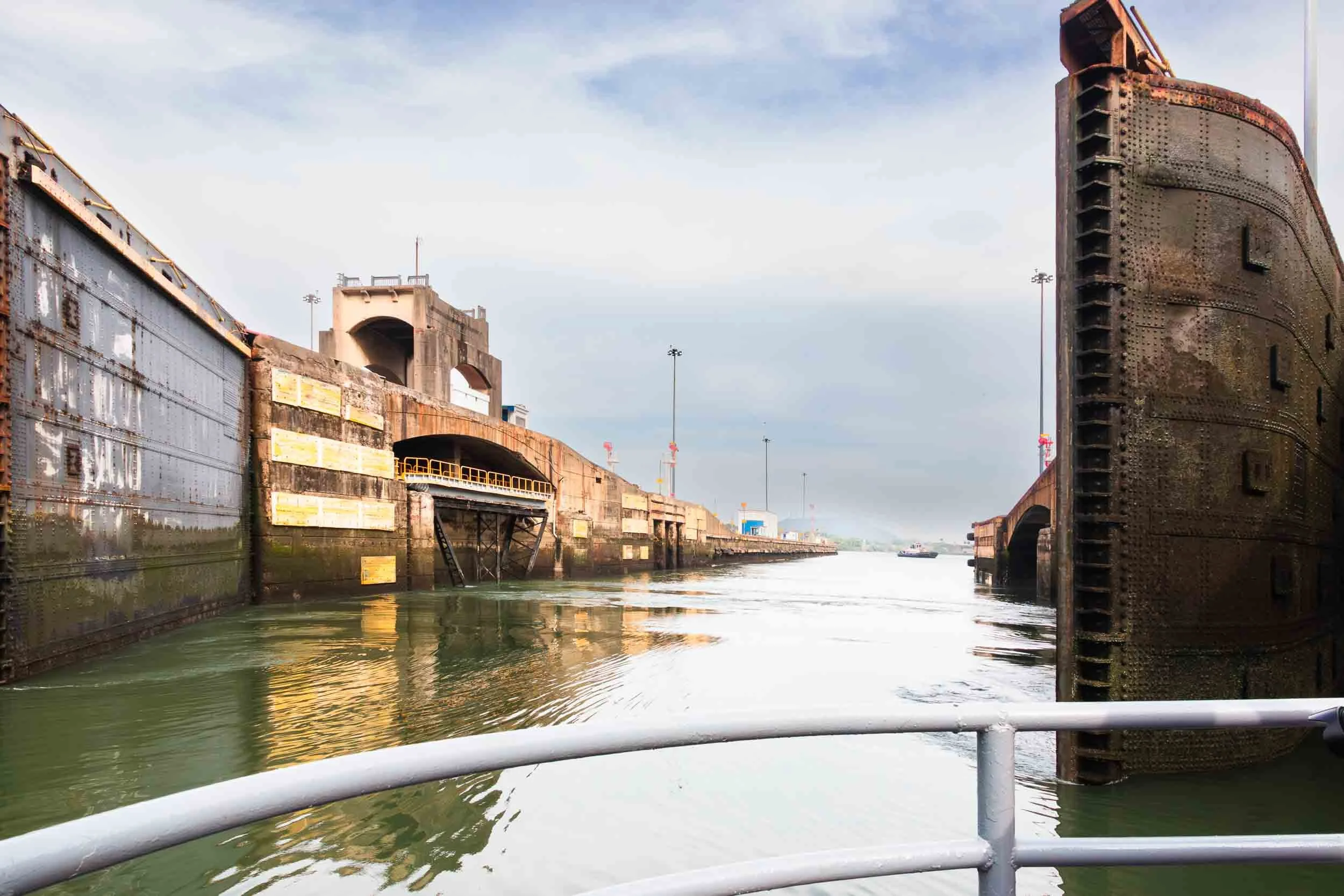
The last gate of the Miraflores Locks open to let us through.
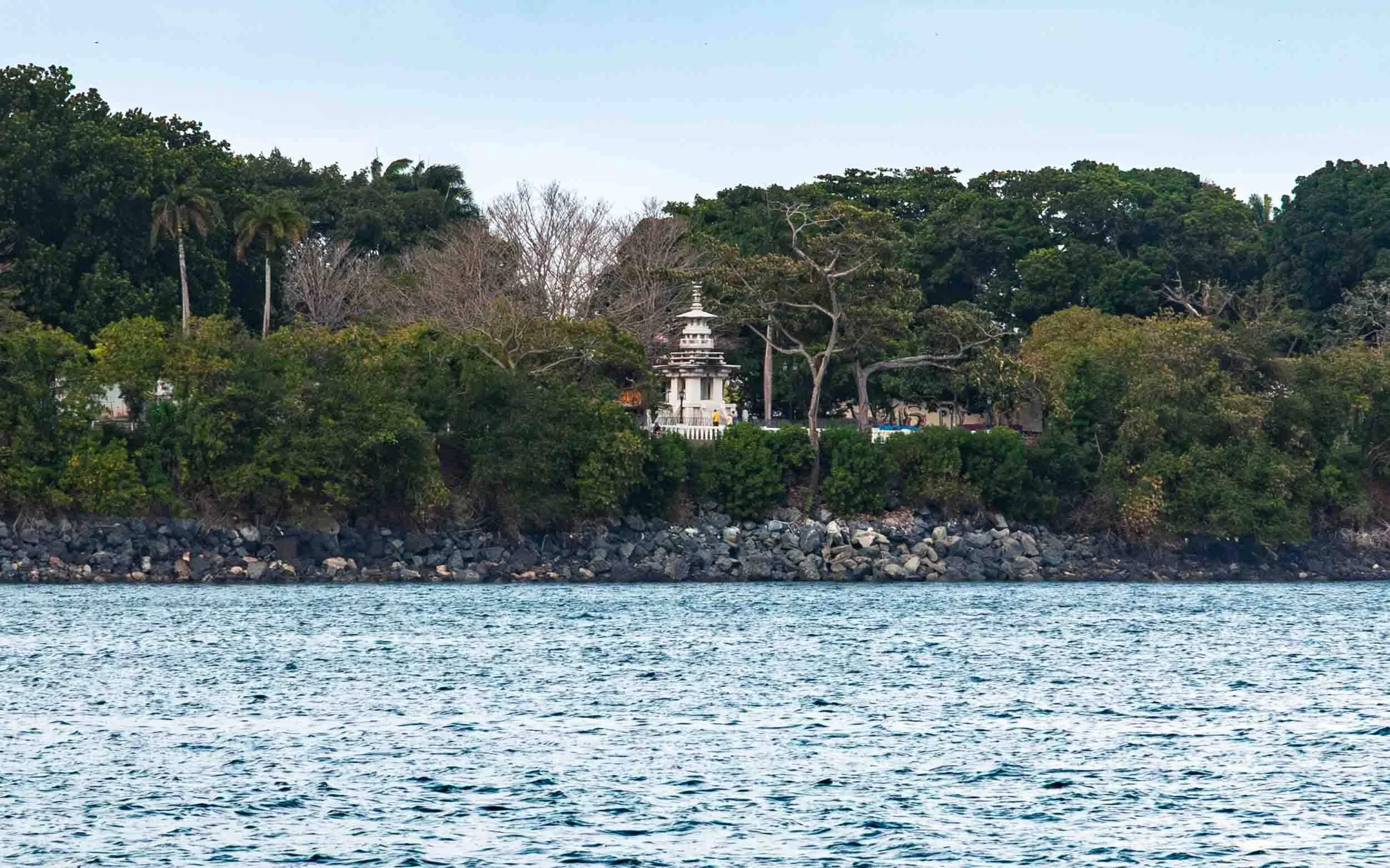
April 20, 2025: Chinese Pagoda in Panama, constructed in 2004.
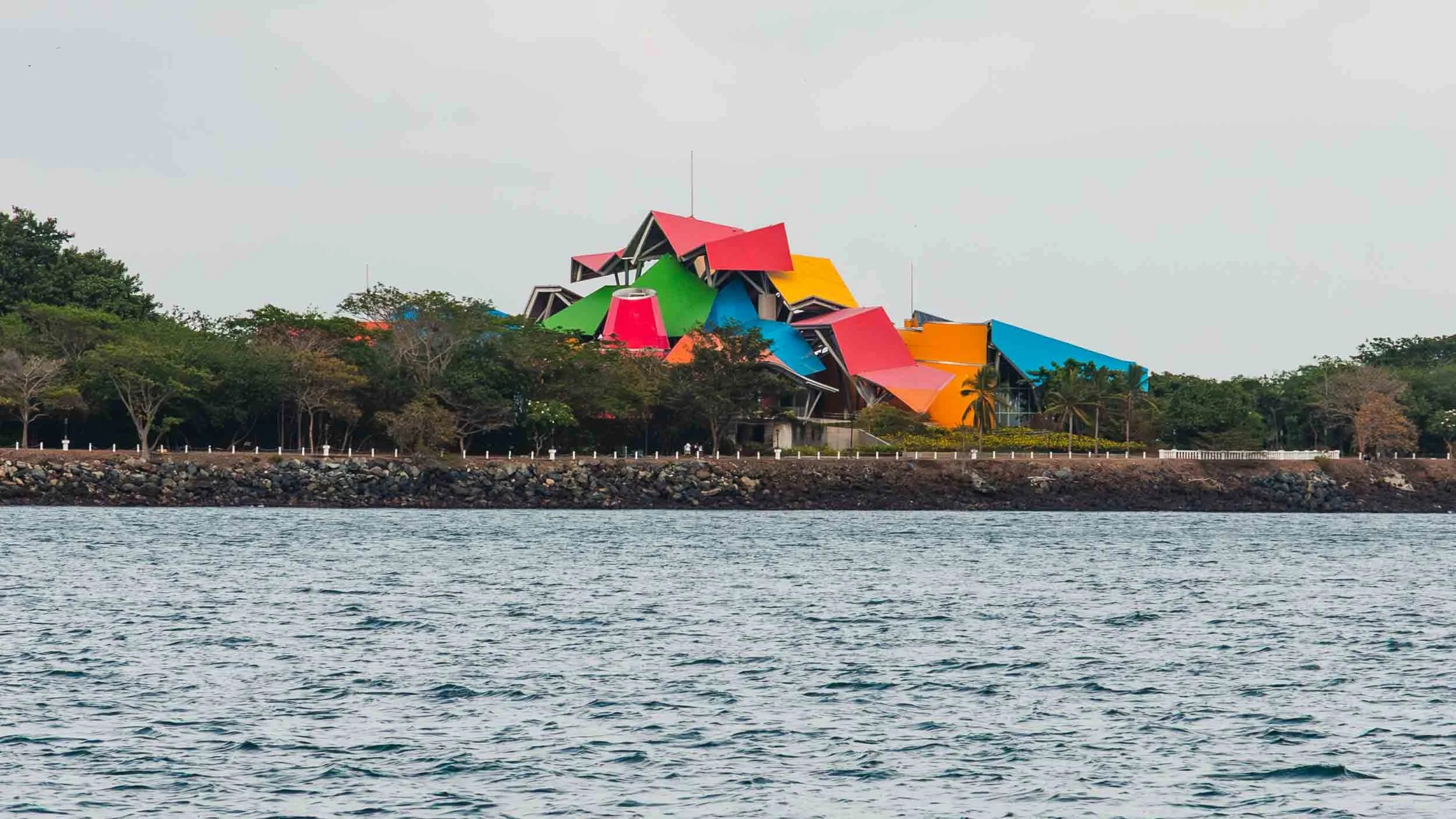
Biomuseo (Biodiversity Museum) by Frank Gehry
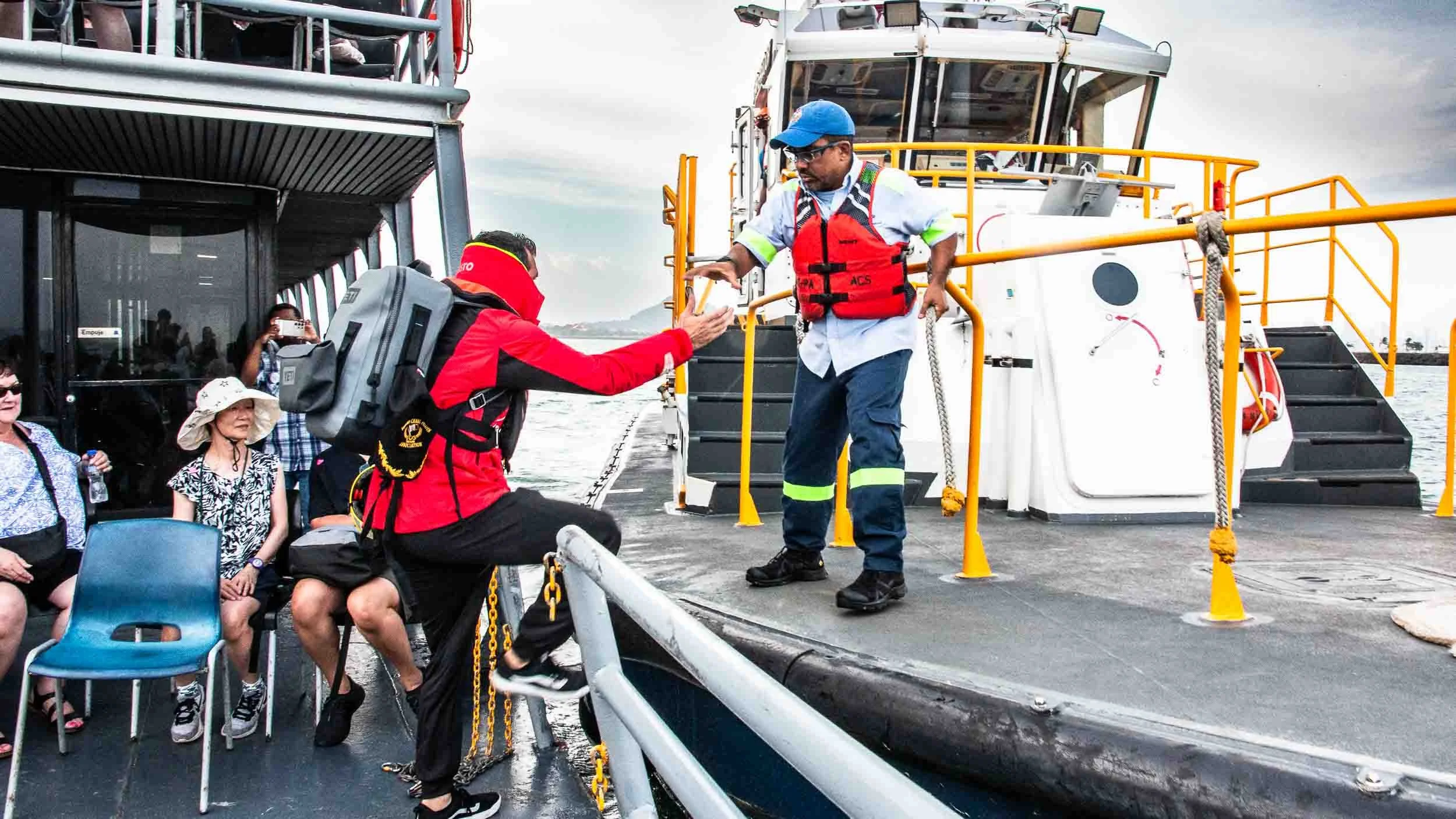
A Canal Pilot operates the boat during the passage through the canal. Here that pilot has completed his task and is now being picked up by one of his colleagues.
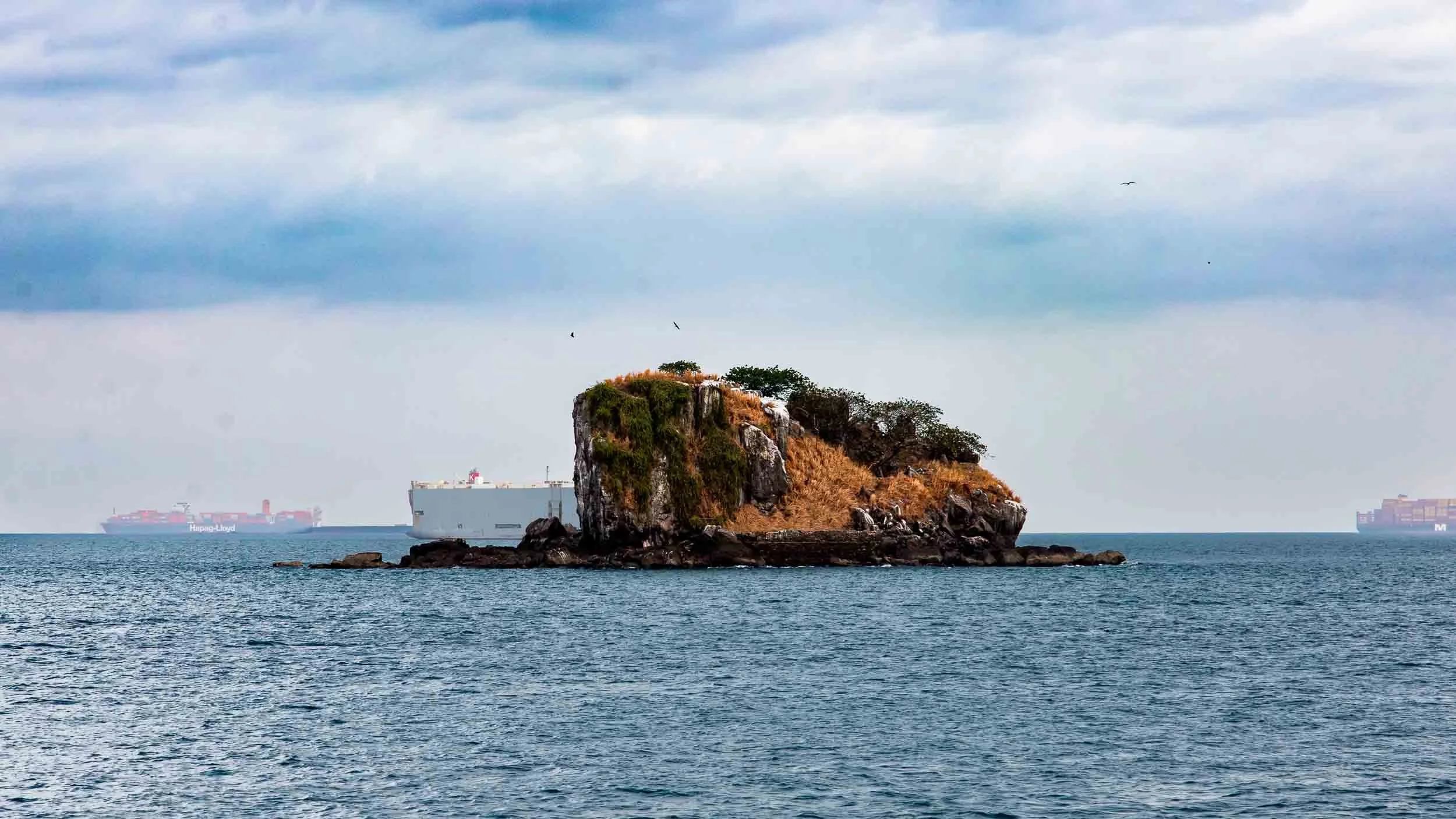
Isla Chama in the Bay of Panama.
Part 3
During the sixteen days of the cruise we stopped at other ports for tours and sightseeing. The links below will show the activities before and after the Canal passage. These links open in new Tabs. To get back to the main page just close the tabs when finished. NOTE: These links are still being developed.
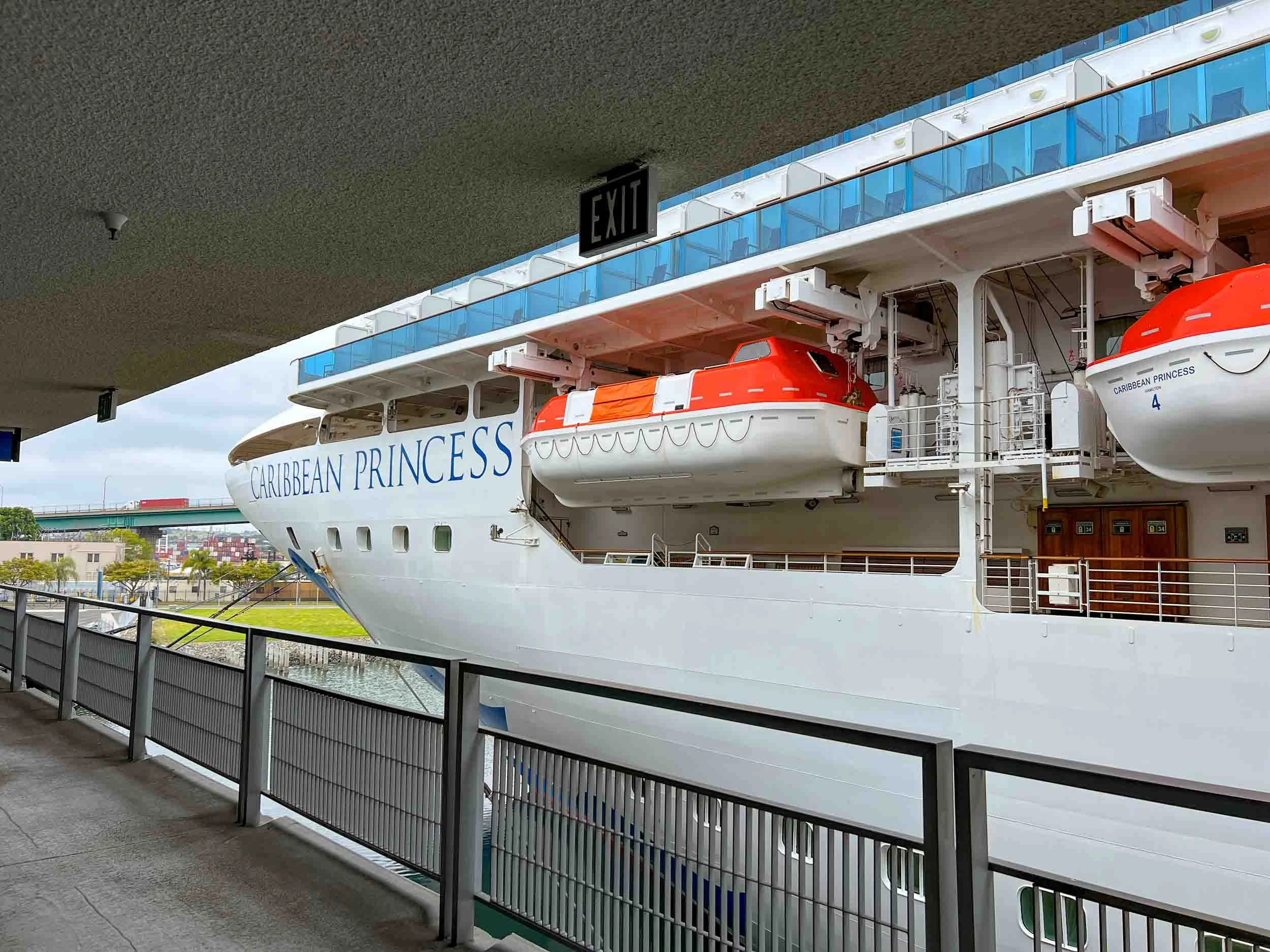
Caribbean Princess At Sea
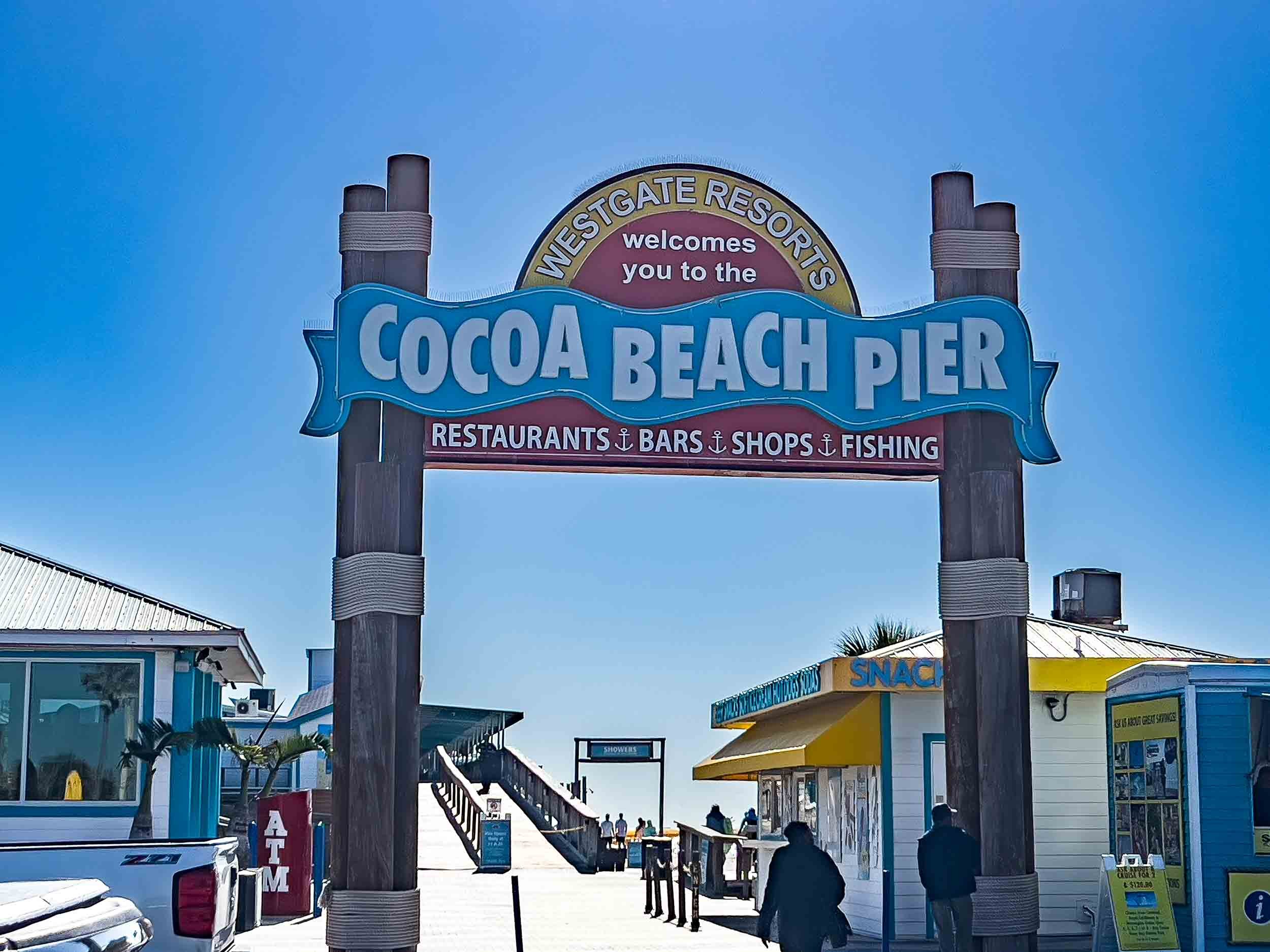
Cocoa Beach

Kennedy Space Center
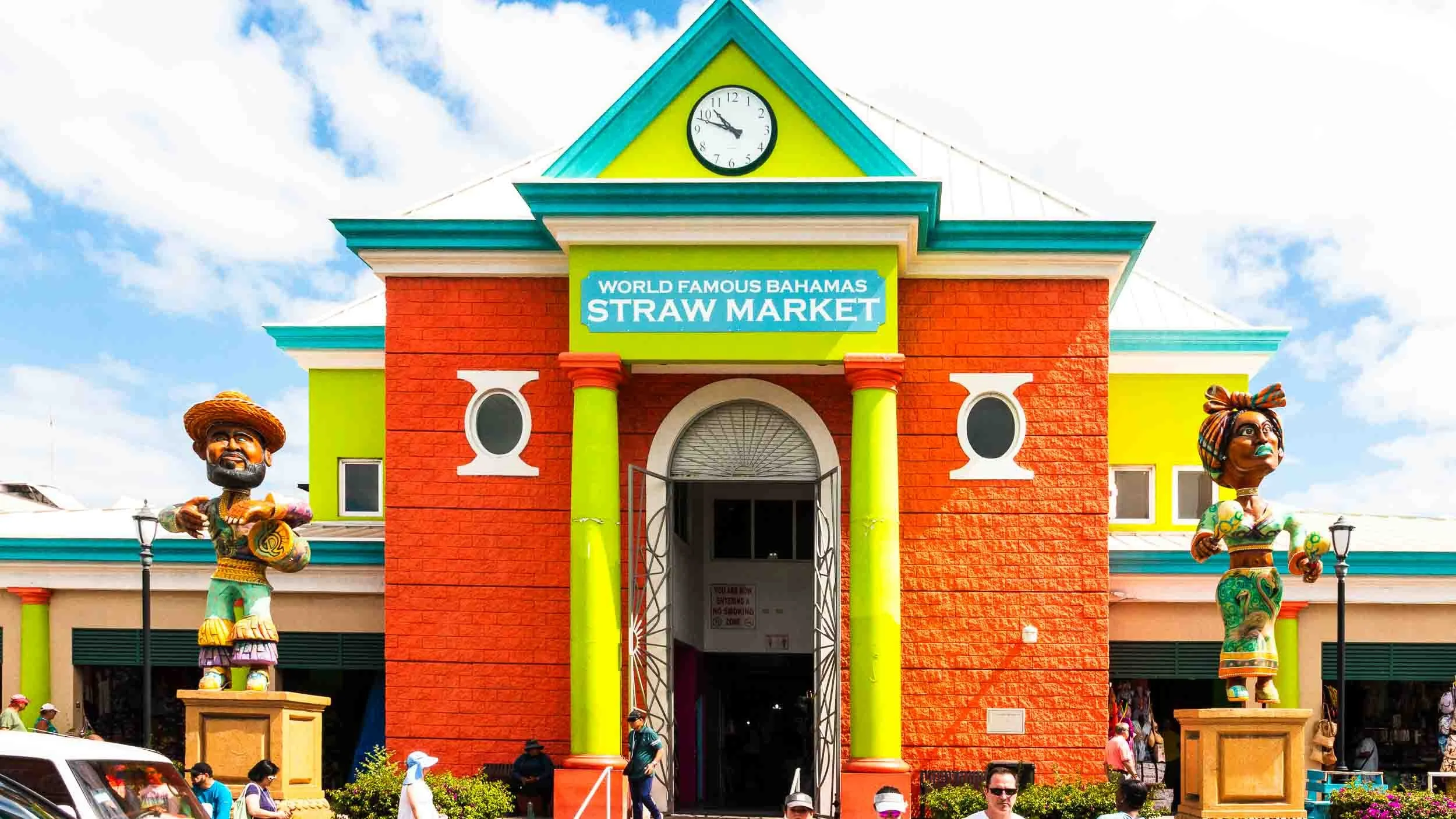
Nassau, Bahamas
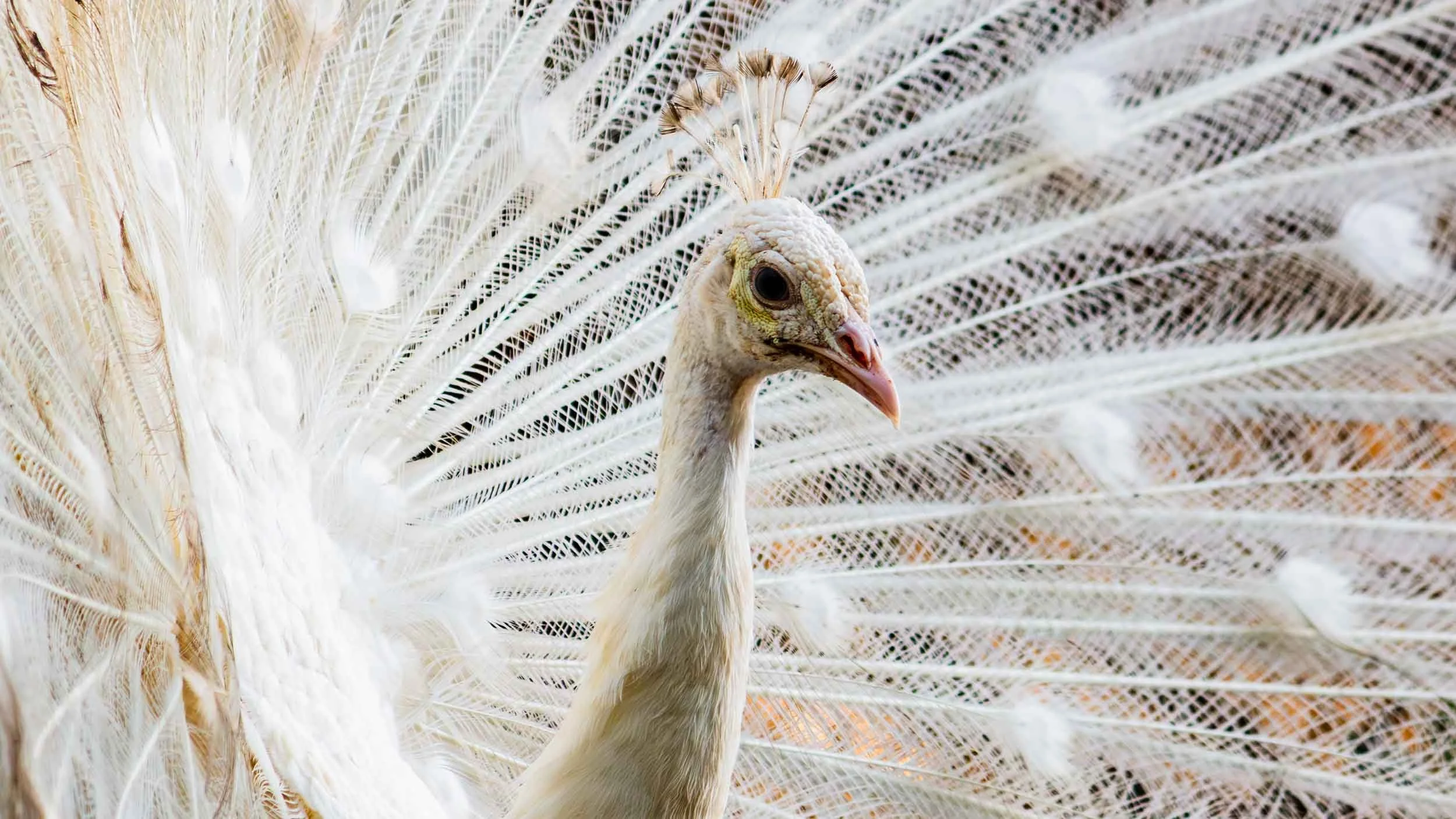
Catagena Eco Oasis
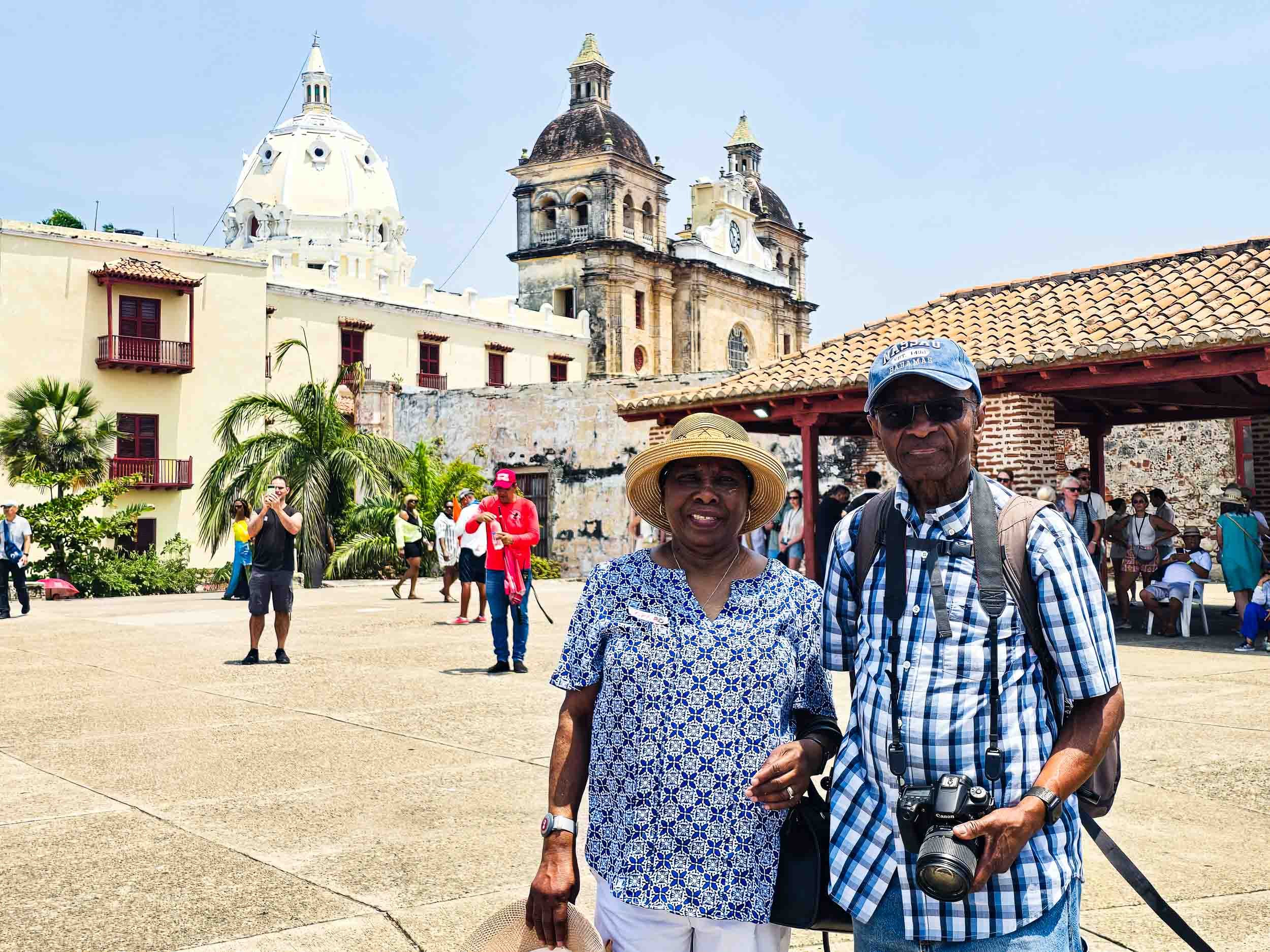
Cartagena Old City
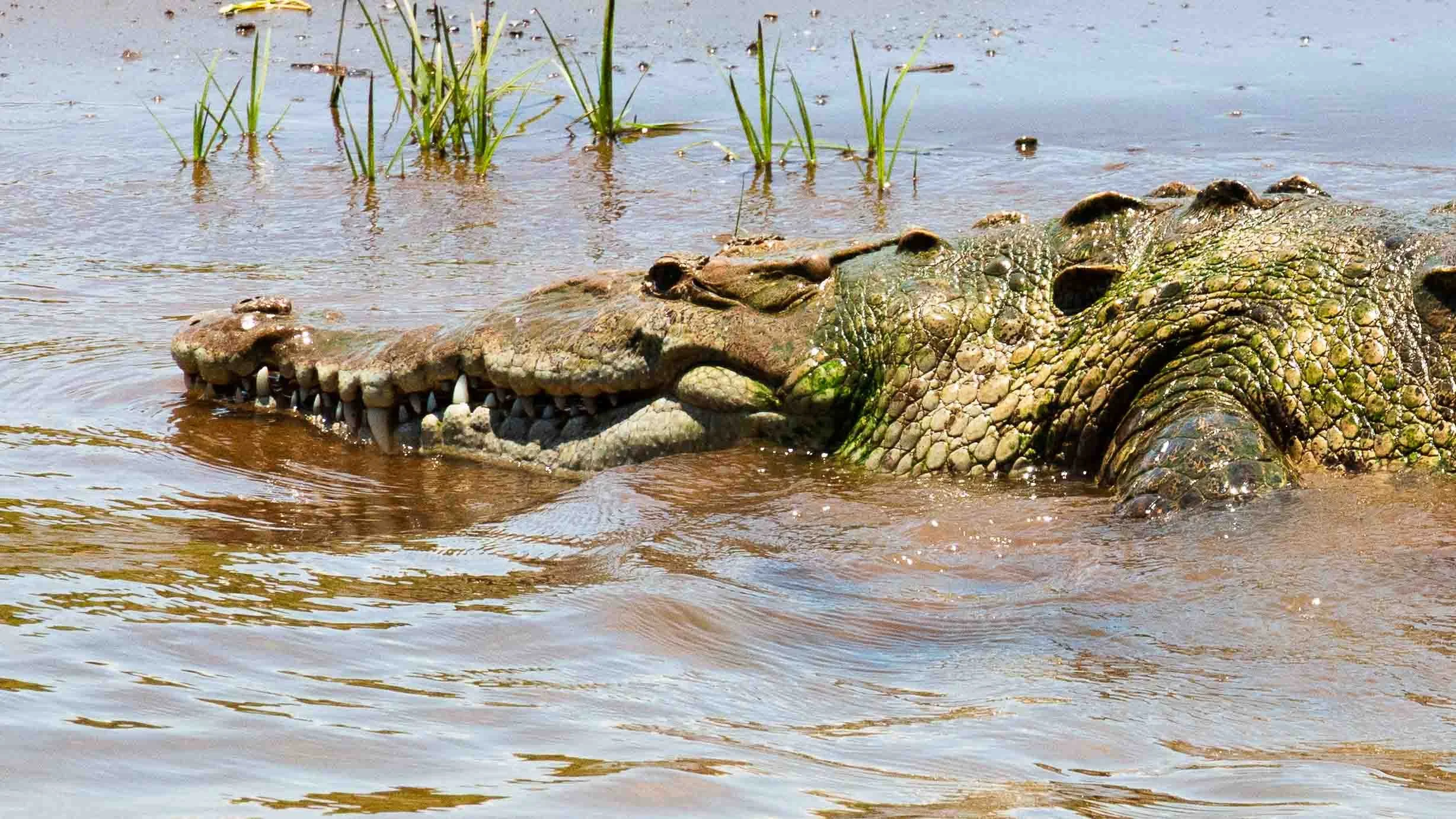
Puntarenas Costa Rica
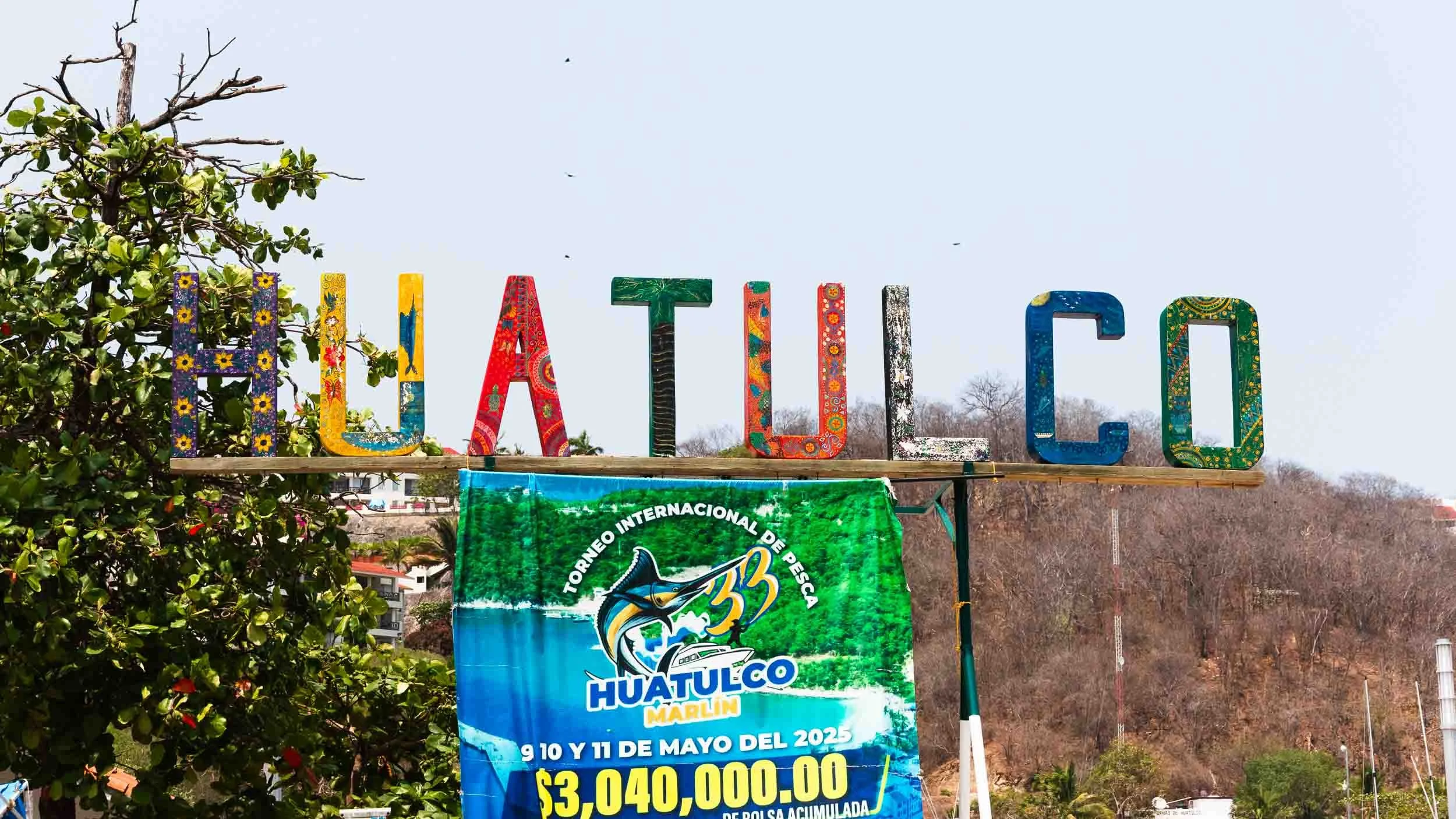
Huatulco, Mexico
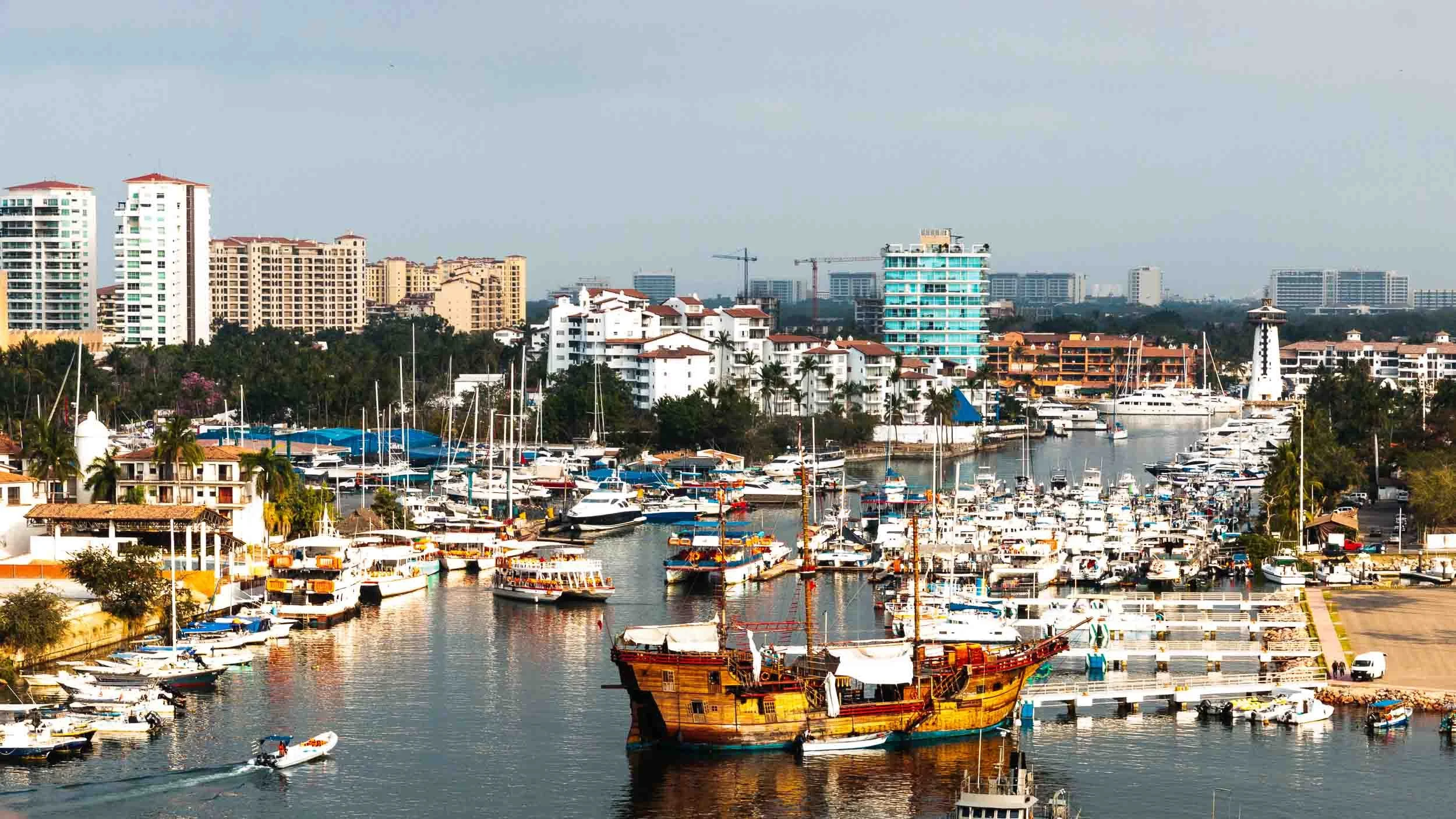
Puerta Vallarta, Mexico